
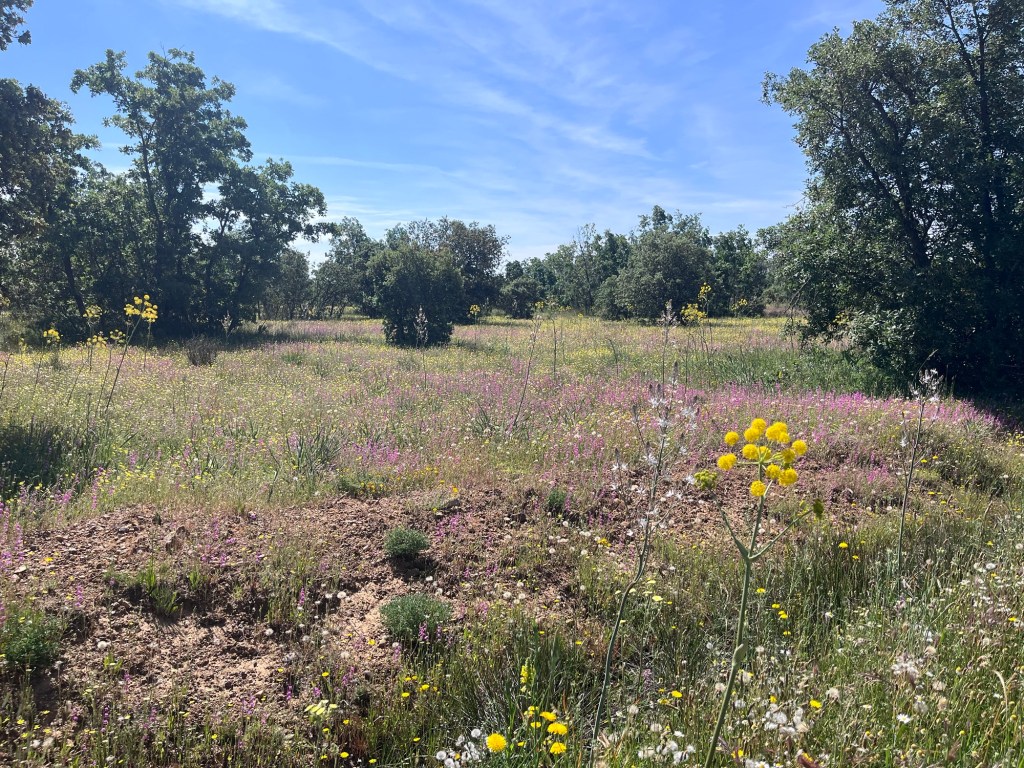
Now the dust has settled on our epic journey, at Roger’s request, I have put together a few thoughts and photos ( we took hundreds) of the stunning and varied wild flowers which genuinely amazed and enthralled us during the two weeks.
Of course as we cycled from windy coastal points, over mountains, across high dry plains and rolling countryside in spring we had the added benefit of these different habitats, but genuinely the variety and beauty all the way along was a real pleasure.
Before tackling the plants it is also worth looking at what other wildlife we saw or heard.
Birds
Of course we see more birds than other sorts of wildlife. As well as the Cuckoo on four days and Kites and Buzzards most days we think we did see some European Vultures as we approached the Pyrenees.
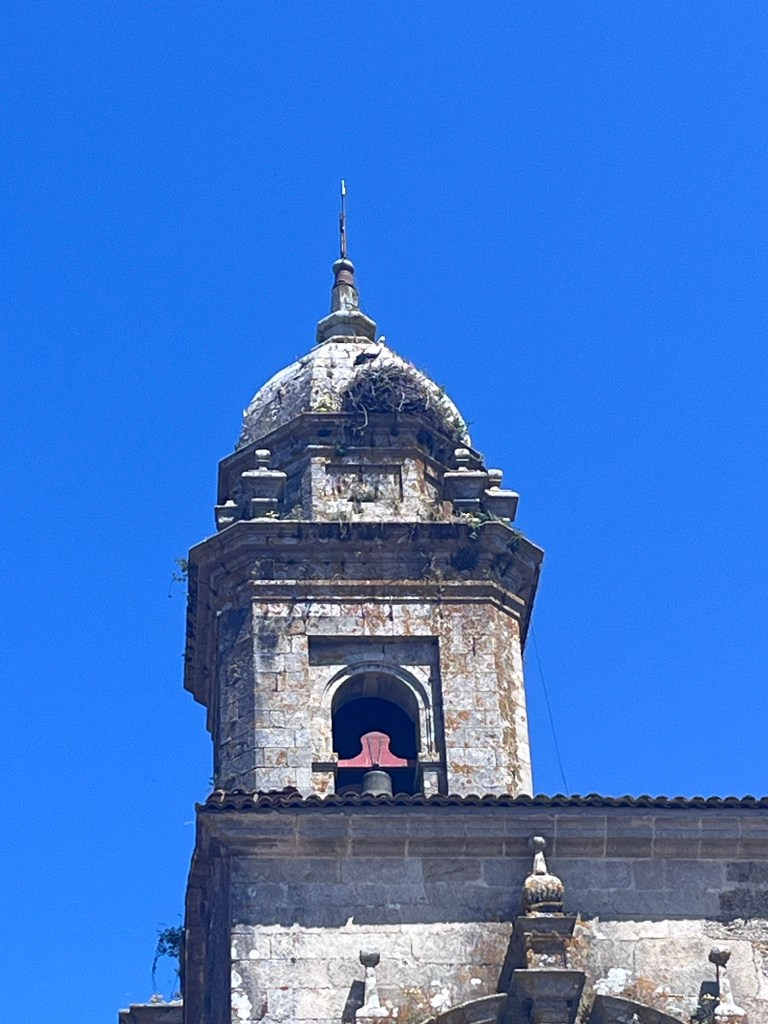
In Western Spain there were plenty of Storks and we took to counting the number of nests on church roofs and spires. I think the maximum was five on one church.
Nick became slightly obsessed with his Merlin ID birdsong identifier with the Serin, Blackcap, Chaffinch, Wren and Blackbird being the most heard.
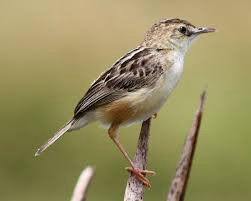
Although you have to take some of the supposed birds identities with a pinch of salt ( I know these apps are not always correct) Nicks favourite quoted was the Zitting Cisticola. It turns out it’s another LBJ ( Little Brown Job) whose name is more interesting than its looks!
Mammals
These are always tricky to spot except for the roadkill and whilst we did see a couple of deer I think we get more of these around Tonbridge.
Our most impressive sightings were on a misty morning climbing out of Sarria in Galicia when we saw two Pine Martens run across the road in front of us. One stopping to check we successfully cycled past.

Reptiles & Amphibians
We only saw squashed frogs but very often heard their croaking during the day or at camp.
Whilst we did see many flat snakes and the usual hordes of small lizards scuttling in the crevices of walls. Nick says he almost ran a brown snake over whilst descending one of the railway voie vertes in France.
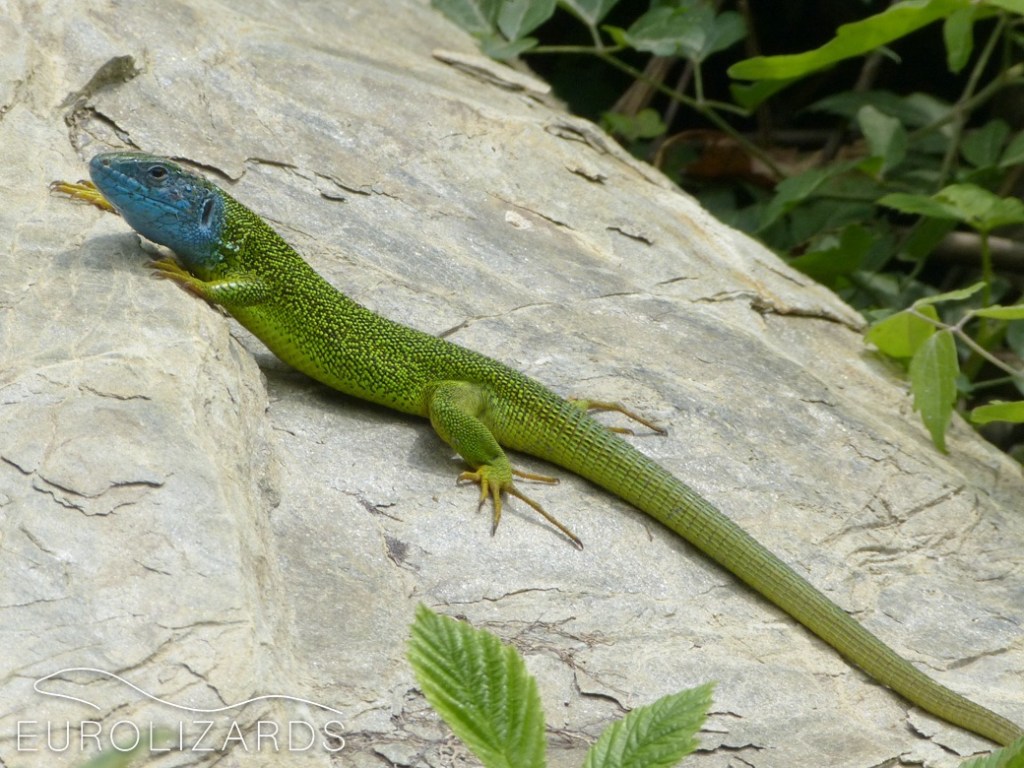
I also saw a large ( over a foot long) almost dayglow green lizard run across as I was struggling up the last hill in France. On looking it up it later it is very helpfully called a European Green lizard. Literal names make so much sense!
We did see many butterflies but not too many large or ultra colourful ones and pleasingly there weren’t too many mosquitoes about either!
Flowers and Shrubs
Clearly the number one was Broom as we saw its bright yellow everyday and smelt its scent too.
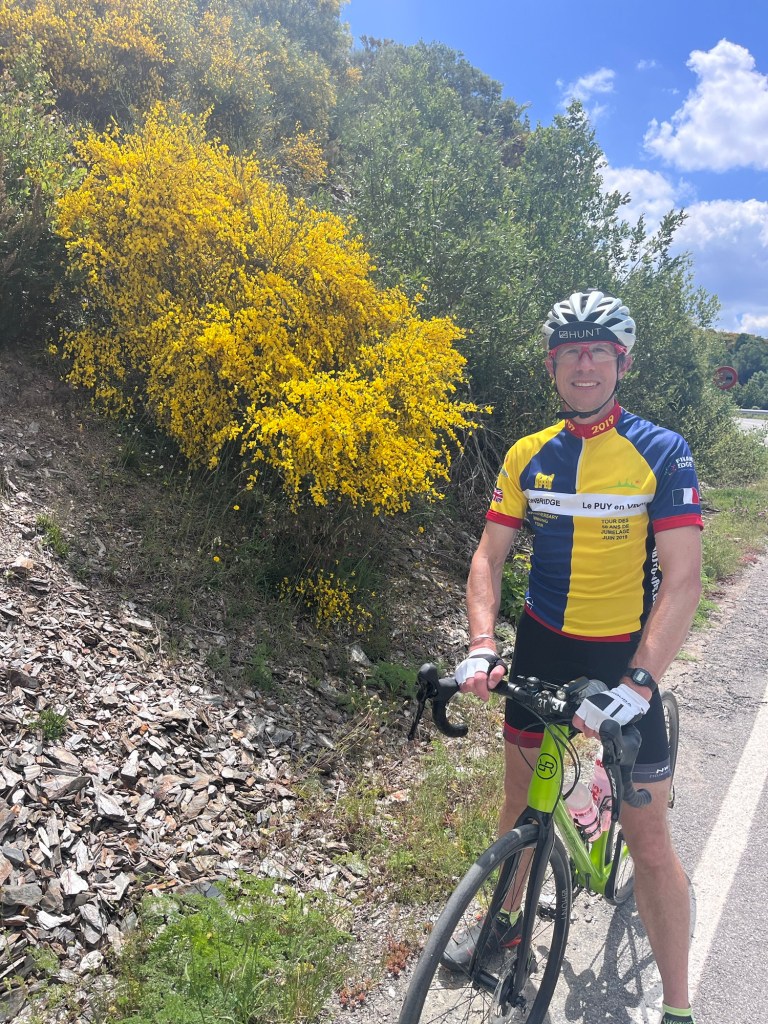
Perhaps the most beautiful flowers we saw were various varieties of Orchid which became more numerous as we neared the Pyrenees. We saw many types on our damp circuit of Ireland too so perhaps the wet spring in this part of Europe also helped the Orchids.
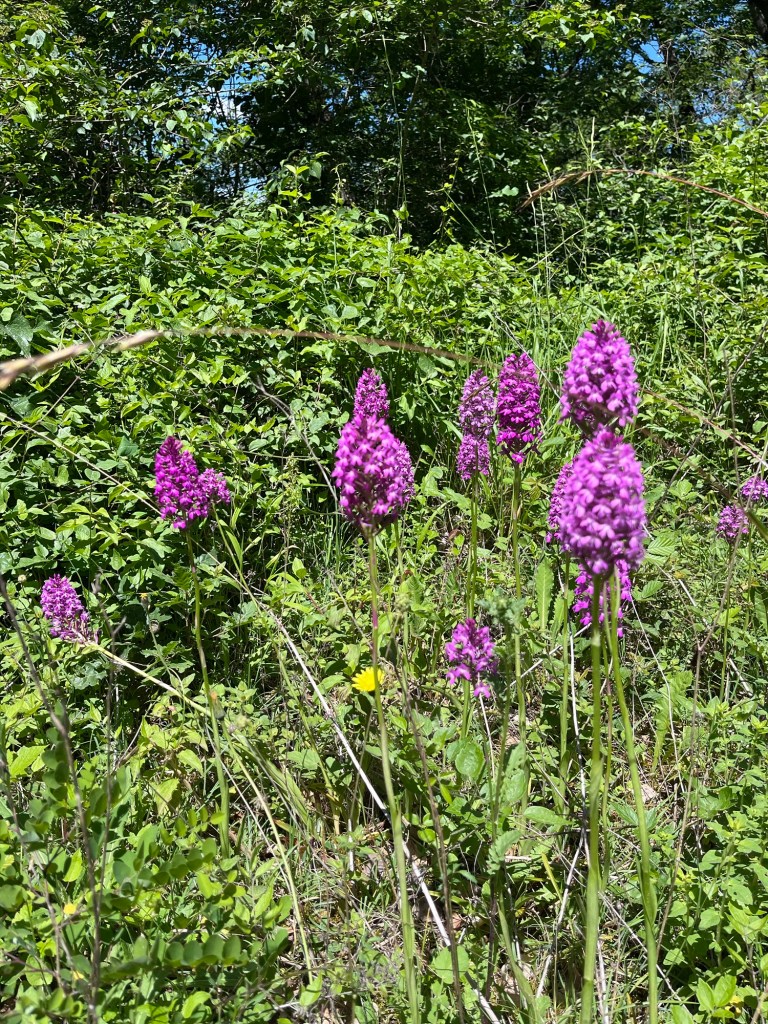
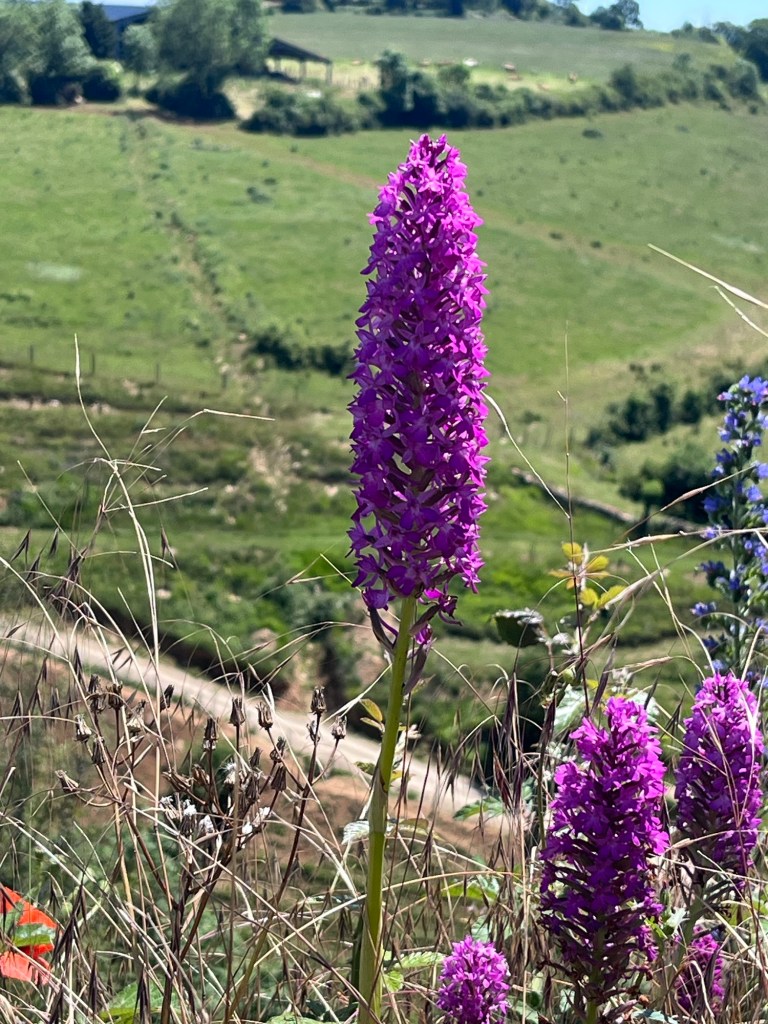
Easily the most numerous and found in stands along roadsides and particularly along the old railway lines we cycled were Pyramid Orchids.
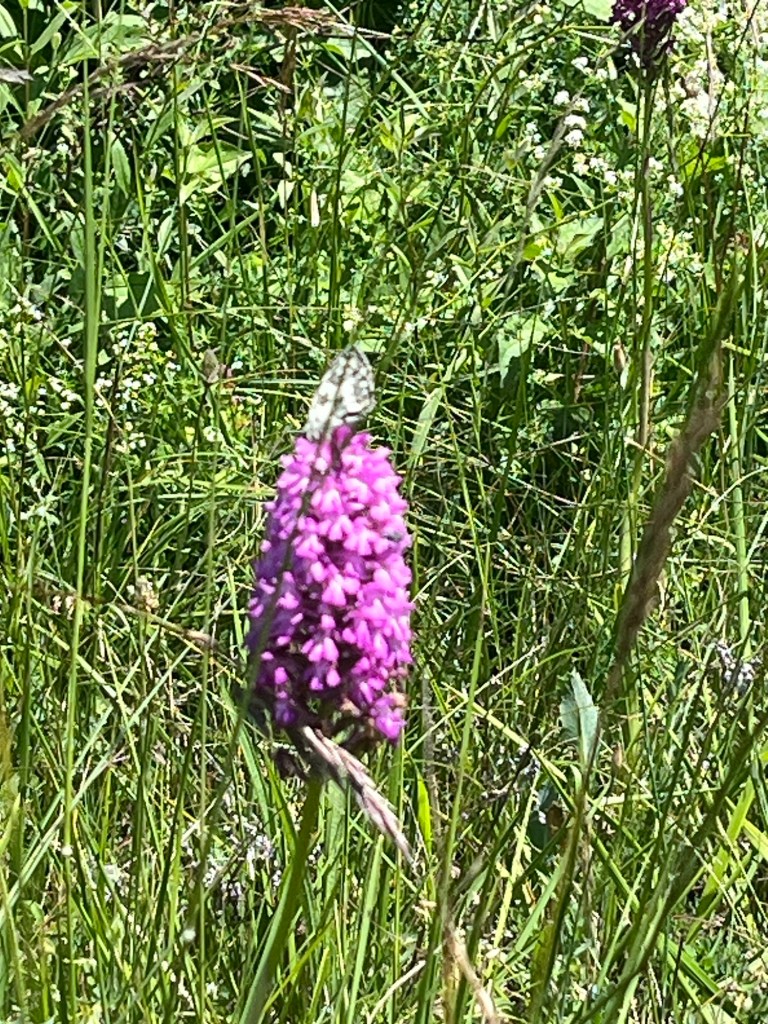
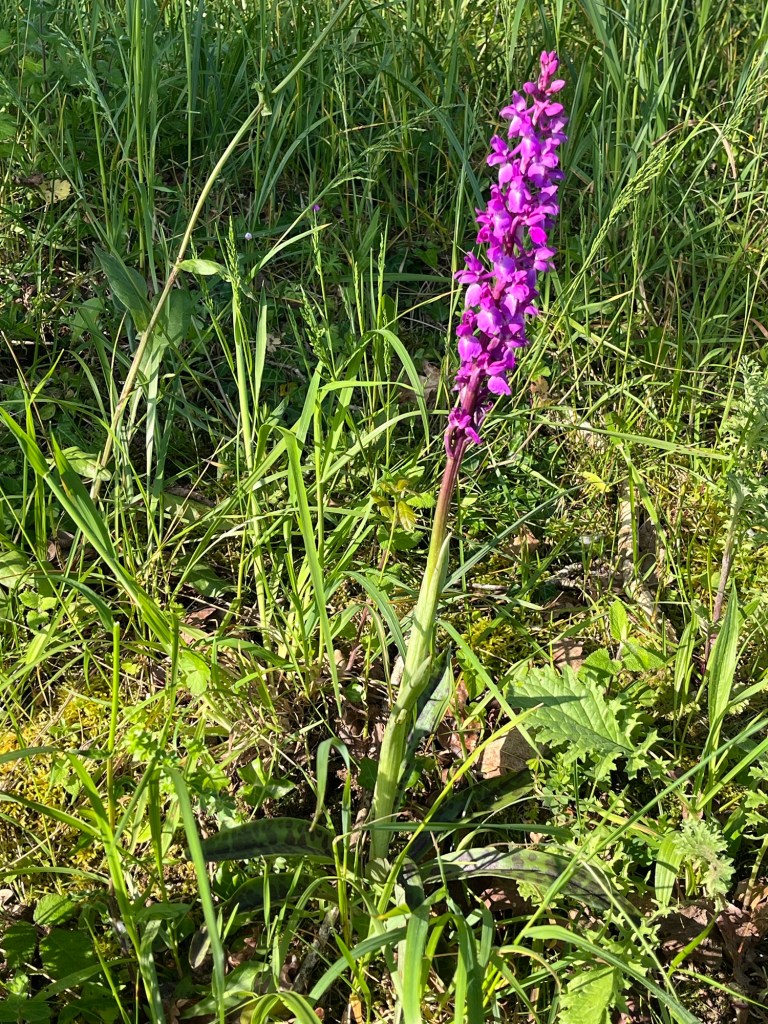
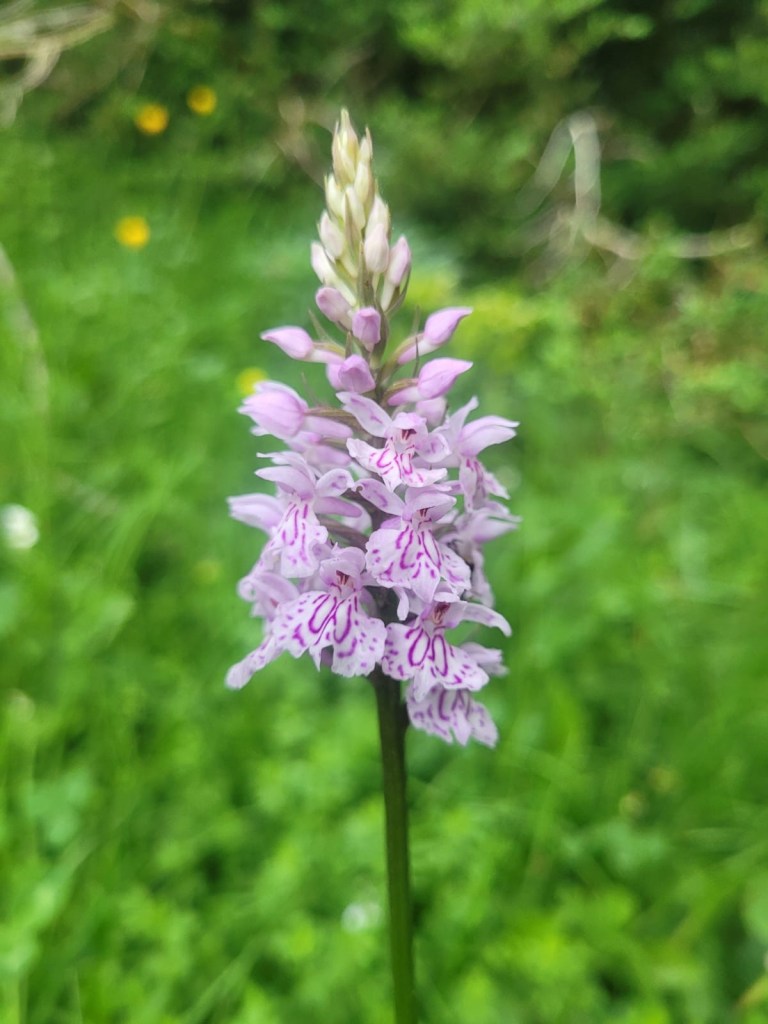
Early on in Spain we spotted this similar coloured to the Pyramid Orchid but distinct species.
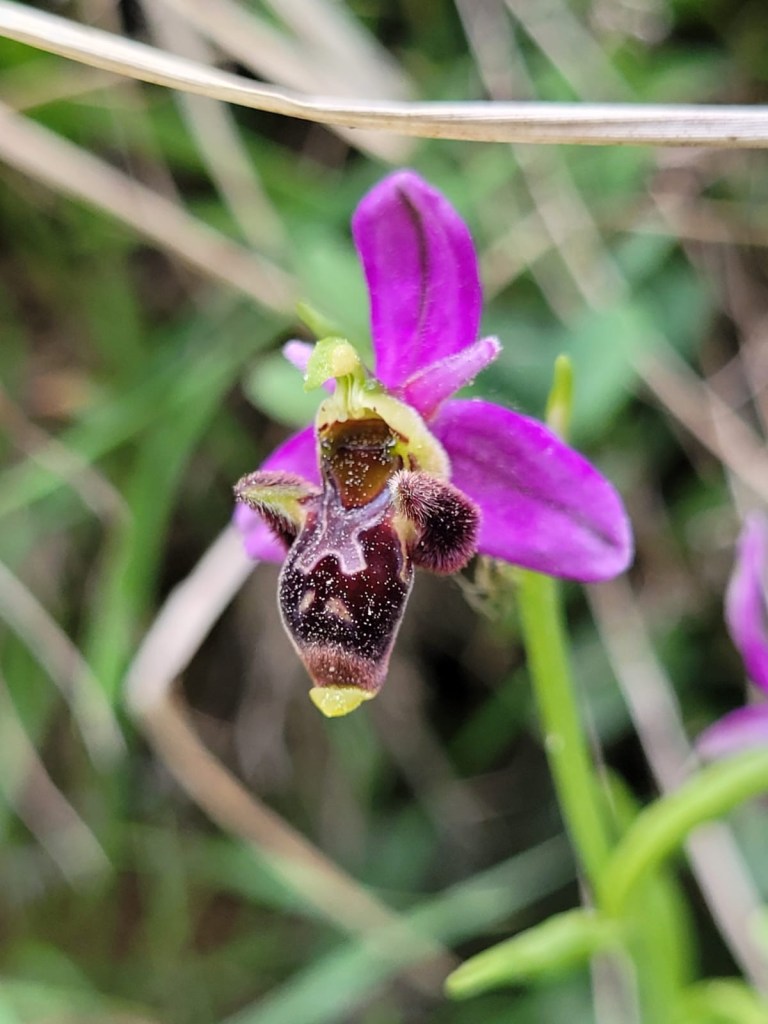
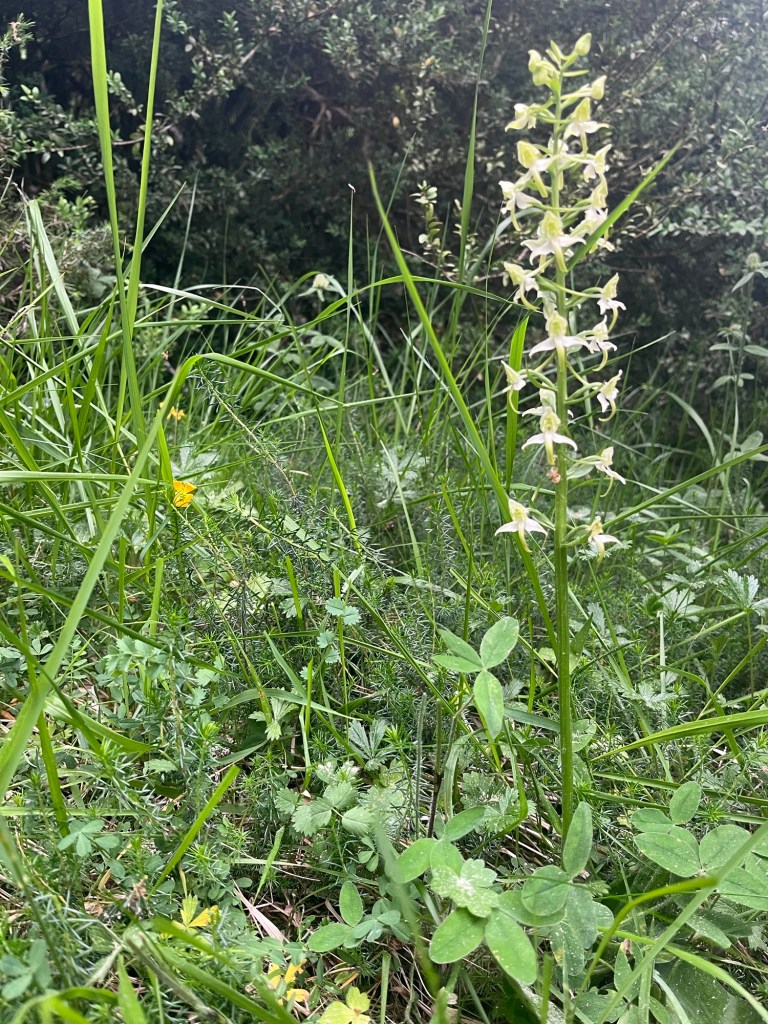
Spotting the Bee and Butterfly Orchids adjacent to one another in the foothills of the Pyrenees was stunning. However I did see them together again a couple of days later in France so wonder if they are unlikely bedfellows.
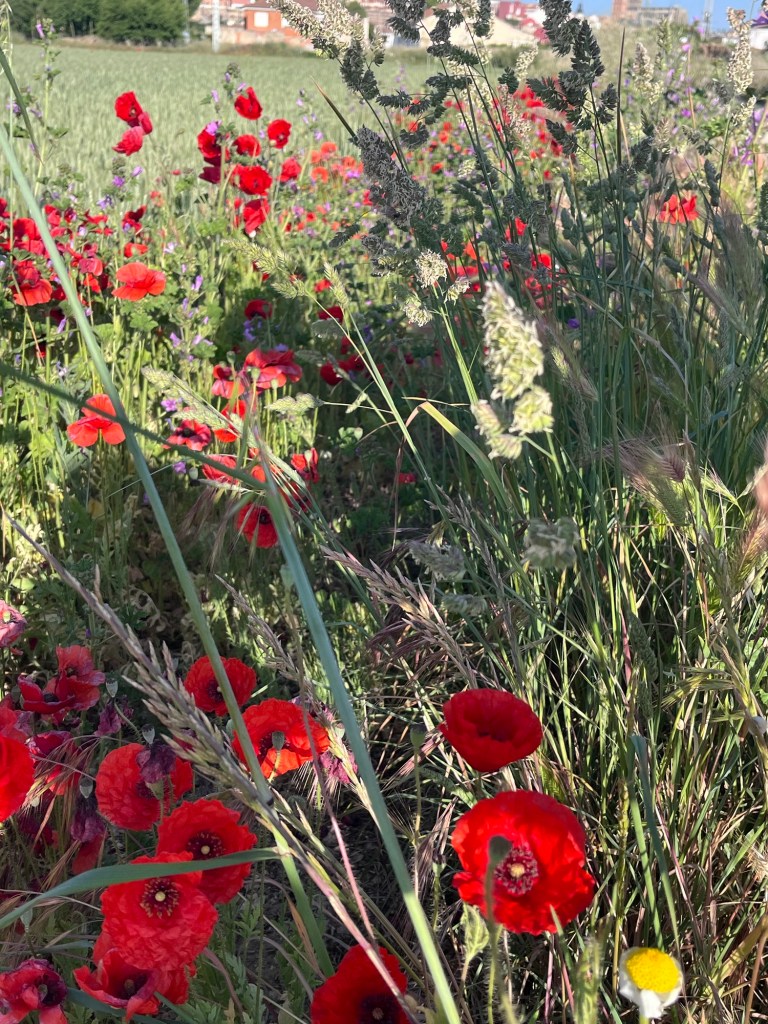
In trying to put this together I was struggling on how to categorise what we saw and make some logic to our sights especially where photos do not really show the true wonder of swathes of single or mixed colours that in normal times you would say should not be put together.
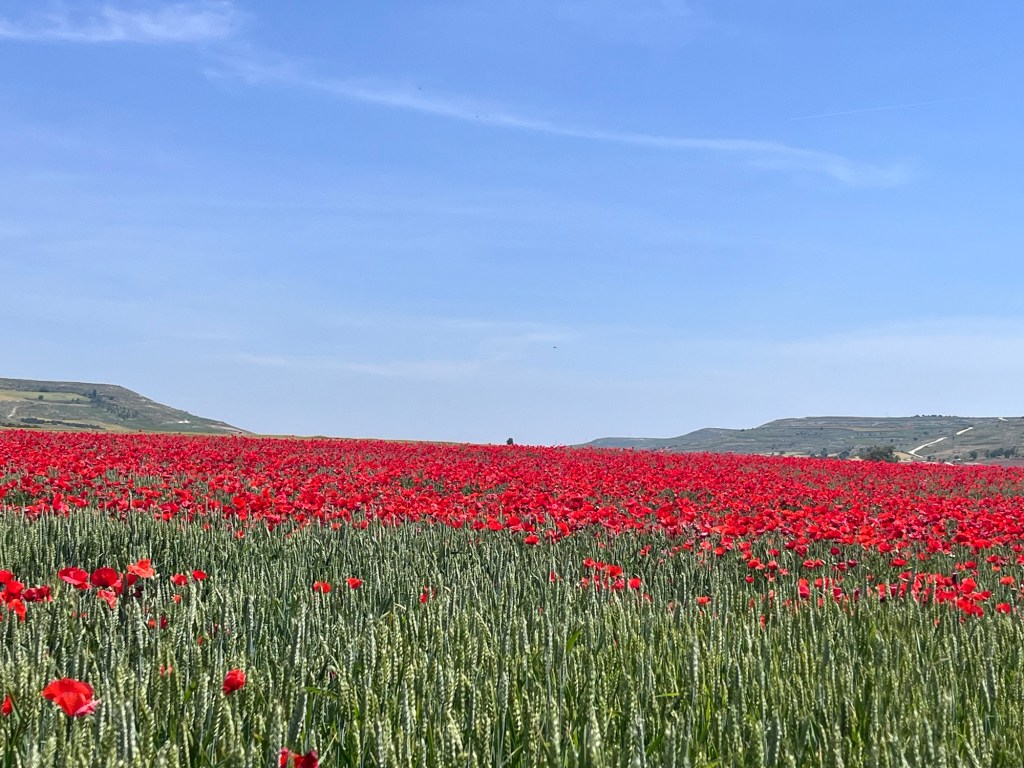
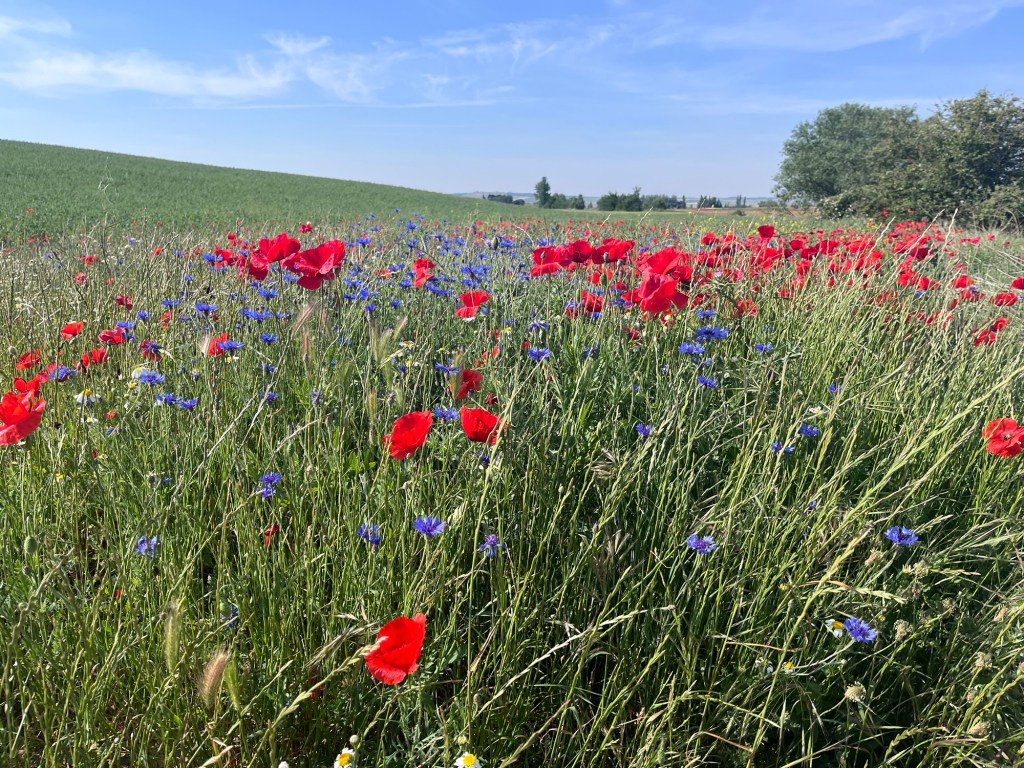
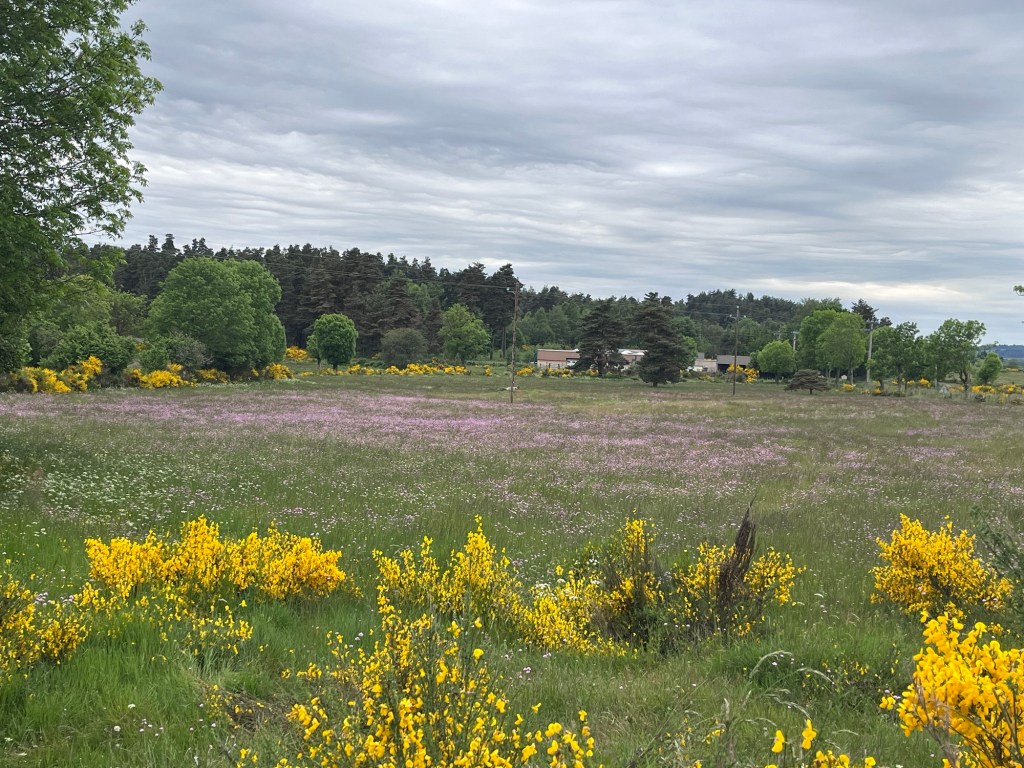
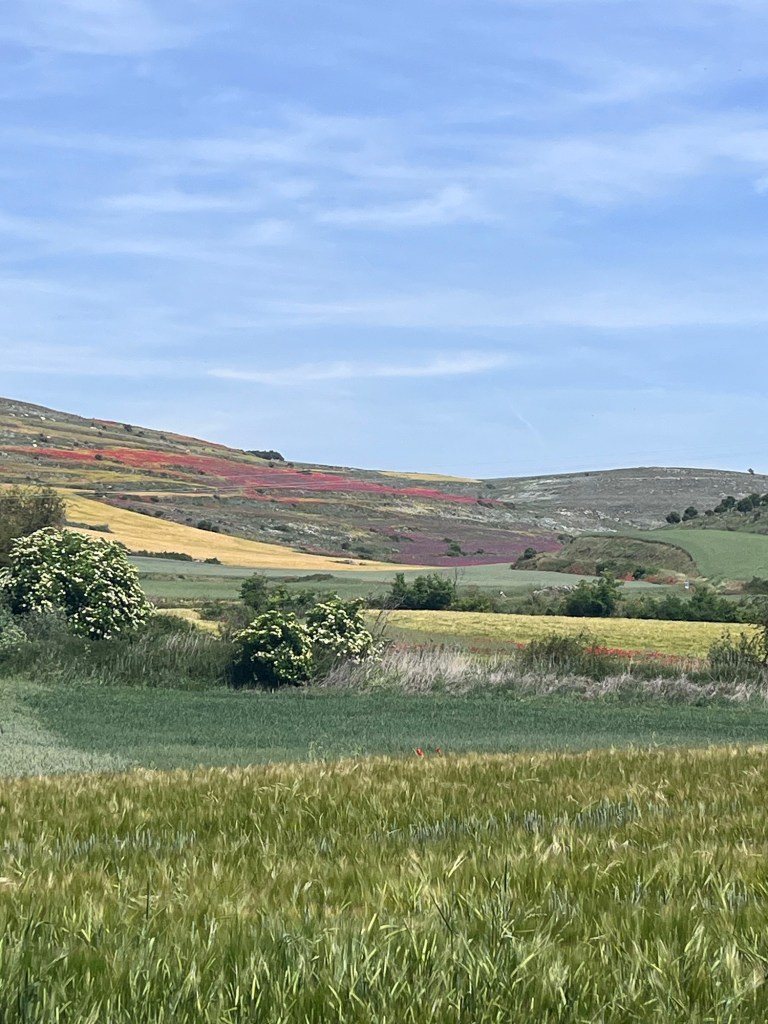
As you can see above the photos are ok but all I can say is that you have to see them in real life to get the proper impact of the swathes of colour in Big open fields.
When we got to the Massif Central it was noticeable that we came across very much more environment specific flowers and plants affected by the cooler temperatures, high altitude and limestone soils.
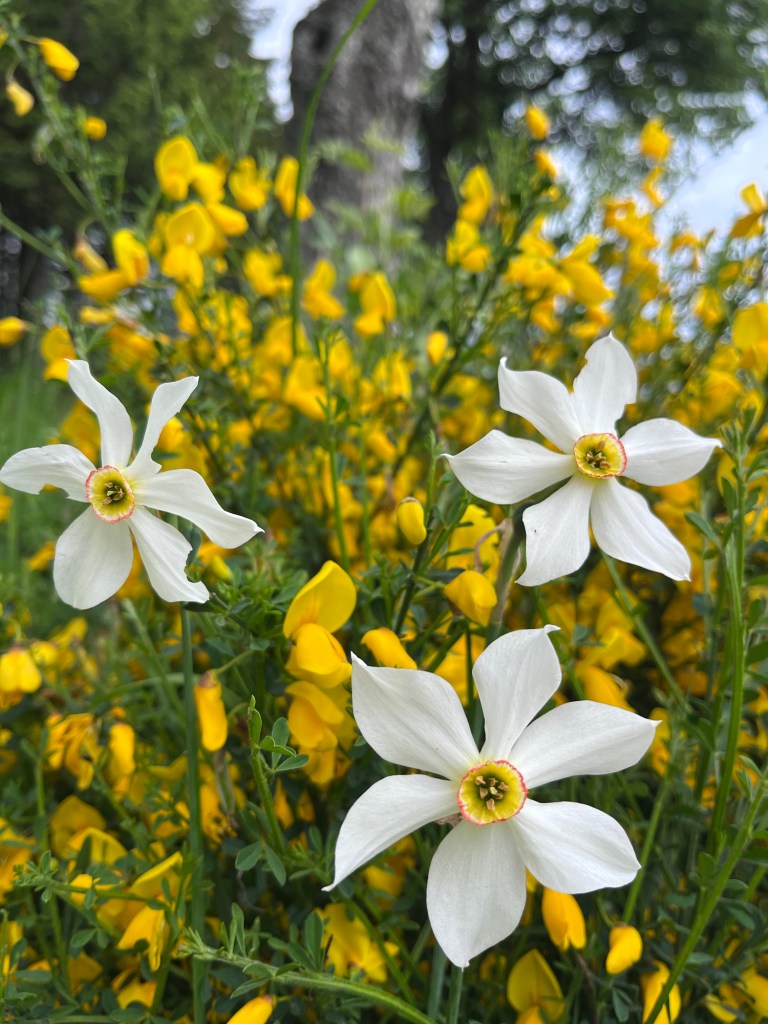
I was pleased we just got to see a few of the last of the wild Narcissus that can fill the high fields in this area after the wild daffodils have faded.
Plants can either be damp loving or stone hugging and we saw both of these types.
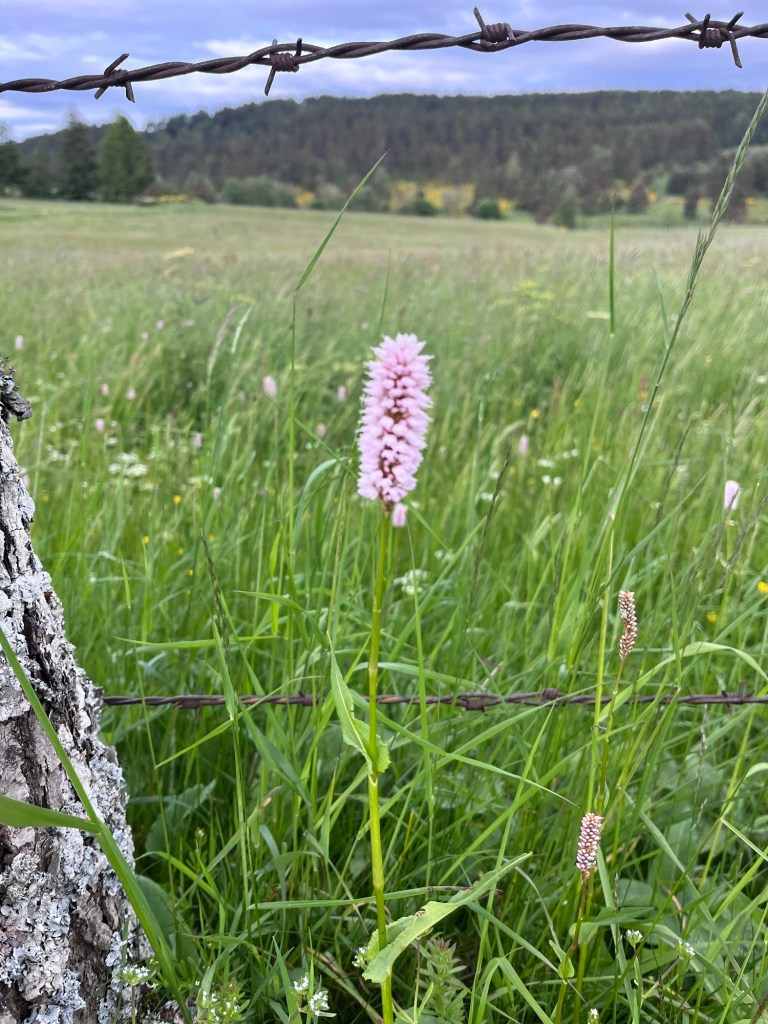
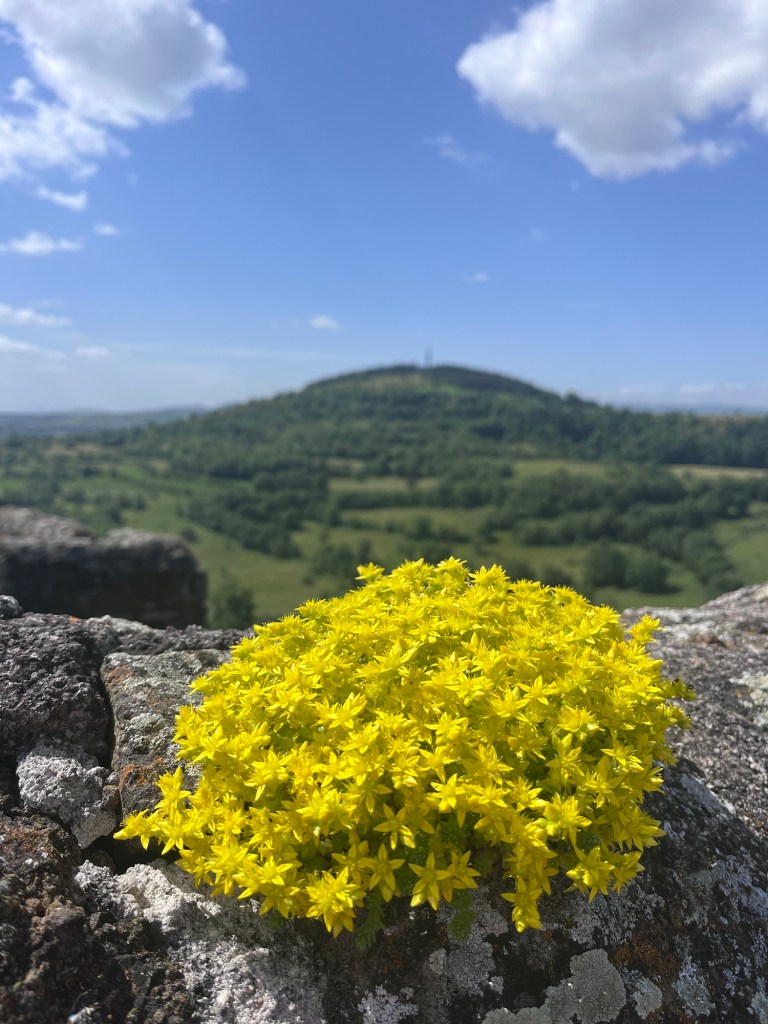
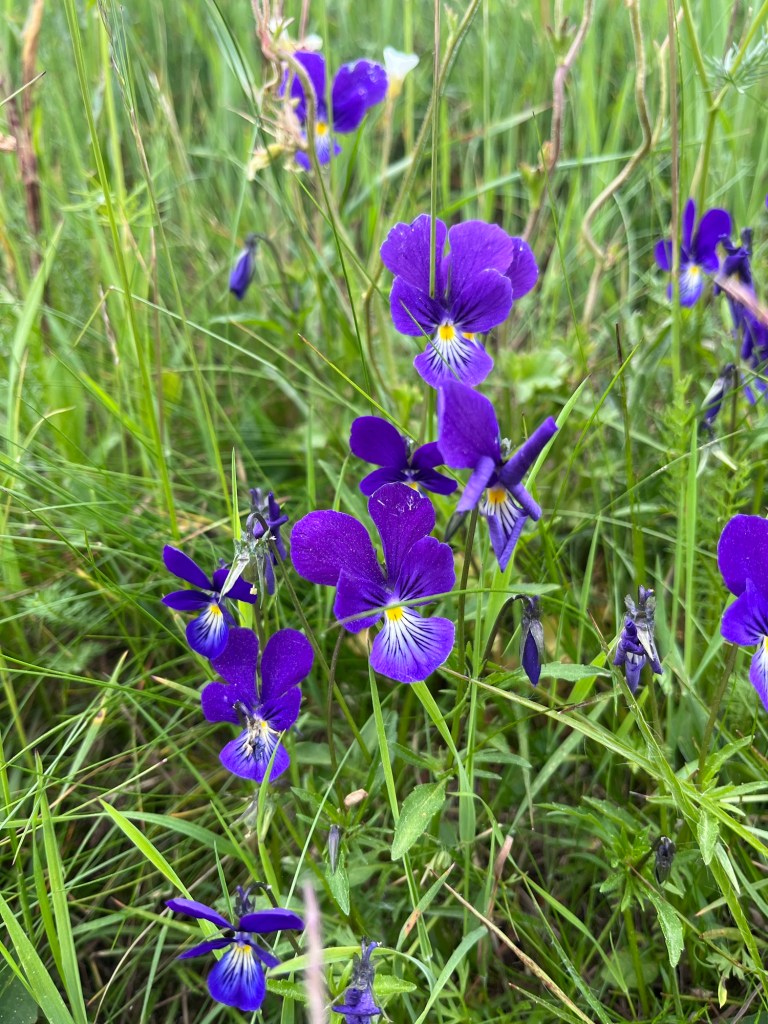
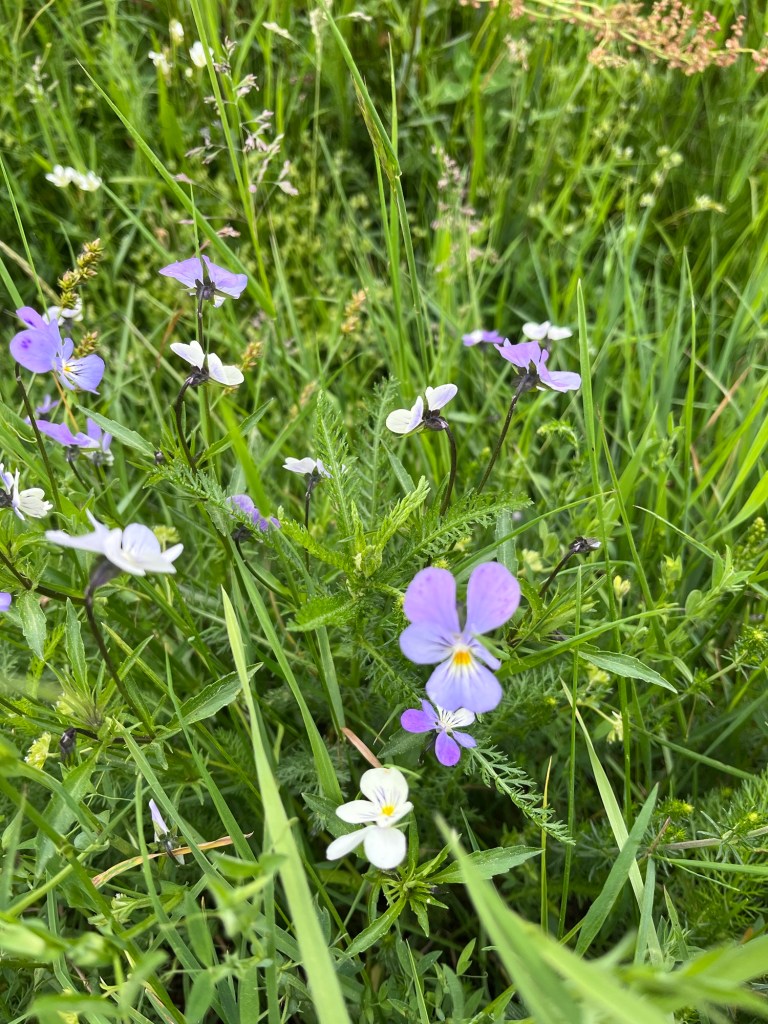
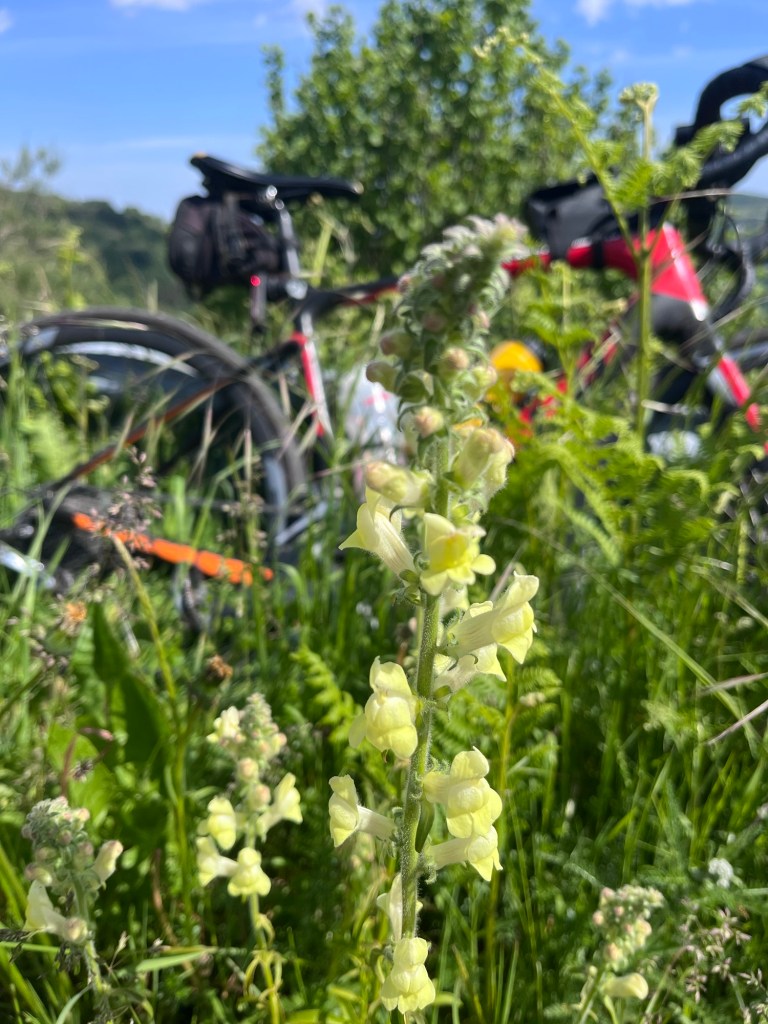
Of course we saw many of the common types of flowers we get back in the U.K. with many foxgloves, campions ( red, white and bladder) but trying to keep to the more exotic or unusual Dom & I spotted this which looked a bit like a foxglove.
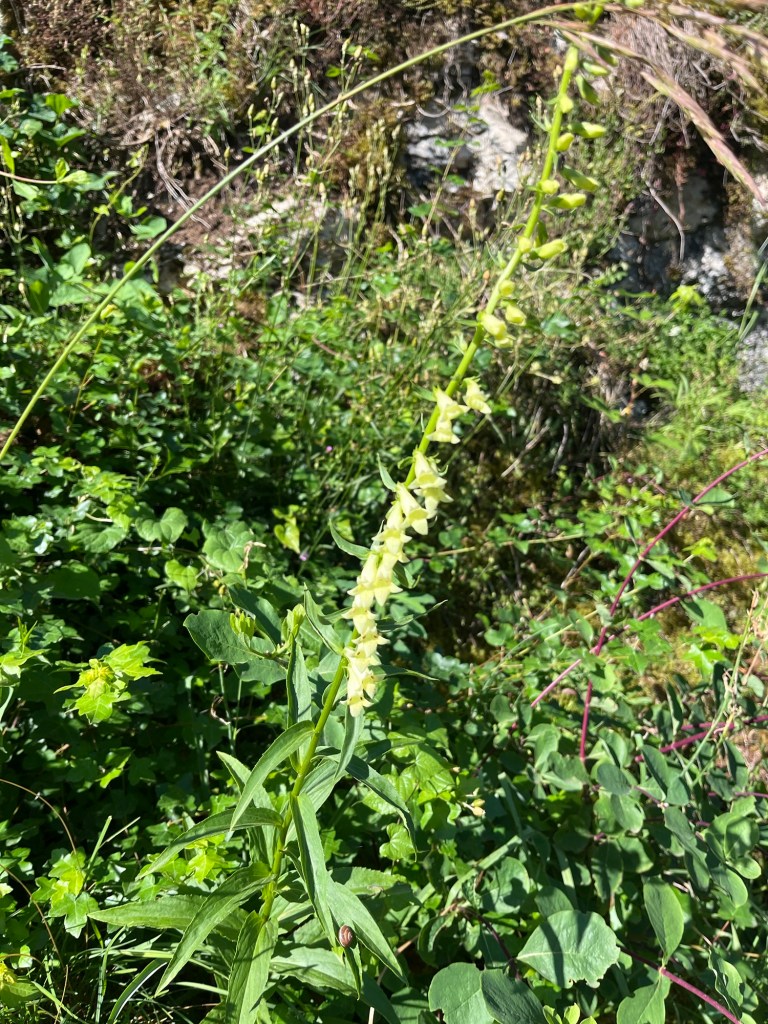
Well it is a small yellow foxglove or Dead Men’s Thimbles, which seems appropriate as it remains full of poisonous digitalis.
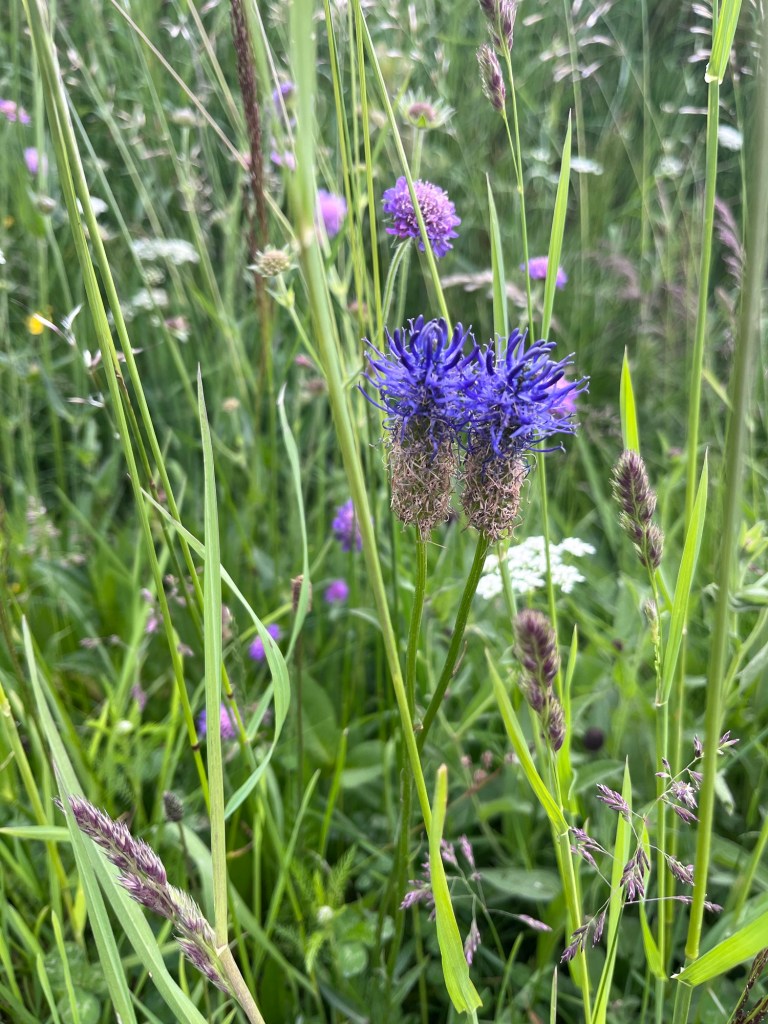
I guess it was the sheer variety and different colours that made us all so aware of what we saw. We do have wild flowers in the U.K. but their numbers are lower and we tend to have many in clumps such as bluebells or oxeye daisies but all along the roadsides in Spain and France different species were vying with one another for superiority.
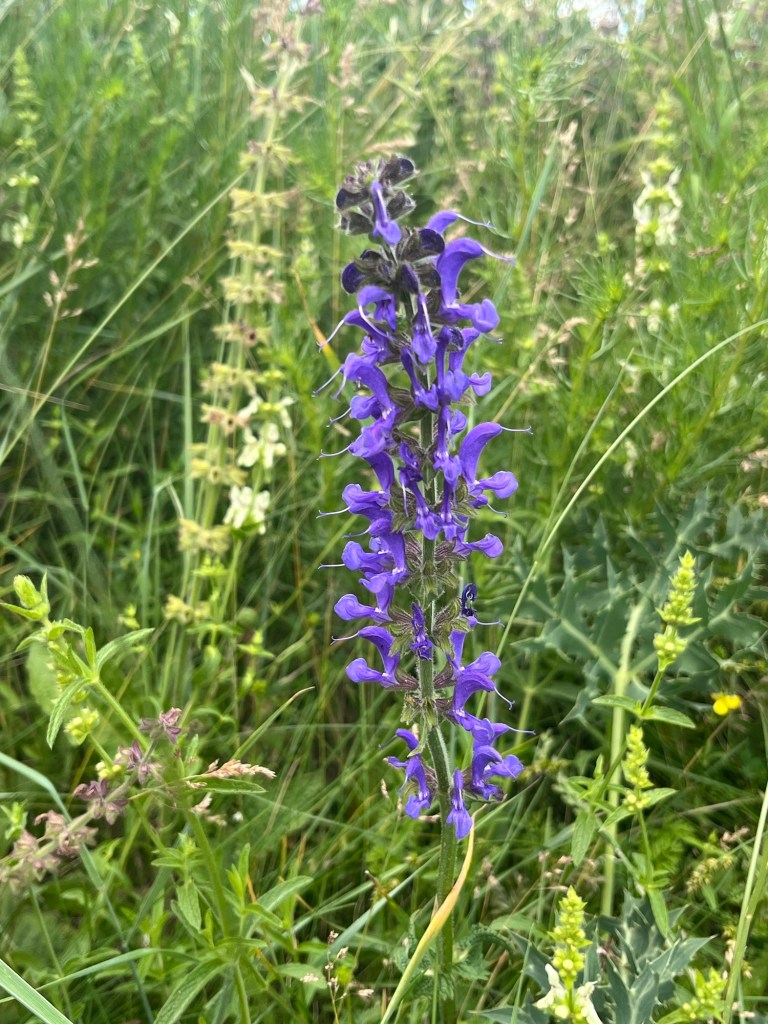
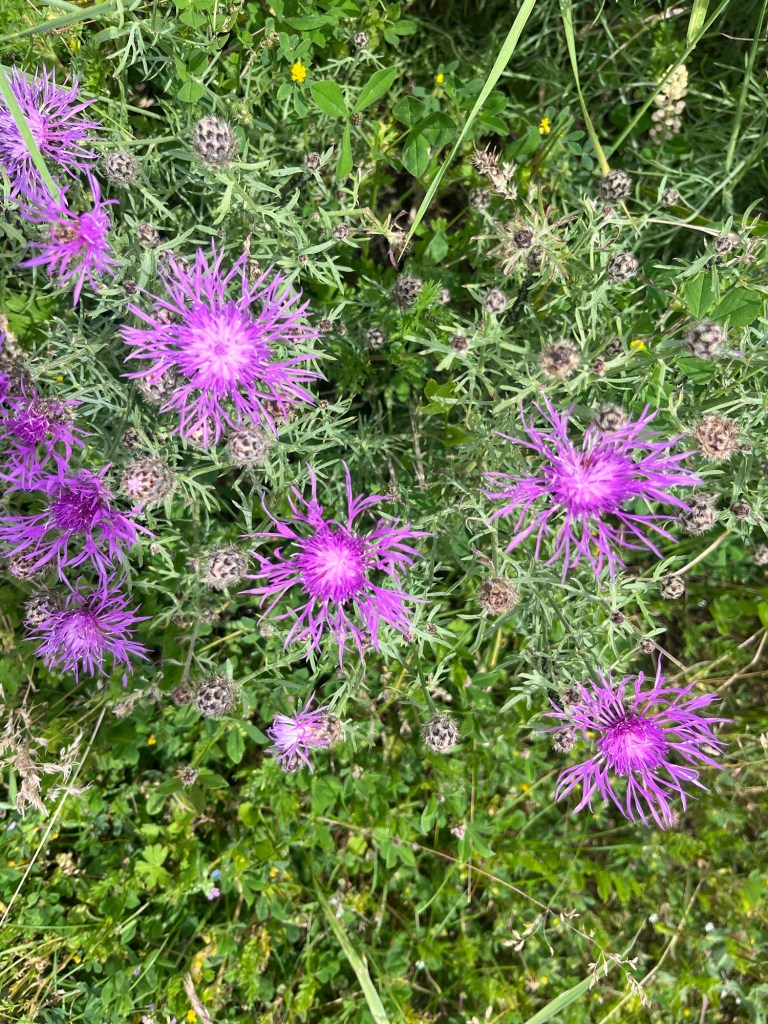
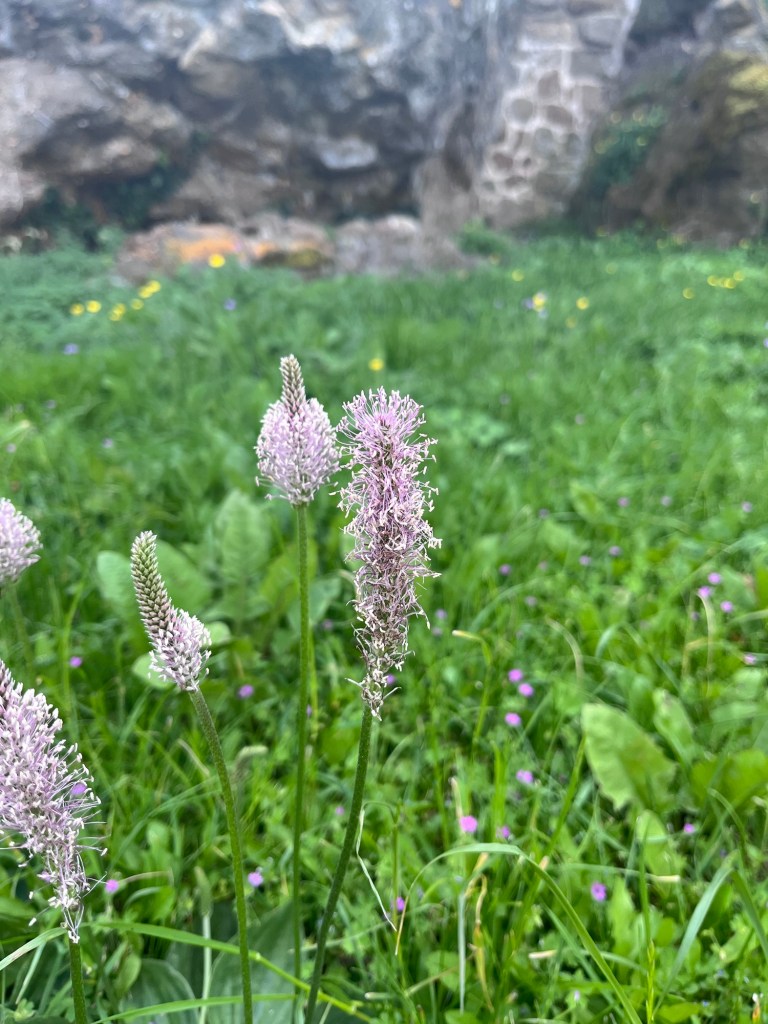
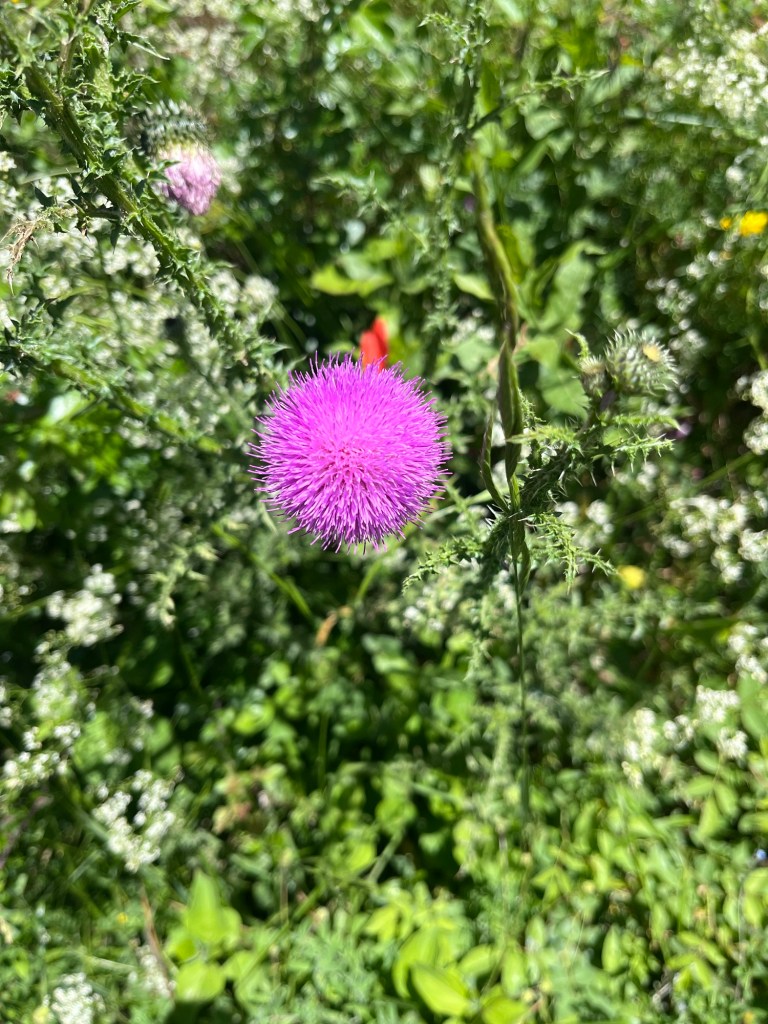
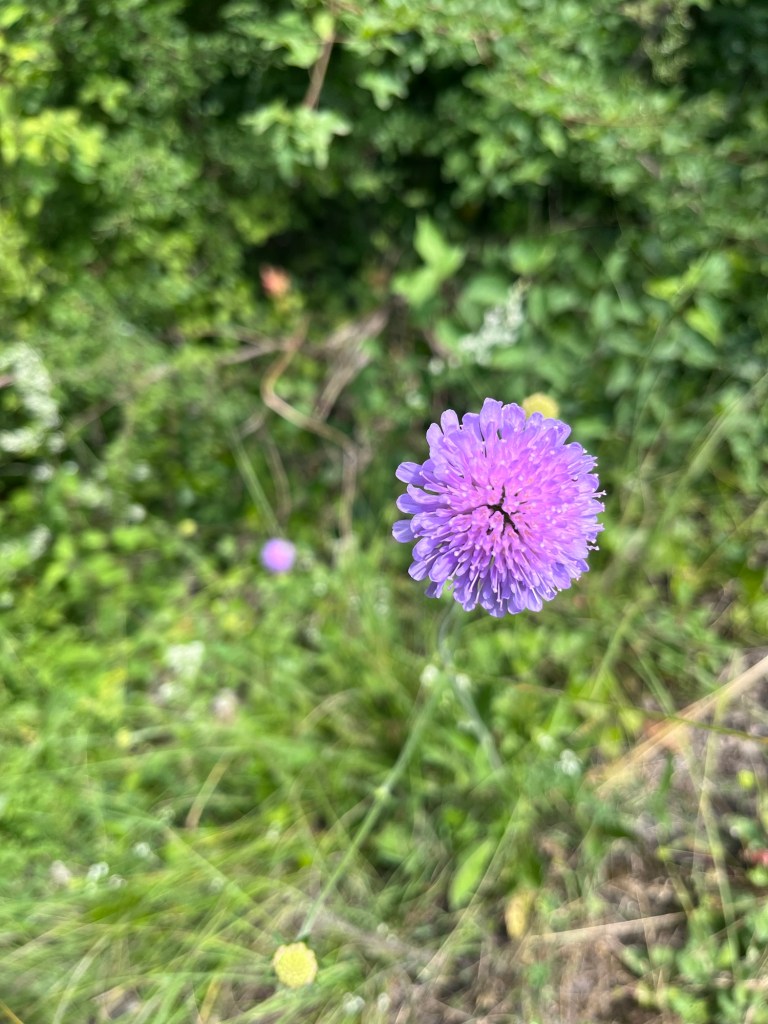
In amongst all these so called wild flowers we saw the ancestors of many of our coveted garden favourites.
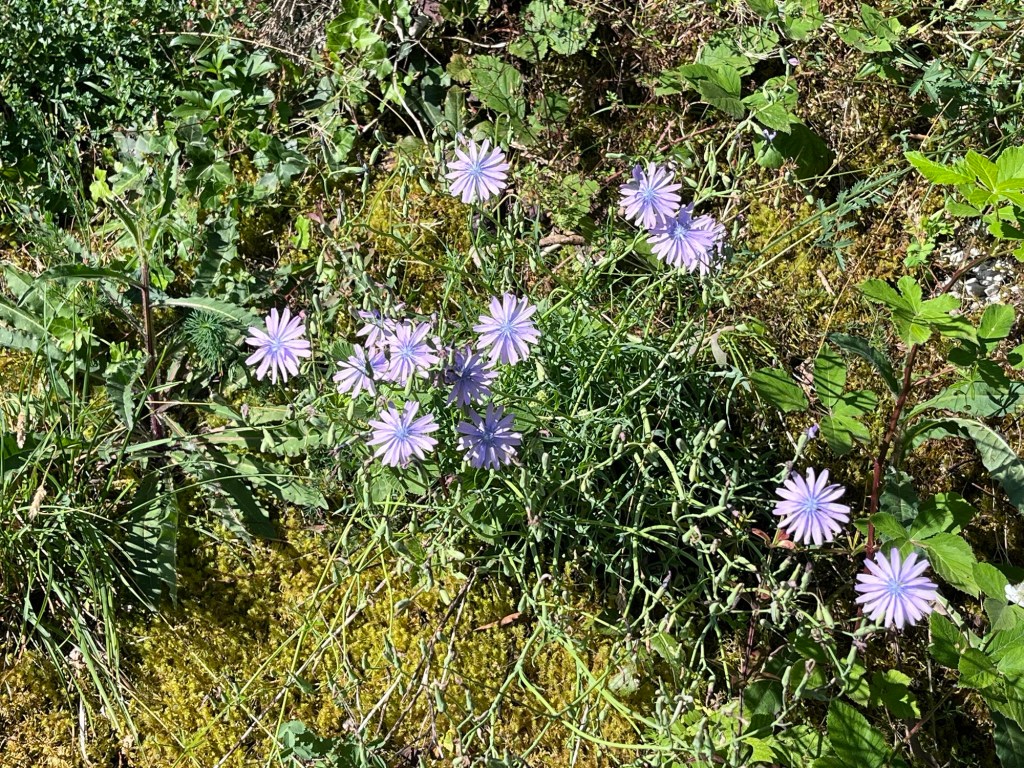
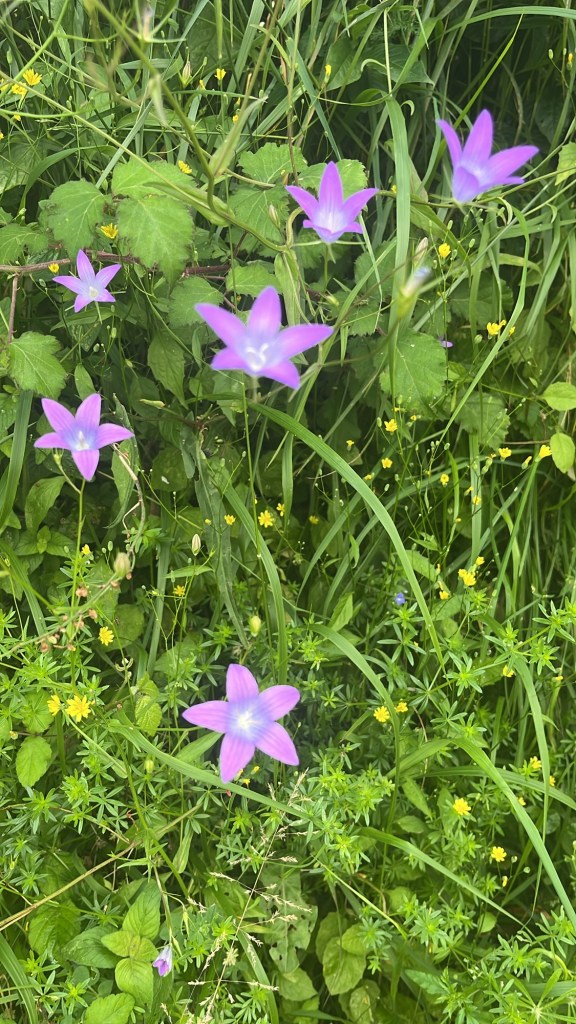
There were many varieties of the legume (pea) family which were normally yellow or pink but are characterised by the shape of their flowers.
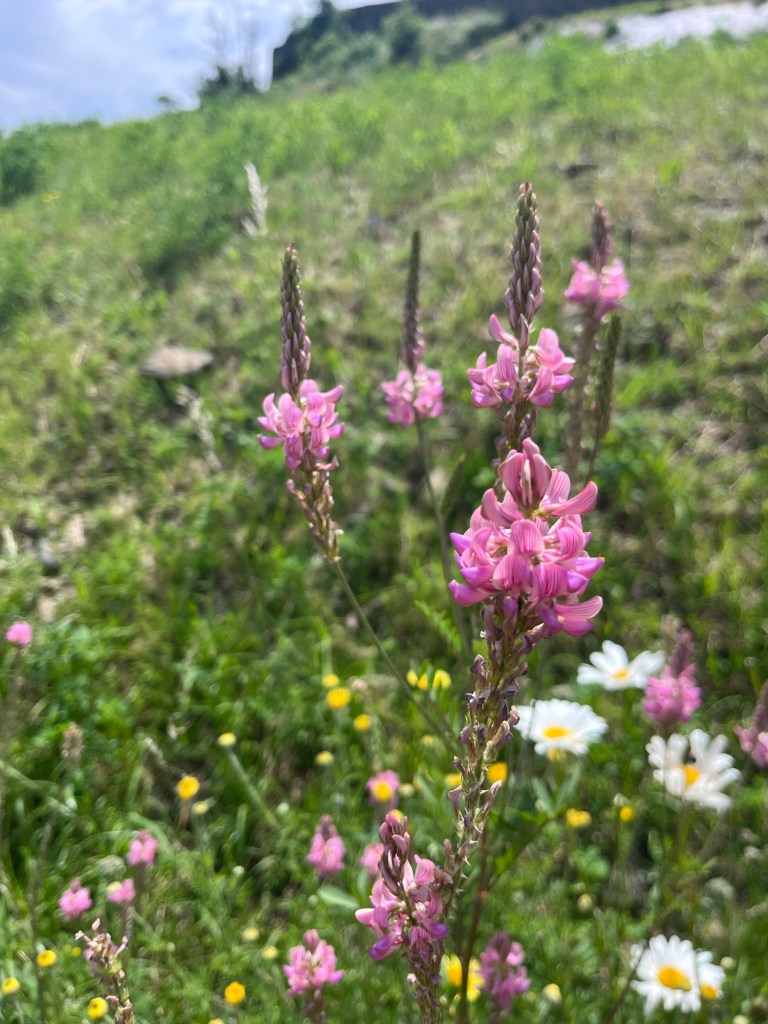
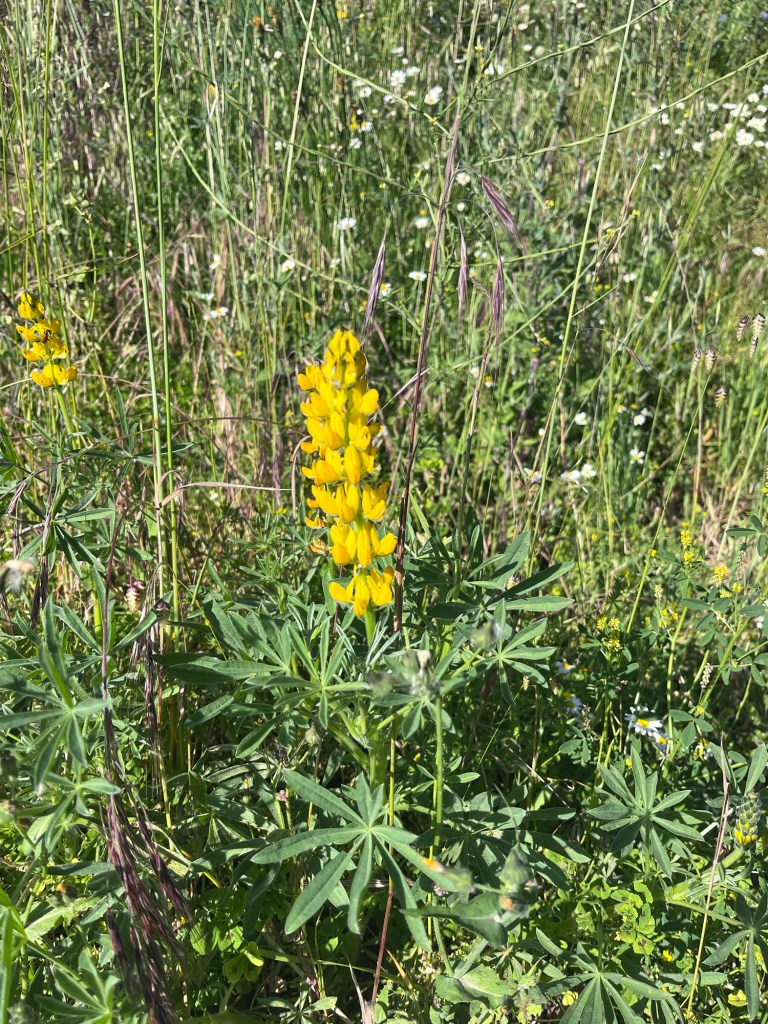
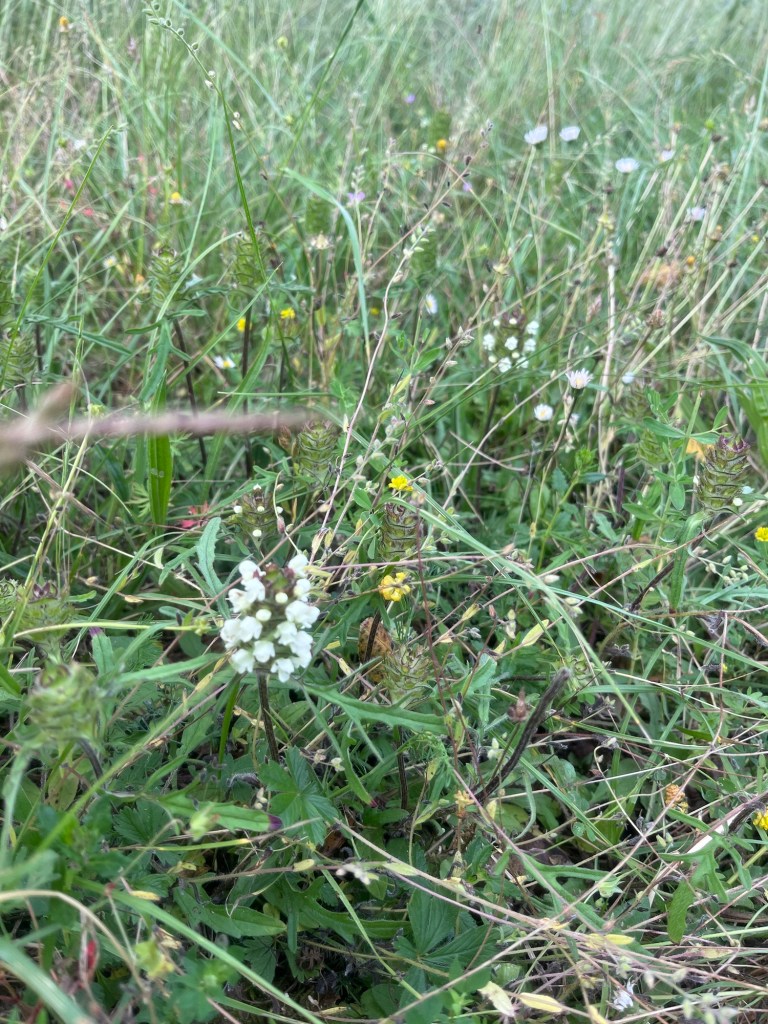
Obviously many of these plants had medicinal or herbal uses judging by their historical names.
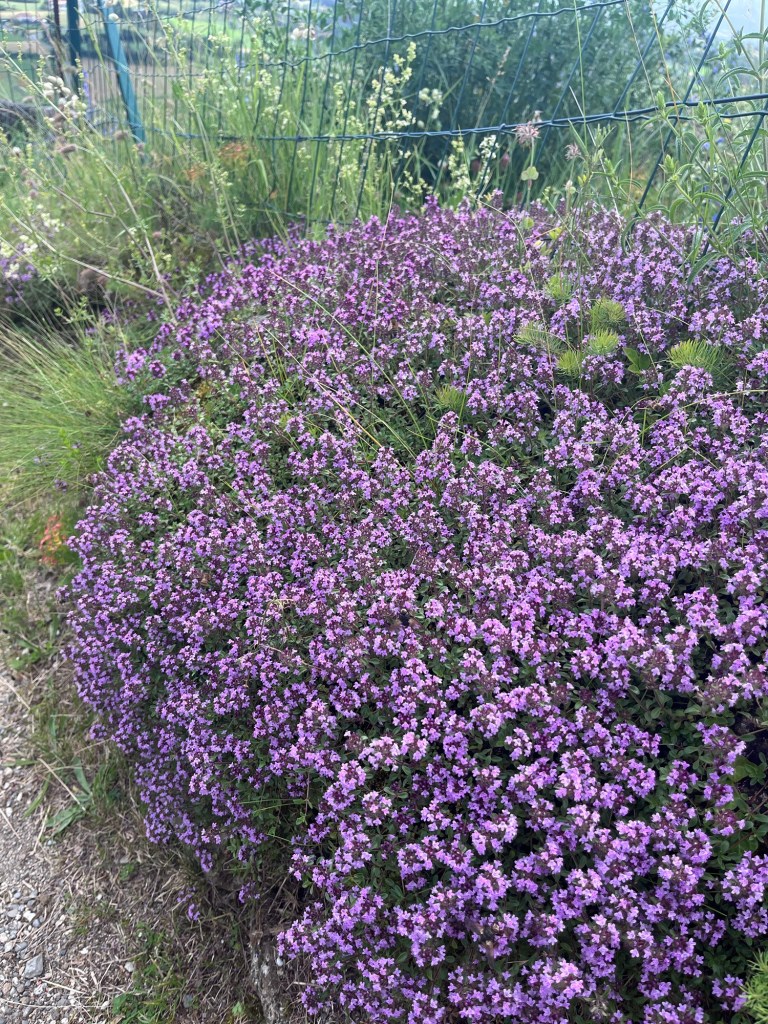
Thyme, Fennel and mint were often by the roadside and their distinctive scents rose if crushed whenever we wandered onto the verges.
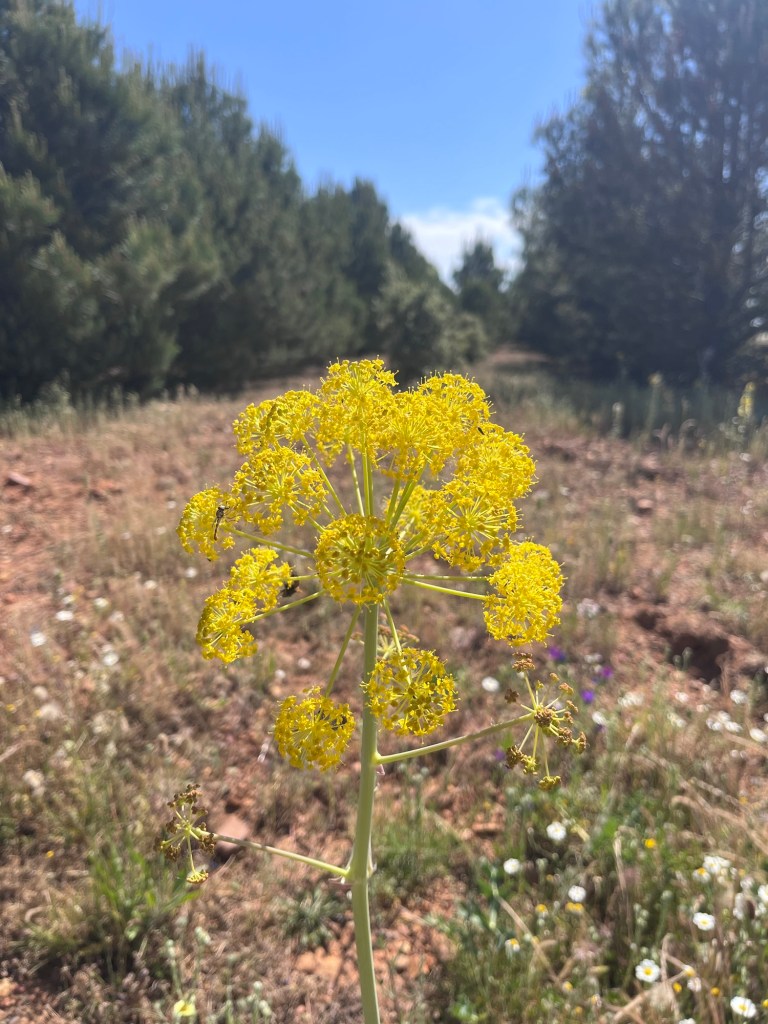
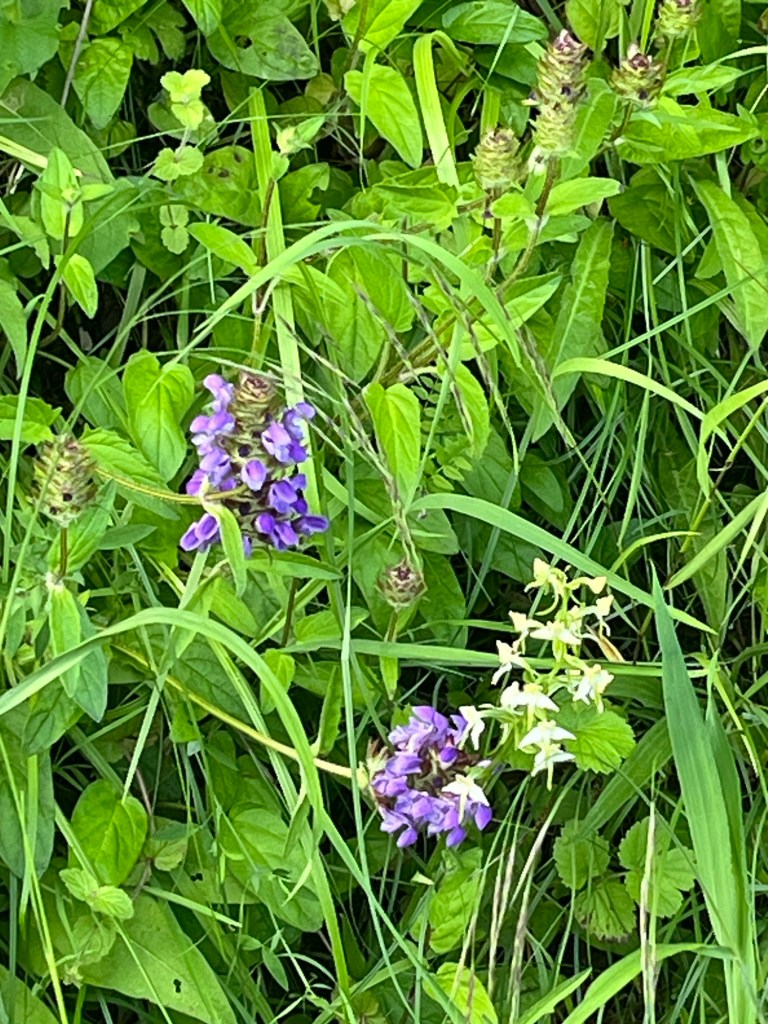
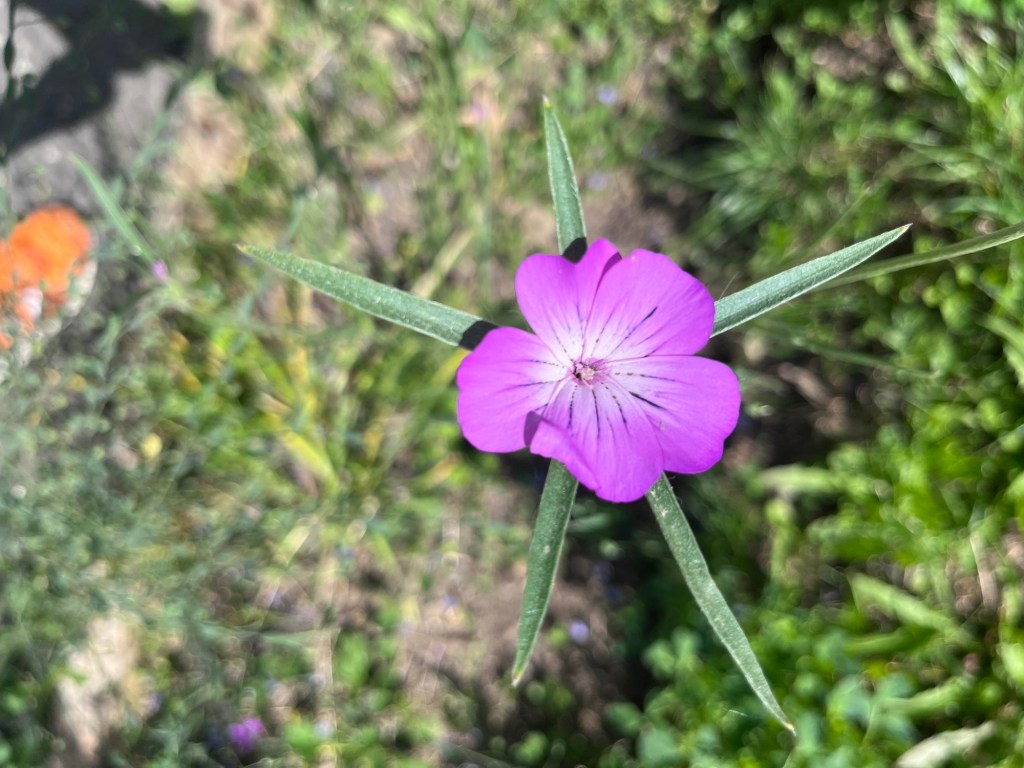
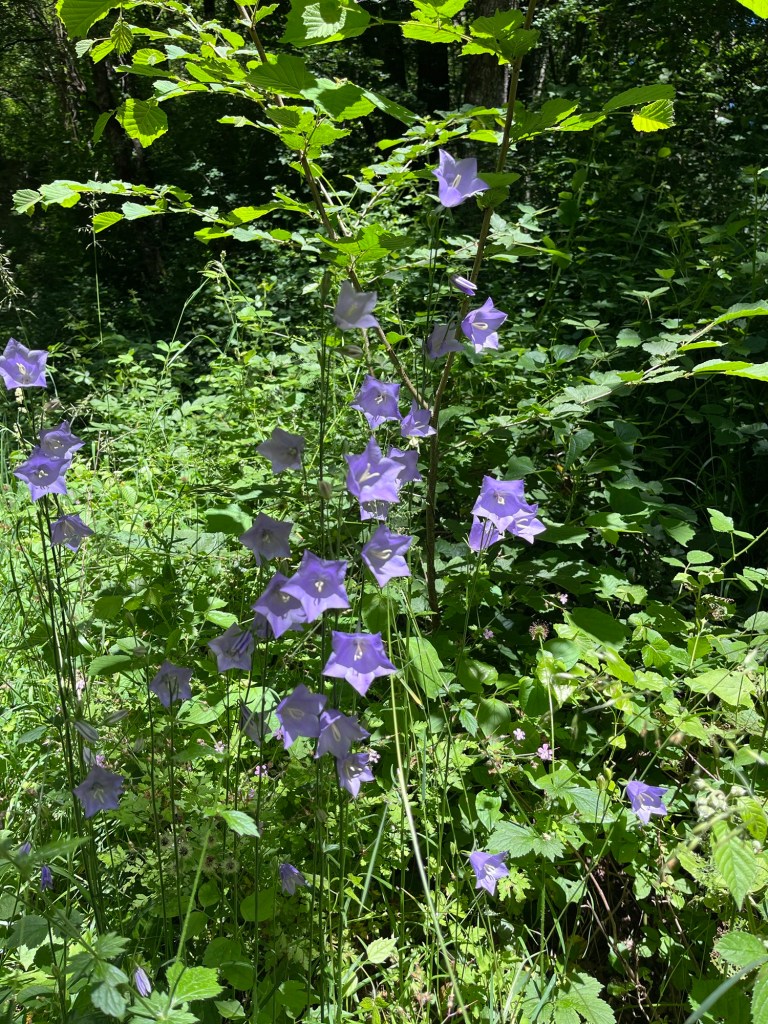
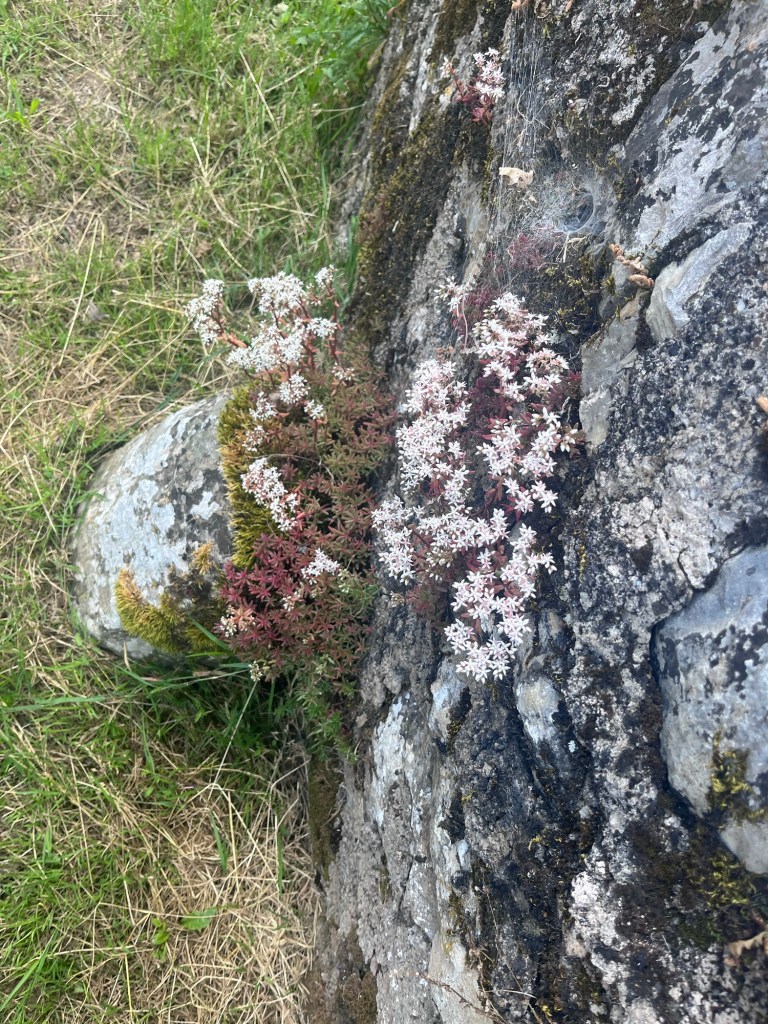

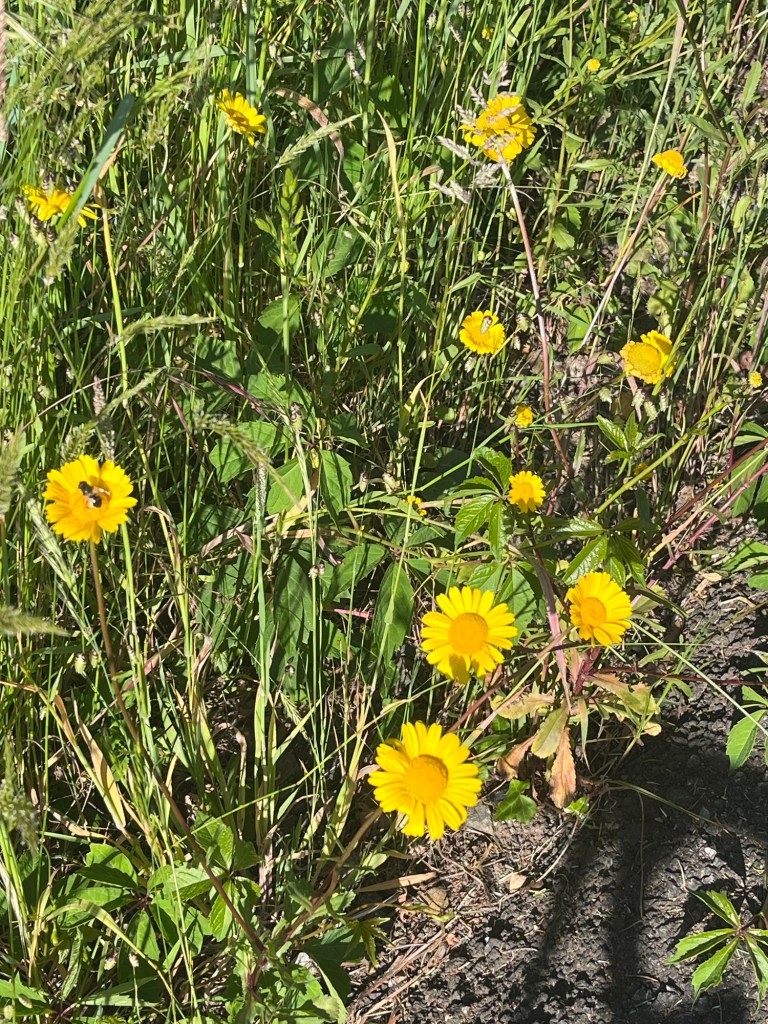
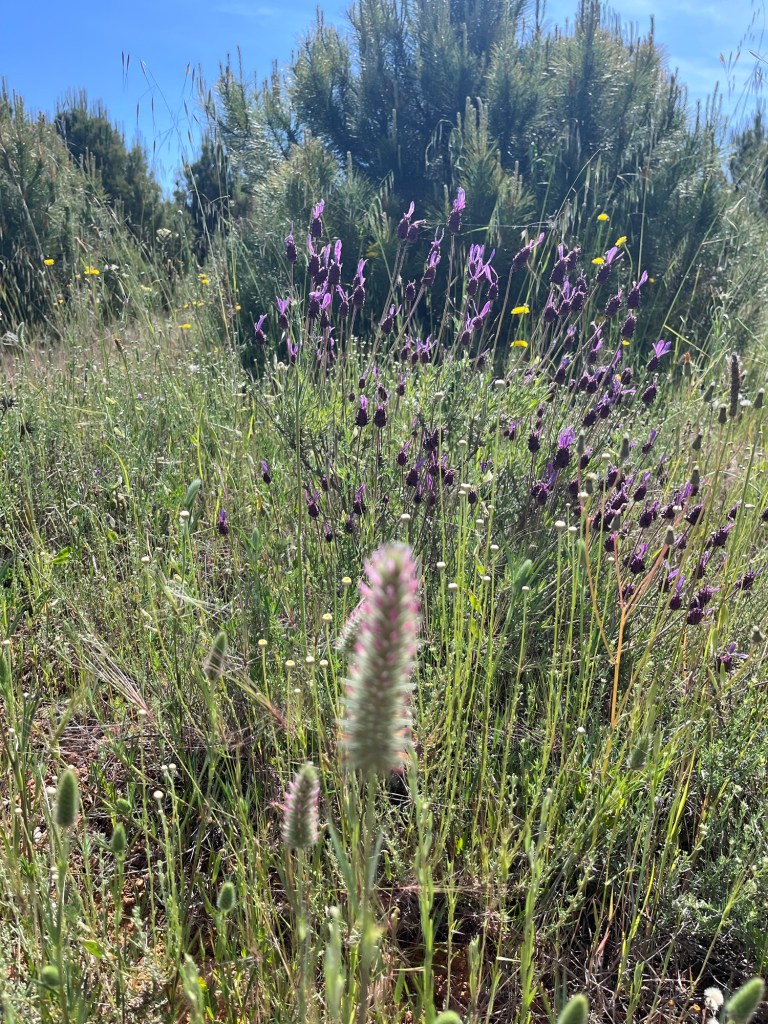
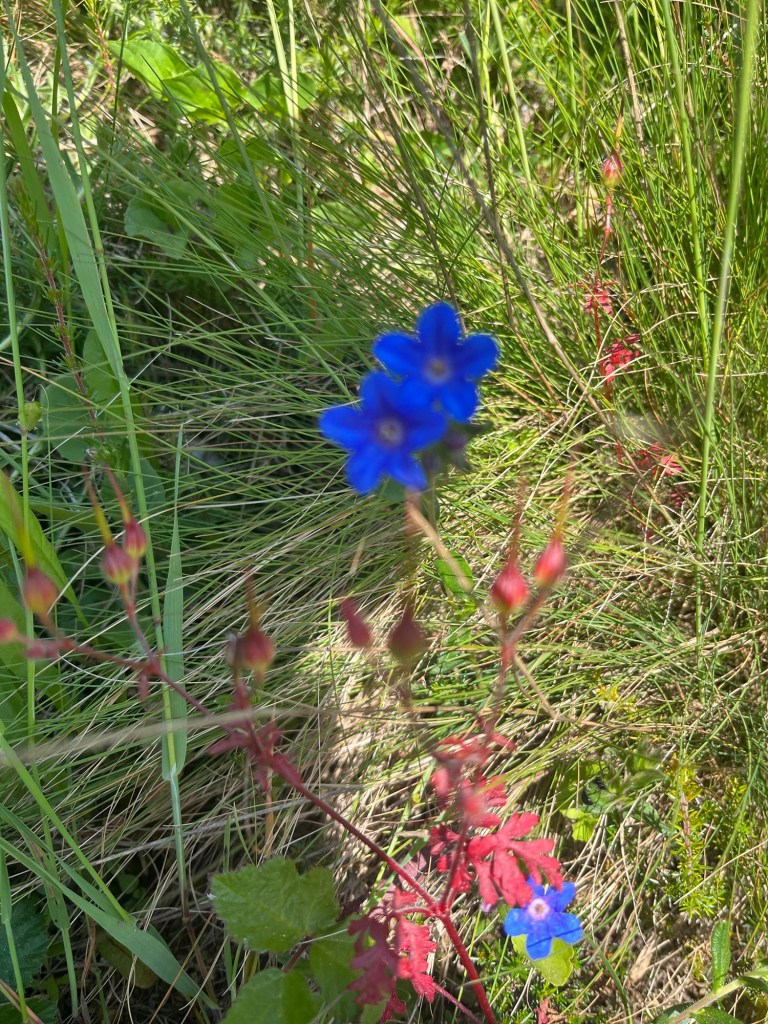
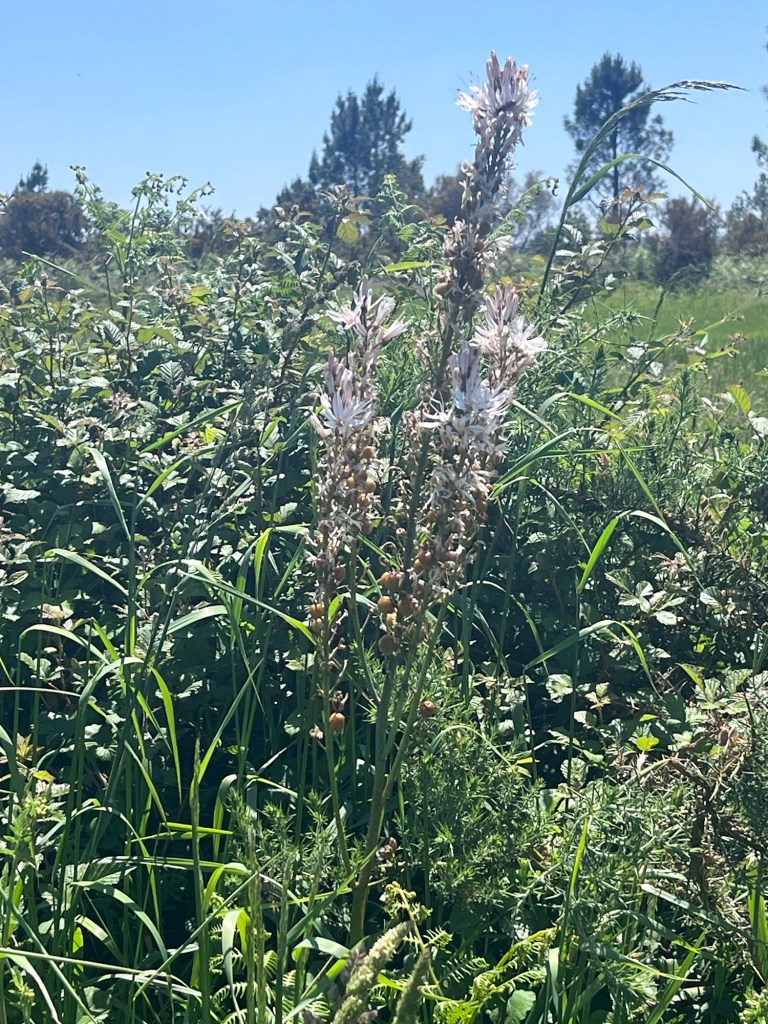
There were many other flowers too, including familiar ones such as forget me not, vipers bugloss, speedwell, daisies and buttercups to name a few, but I don’t just want to send a load of pictures. However what these do show are the variety colour size and shape of the wonders we saw.
Undoubtedly this was in part because we travelled in late spring/ early summer, next year we will either be riding in late June or early. September so may not get the same diversity.
Plants look great in gardens but when you see them in the wild naturally drifting and mixing together or creating red, blue, yellow, pink or white fields that is truly wonderous. You just have to get out there on your bike to go see it. ( or enjoy our magnificent bluebell woods)
I hope you enjoyed this extra edition, I’ll leave you with this photo of a truly magnificent Pyramid Orchid that would grace any garden and put most flowers in the shade- almost literally as it was so big!
See you next year.

 nbjtours
Loved this, Neil. I felt I was there with you.
Lots of love, Loulou x
Sent from my iPhone
LikeLiked by 1 person
Thanks Lou. Glad you enjoyed it. Planning underway for 2025. Off to Paris later this month. Volunteering at the Olympics and Paralympics- should be fun.
LikeLike
Great blog Neil. So easy to forget all the wonderful flora and fauna we see.
>
LikeLike