
Thanks to strong demand ( Roger) I am writing this special blog bringing together some of the natural highlights of the tour.
One of the great things about cycling is that although you can cover a good distance in a day, you can also cover varied terrain and all whilst being relatively quiet and close to nature so that you can feel and smell as well as see. It is also usually easy just to stop at the side of the road to take a photo without holding anyone up. The only exception being when hurtling down a mountain at 30+ mph.
My interest in all things natural must be thanks to the influence of my mum, as I still recall on a summer holiday in the south of France when I was under ten collecting and pressing some wild flowers in the hills around Draguignan. I remember to this day that the fields were full of butterflies I have therefore annoyed the others by constantly stopping or exclaiming about the latest sight.
Insects
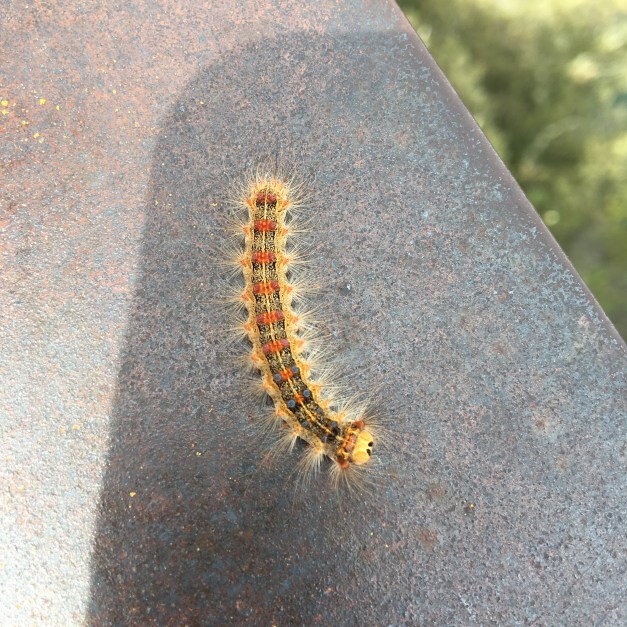
This hairy little chap in the Nesque gorge was one of the rare insect photos. Butterflies have been more numerous than at home and I did see a couple of swallowtails and marbled whites as well as some more common types.
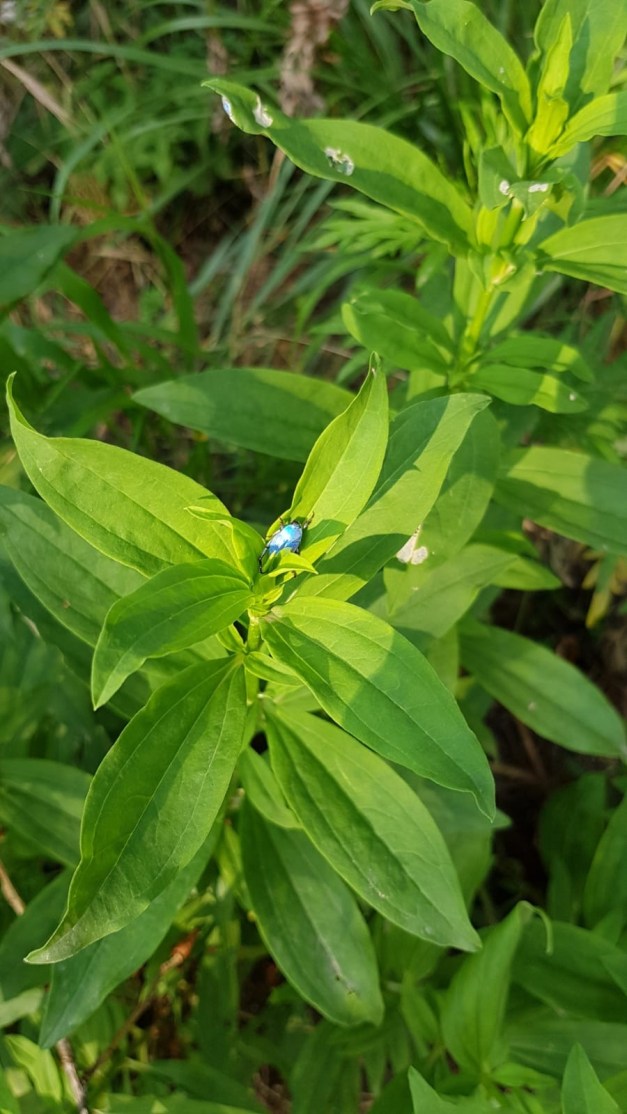
This photo of a metallic blue beetle doesn’t do it justice. Nick was so taken with it at Aubenas that he kept it as a pet until it flew away.
Of course crickets & grasshoppers abound and we also saw a few large dragonflies. The other thing to note is that the mosquitoes in the Camargue are especially large and aggressive so if you do come down this way please cover up.
Mammals, Reptiles and Amphibians
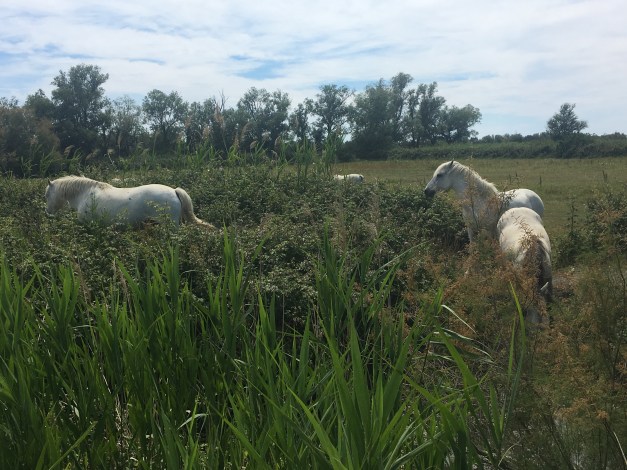
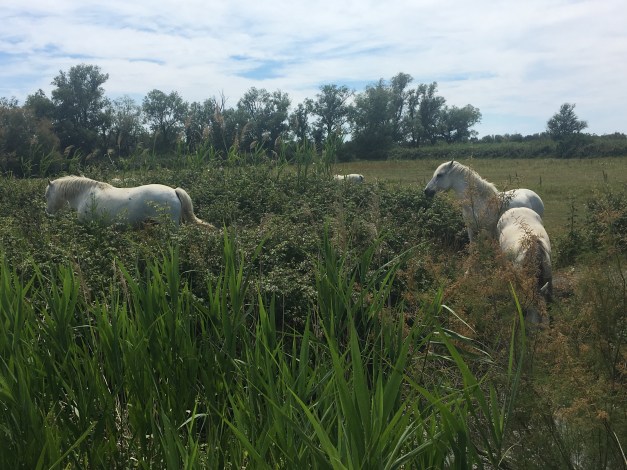
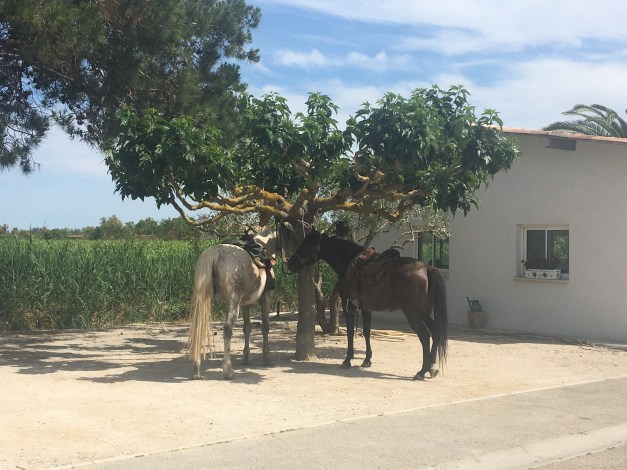
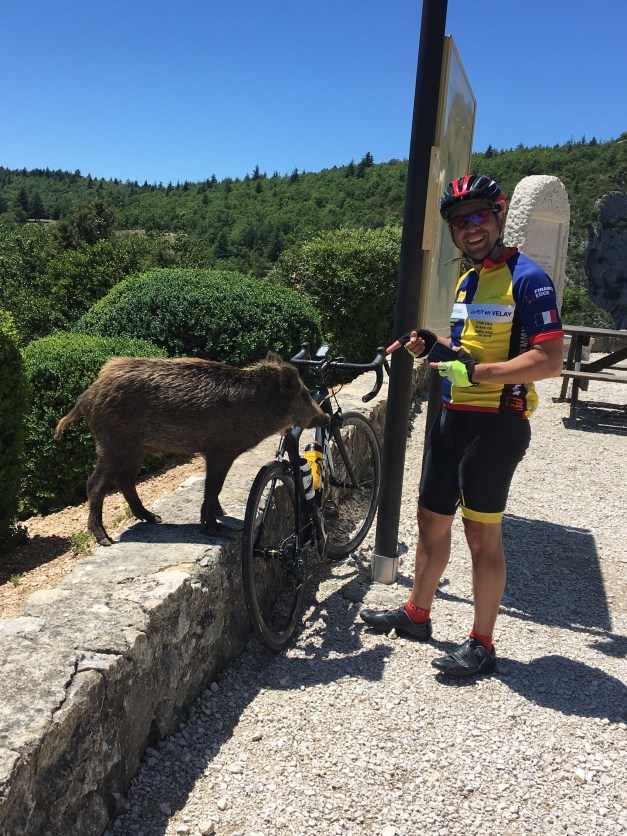
The semi wild white horses of the Camargue were the biggest, the only other mammals seen were a couple of wild boar
a Muskrat ( an introduction from the US that has colonised most of Europe) a small deer and a Hare bounding across the road
Frogs were heard everywhere keeping us awake late into the night and we did see a few live Lizards as well as a large dead snake on the cycle path on our last day.
Birds ( including the Cuckoo)
One of the easiest things to see or hear. We did hear a Cuckoo almost every day, the only exception being our last day in Provence. Nick still can’t believe it. The silhouette of the Cuckoo will therefore correctly remain on the nbjtours logo.
Across the vast open agricultural plains of the North and centre of France the sound of the Skylark was common above the fields or even perched on a fence post.
Buzzards were always the most common bird of prey seen, but this time I think the further south we went, the more Kites we saw and they were the most numerous raptor of the tour.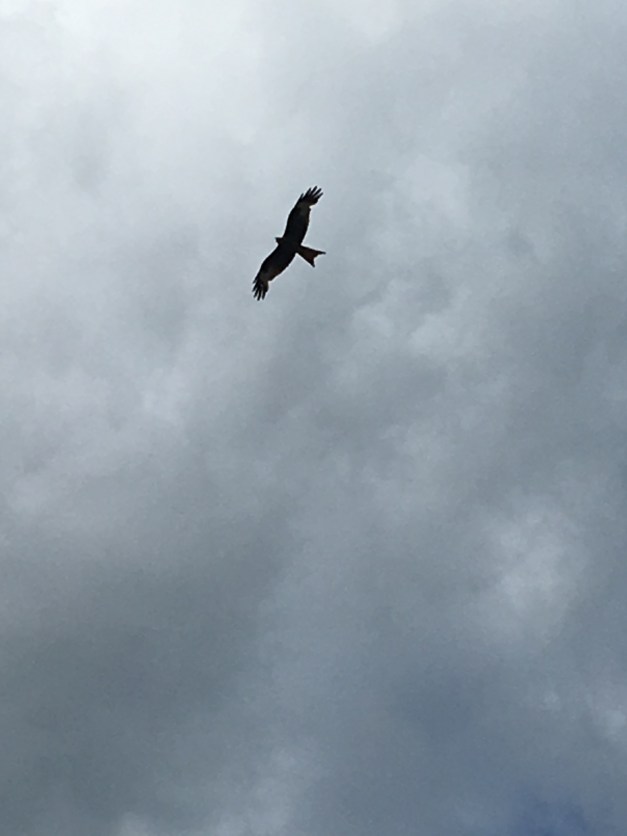
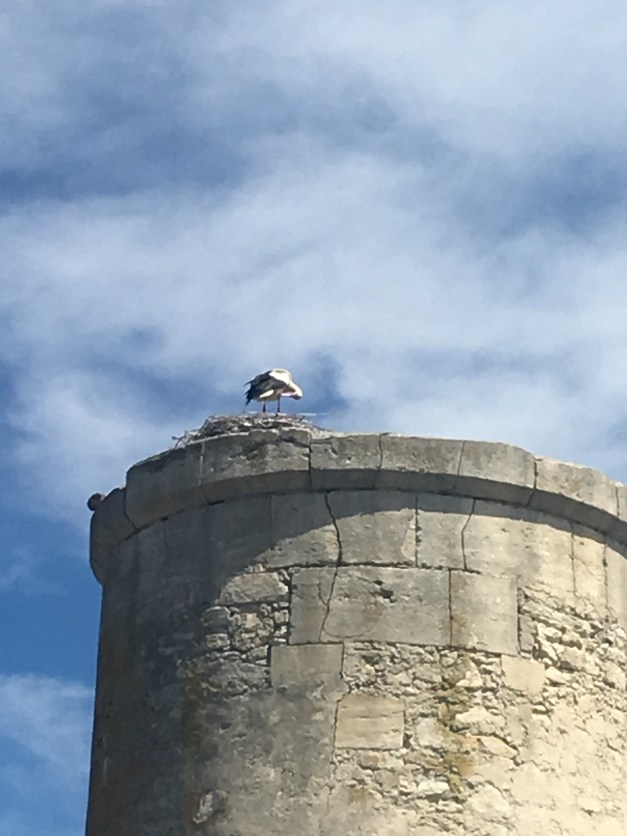
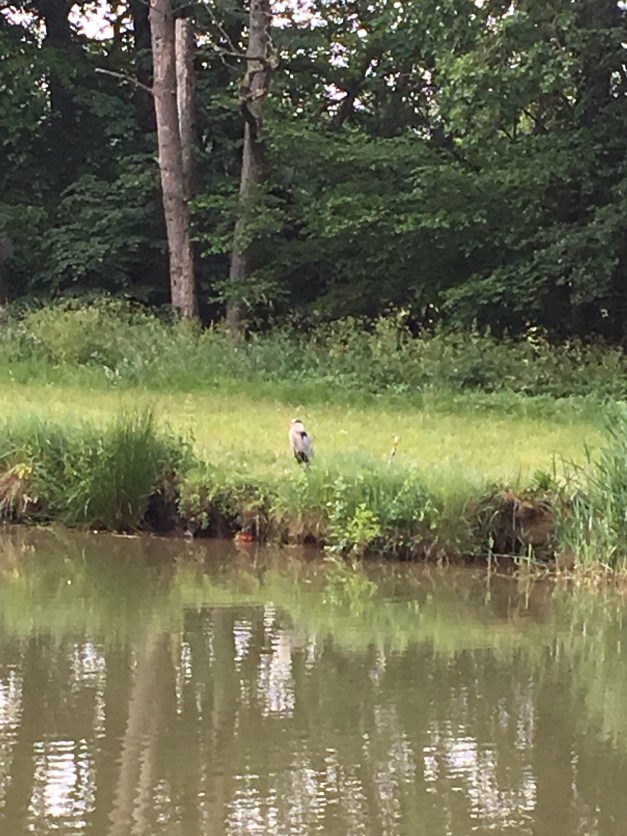
One morning whilst cycling alongside a canal we counted over a dozen Herons and did see them on most days 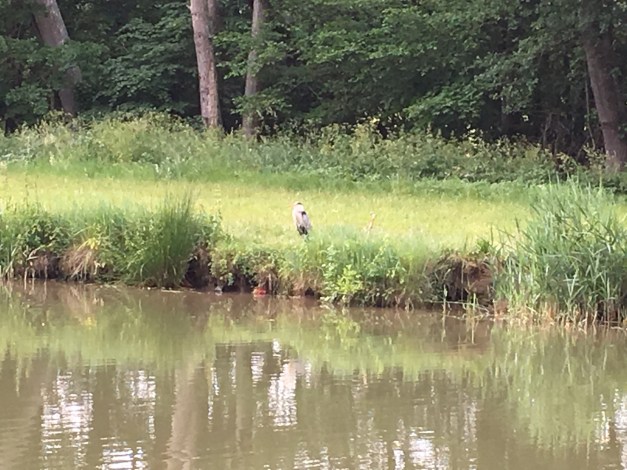 On the last couple of days we also saw a few Egrets and a storks nest.
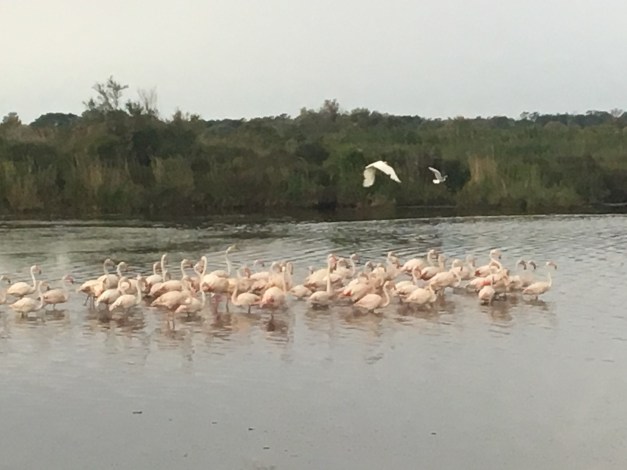
Obviously the Flamingoes were a highlight of the Camargue ( actually captured this morning when we past them in the camper) , but we did also see some Black Ibis and other Cranes. 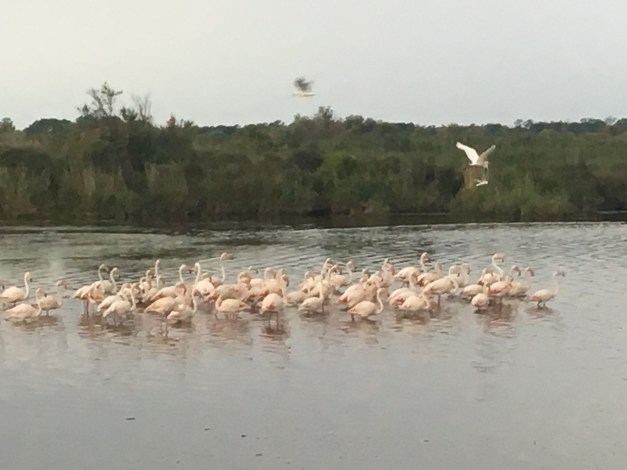
The crow family were omnipresent, harassing the raptors often and we also saw a few green and spotted Woodpeckers. I am also convinced that I saw a Roller ( a stunning tropical like blue bird) flying across a vineyard on the last day.
Flowers
The easiest thing to spot as they can’t move away and on a couple of the days a real highlight of the tour.
In the plains it was the Poppies and Cornflowers that took the eye 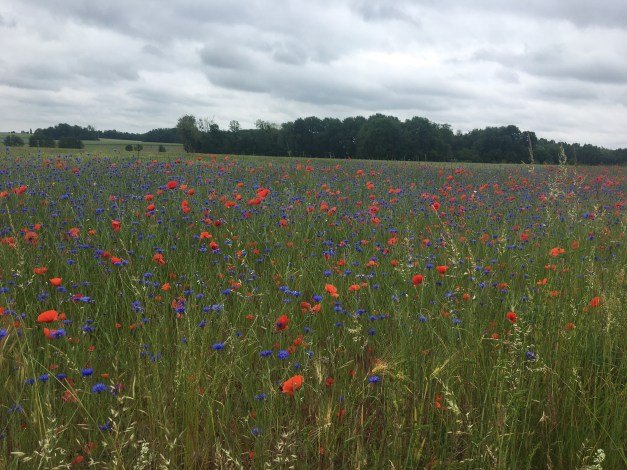
These two flowers are the symbols of remembrance for the U.K. and France respectively so it was very poignant that we cycled through them on the 75th anniversary of DDay.
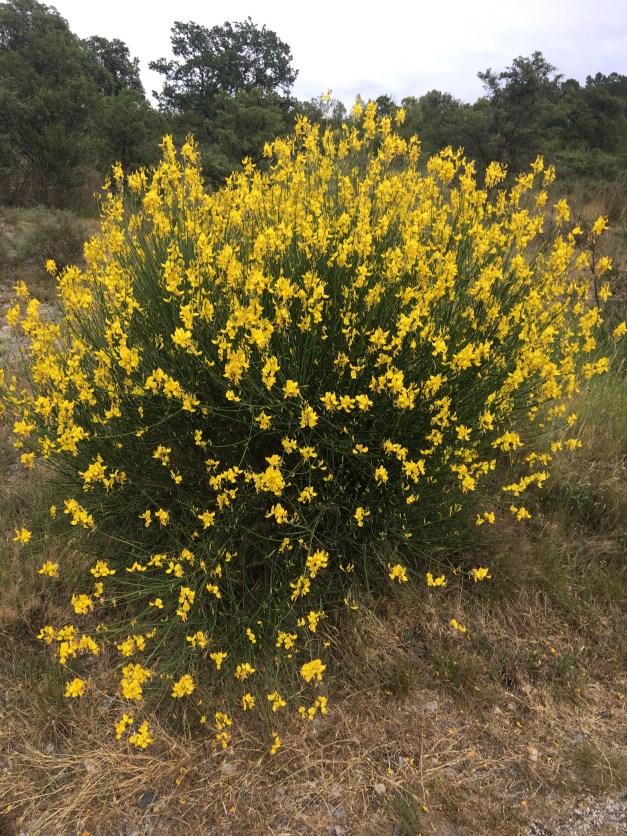
Moving further south the highlight both visually and from its glorious scent is the Broom which adorned the hillside as soon as we approached the Massif Centrale. 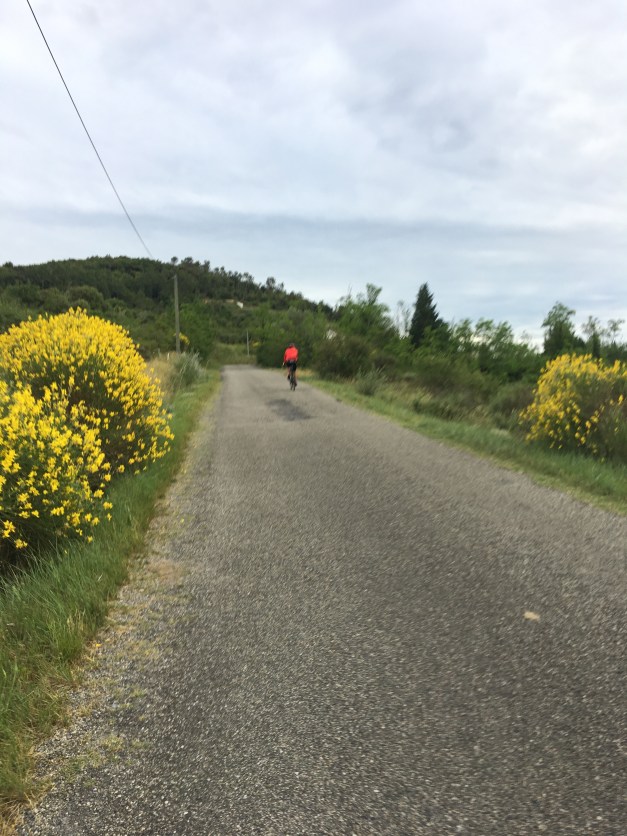
Whilst not quite as dramatic as the Broom we saw in Northern Spain a couple of years back the colour and scent were stunning. 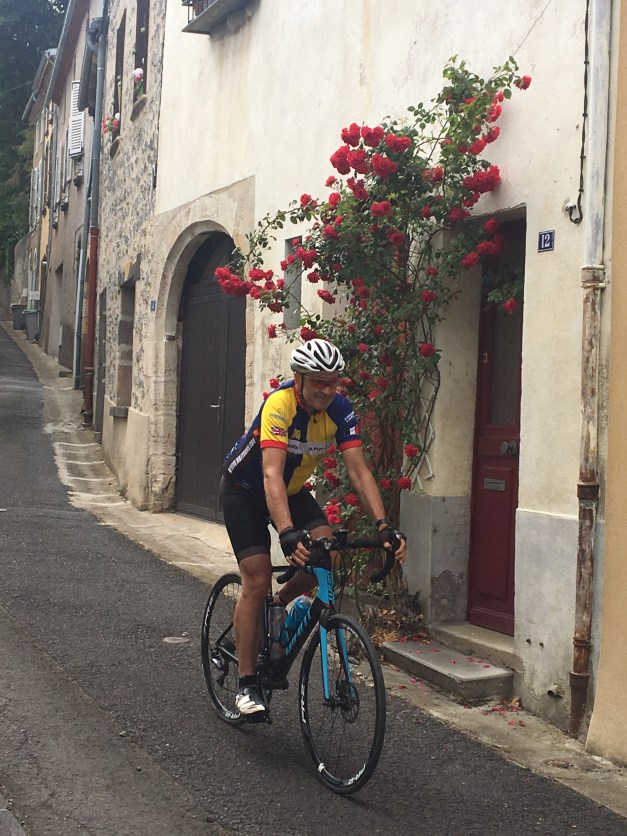
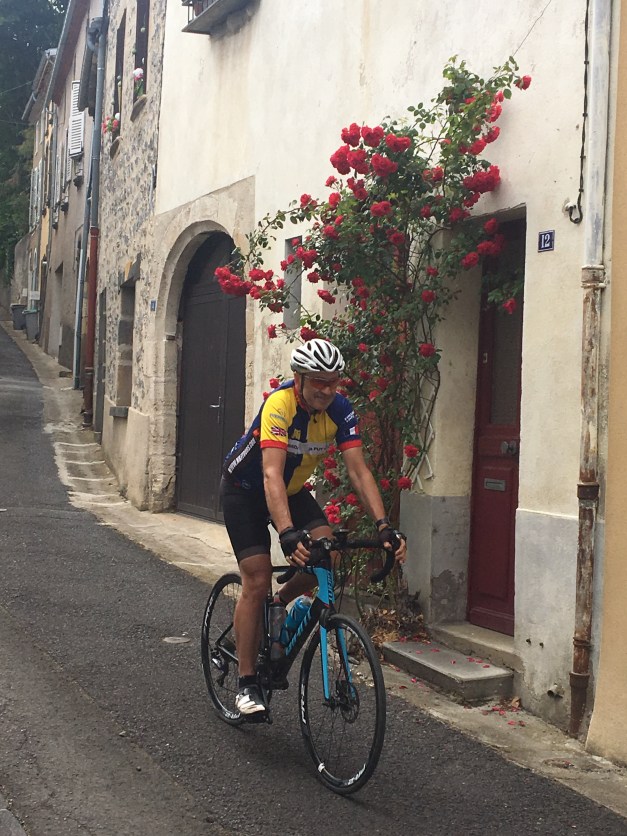
Other scents worth remembering were several roses both in town cheering up the streets and here at the end of a row of vines where they are used to detect disease ( according to Nick ) 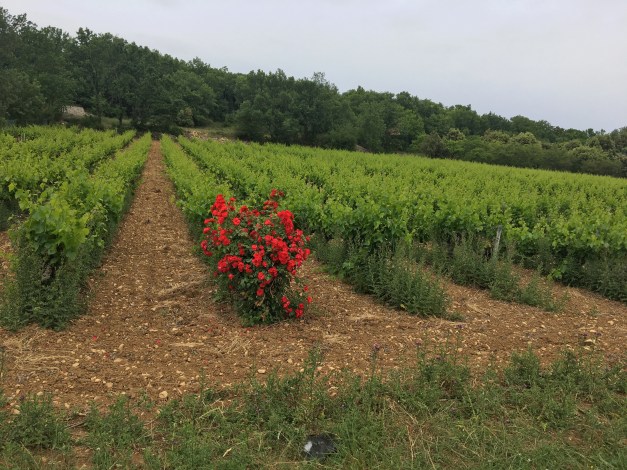
During our long trip along rivers and canals it was sadly obvious that Japanese Knotweed has a serious hold on parts of the countryside and could well be a huge problem if it is not already. Other more attractive water loving plants we saw often were Yellow Flag and this pond of Water Lilies. 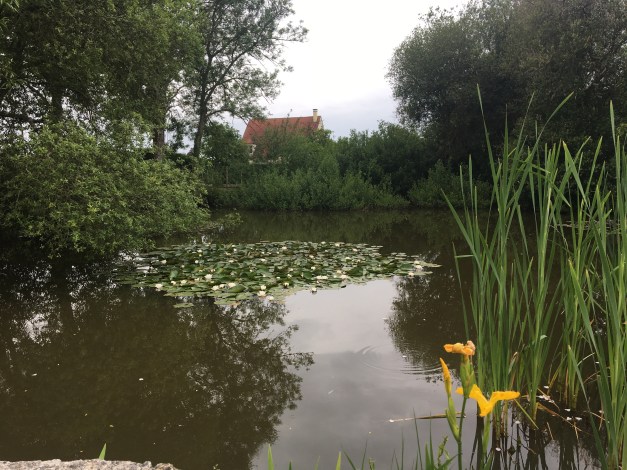
The true beauty of the floral kingdom did not really start to shine until we approached the wilder parts of the route south of Vichy. These Salvias were more common. 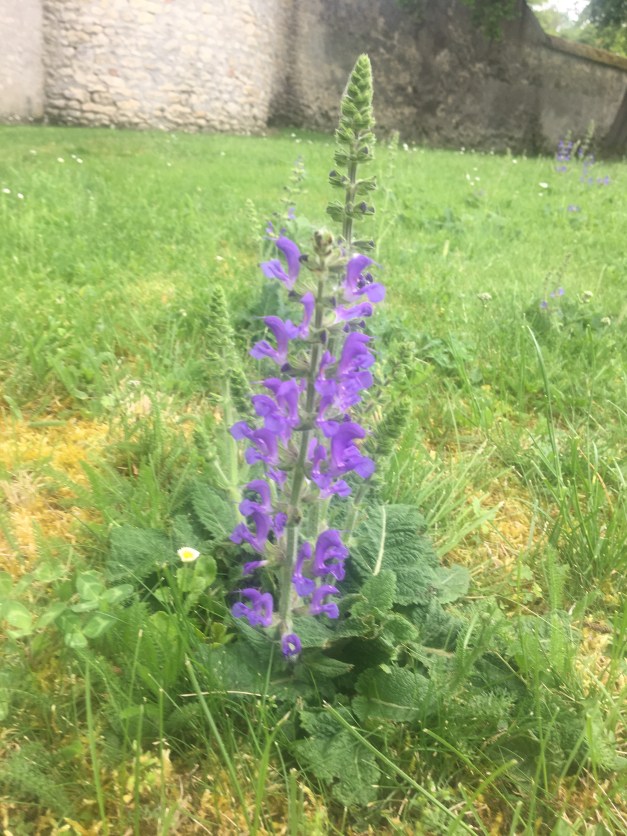
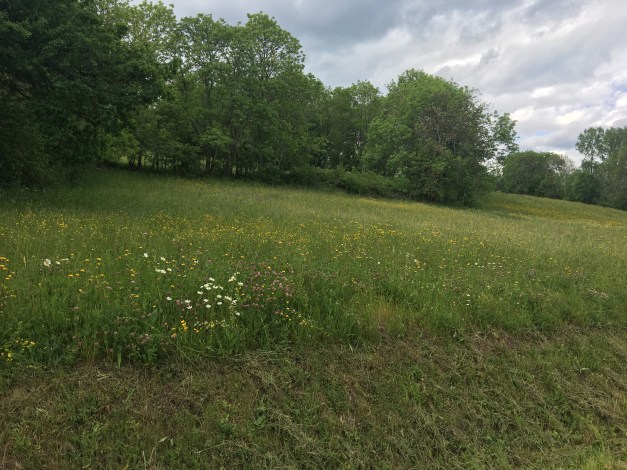
The fields were more unkempt and full of buttercups and other meadow flowers indicating that they had been like this for many years.
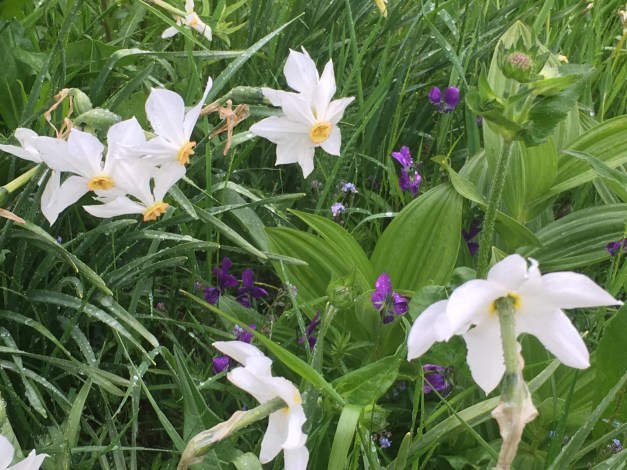
The rain spoiled the high mountains above Le Puy but it was a joy to see the fields of wild narcissi near Les Estables 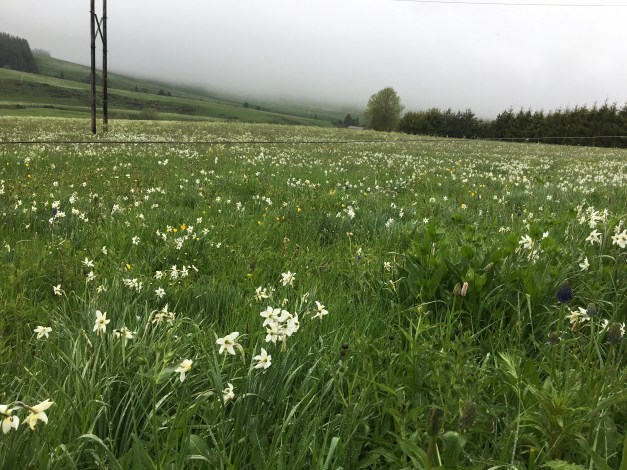
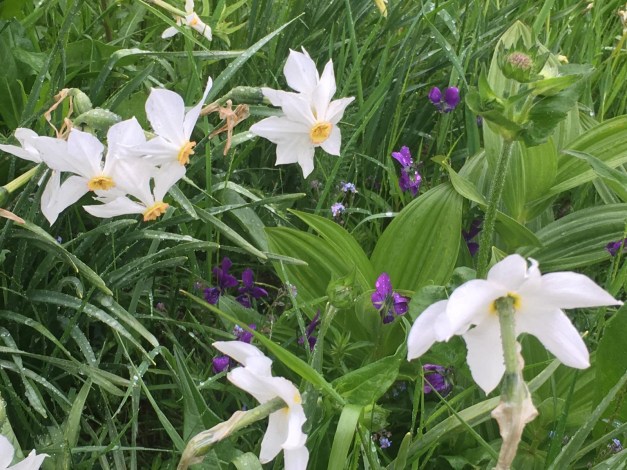
The following day from Aubenas was when we truly could start to appreciate the glory’s of the floral kingdom Where I know the names of them I will add but if you read this and can put me right or fill in a gap please let me know. These mauve flowers were so large that they surely belong in a garden
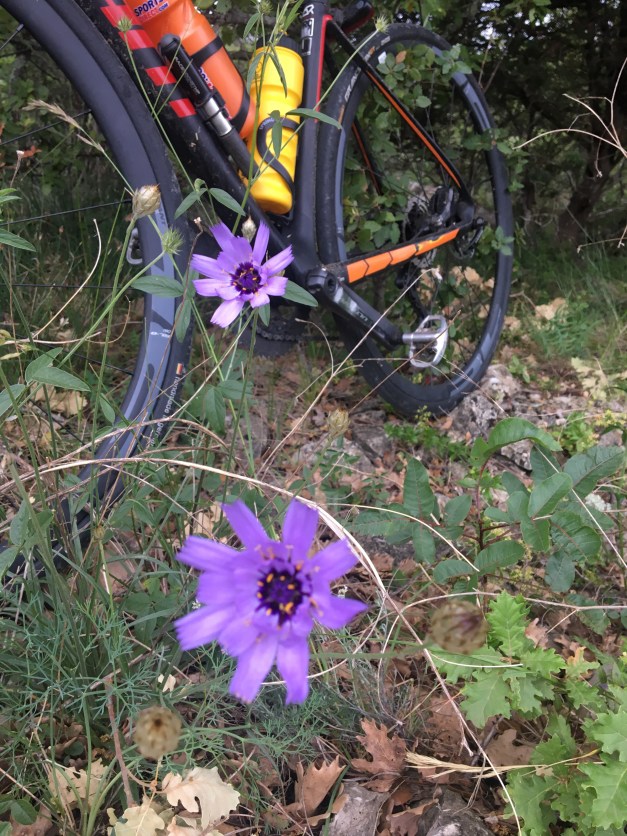
A replacement for gypsophyla? 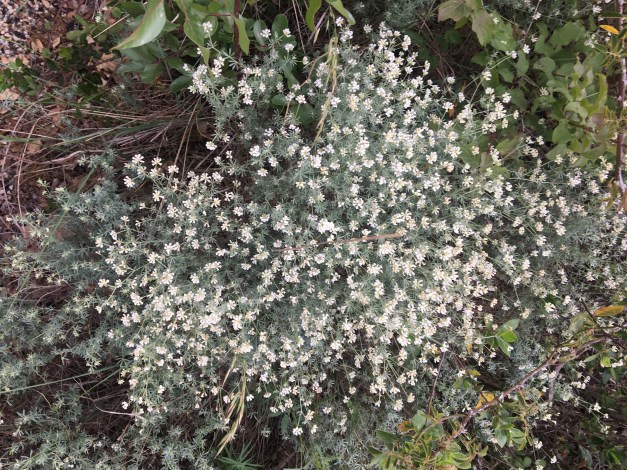
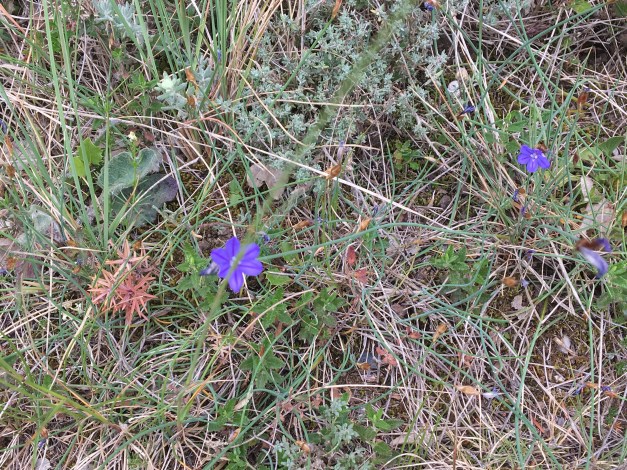
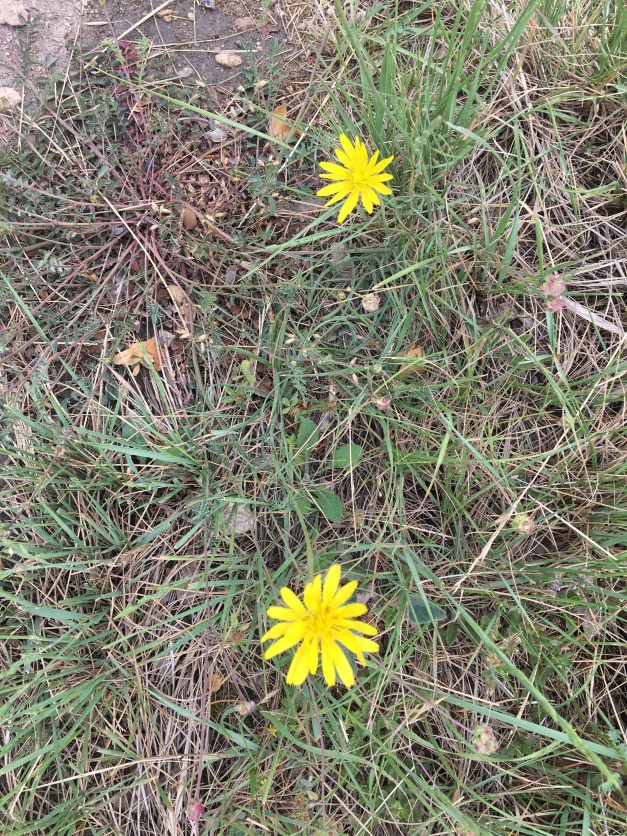
Hawksbit?
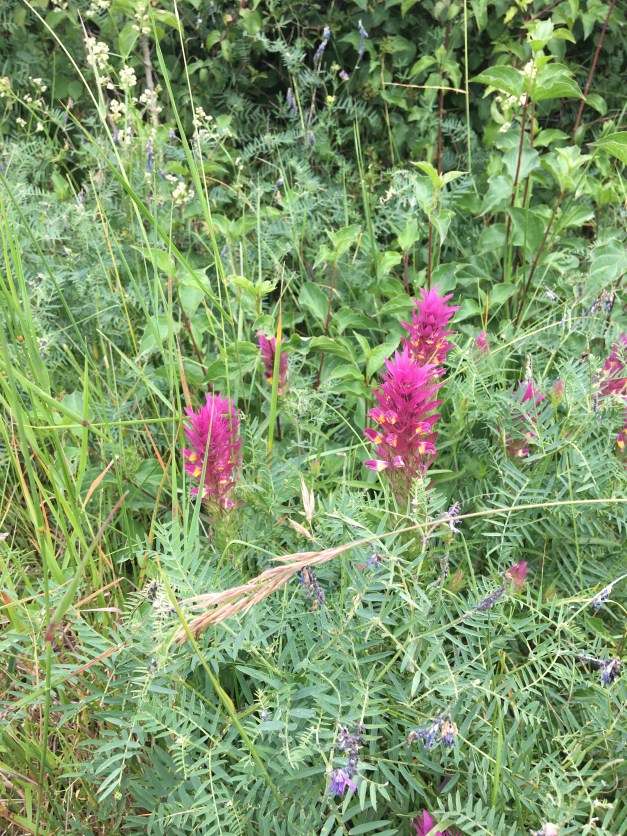
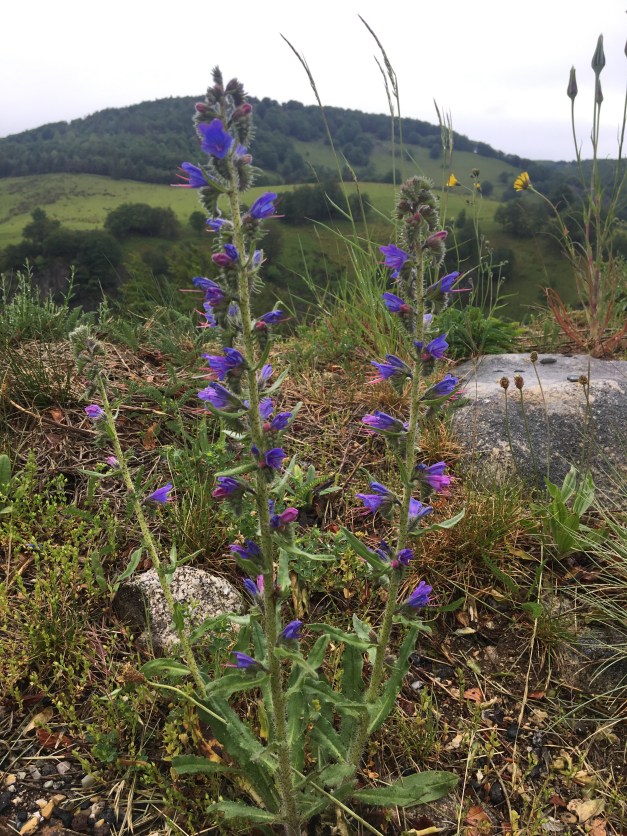
Beautiful spike like plant but no idea what it is. 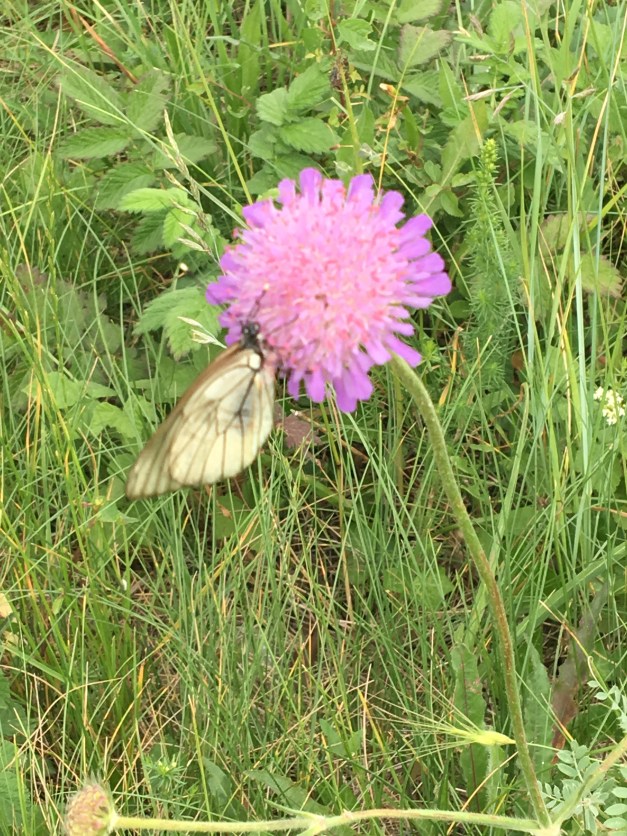
A butterfly on Candytuft. Candytuft was seen most of the last week. 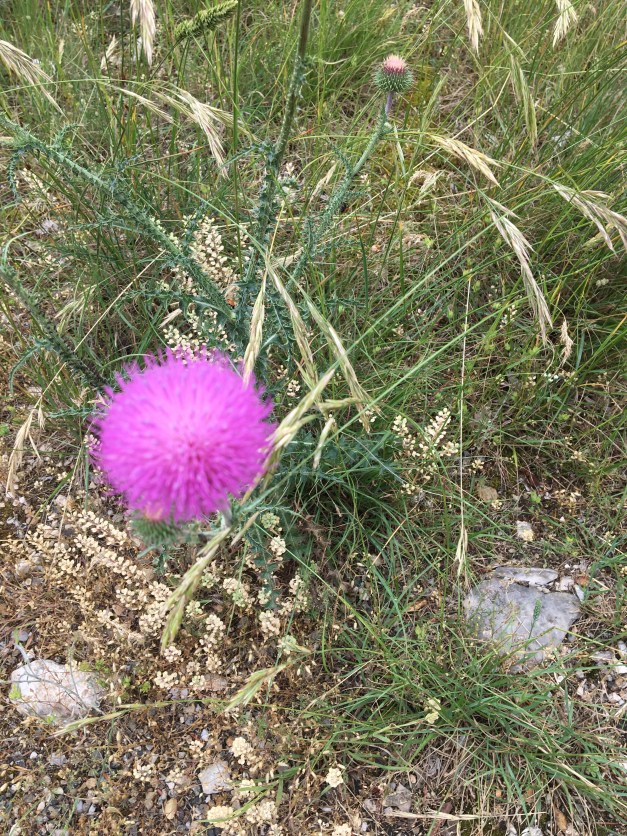
Relative of her thistle
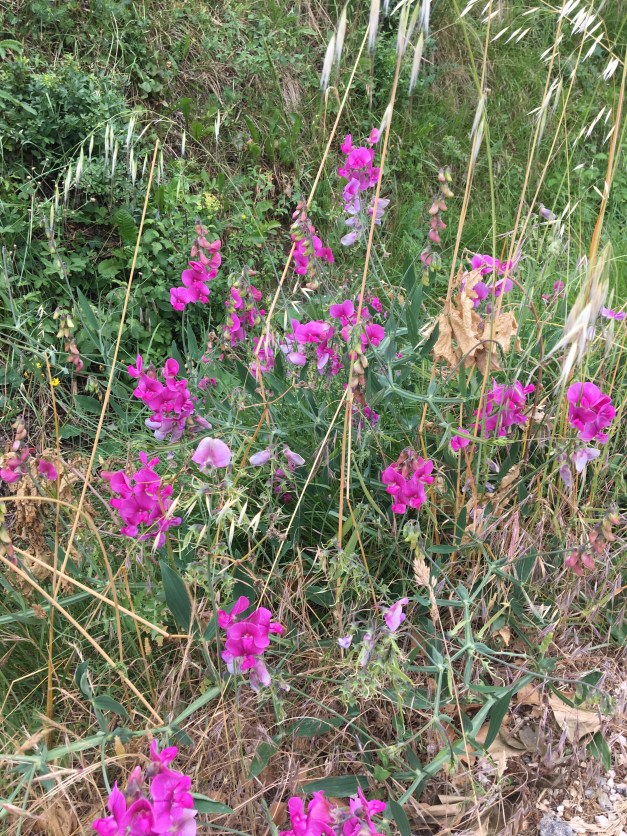
Sweet or everlasting pea. These flowers appeared irregularly for the last three days of the tour alongside the road but never in huge clumps so where they are escaped garden flowered I am not sure. 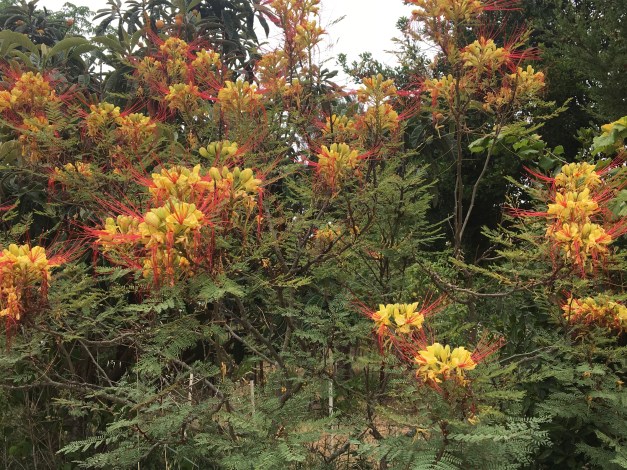
This Acacia like shrub may well have been a garden plant but it’s stunning flowers deserve a photo
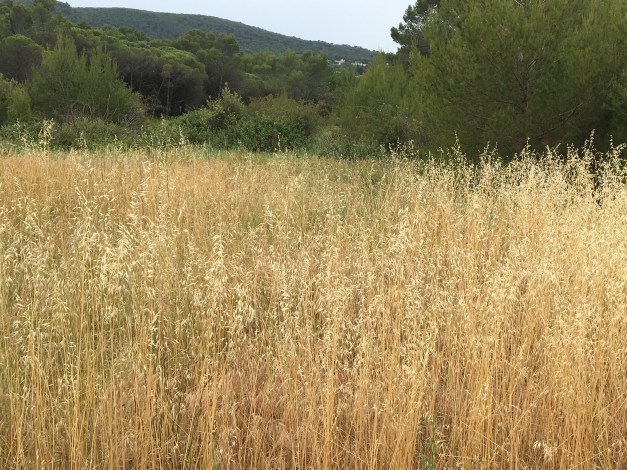
Wild Oats. Such a pretty grass adorning the edge of the road all along and no doubt leading to the eponymous saying.
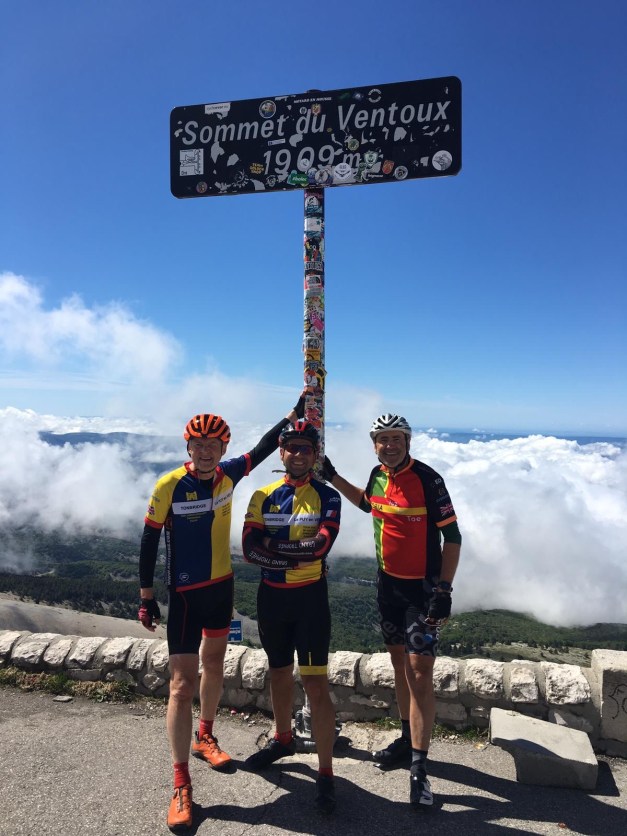
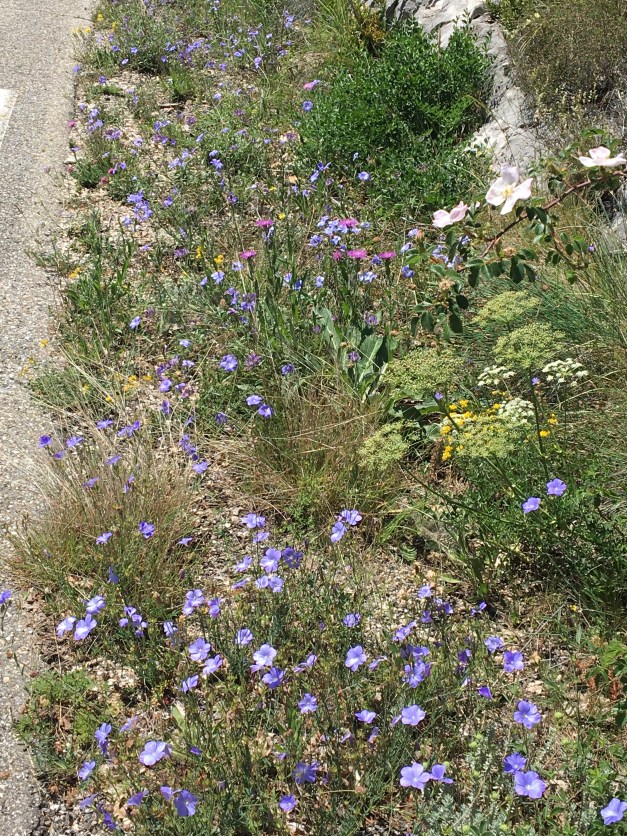
The best day of the tour for flowers was undoubtedly Ventoux and the Gorges de la Nesque where the variety and sheer abundance of flowers makes the need for a garden here superfluous. I ended up over 3-4 miles stopping every 100 yards to look at the latest great plant delaying Chris & Nick.
The photos are here below, again if you know the name let me know, but these great blue flowers were a real joy waving in the breeze. 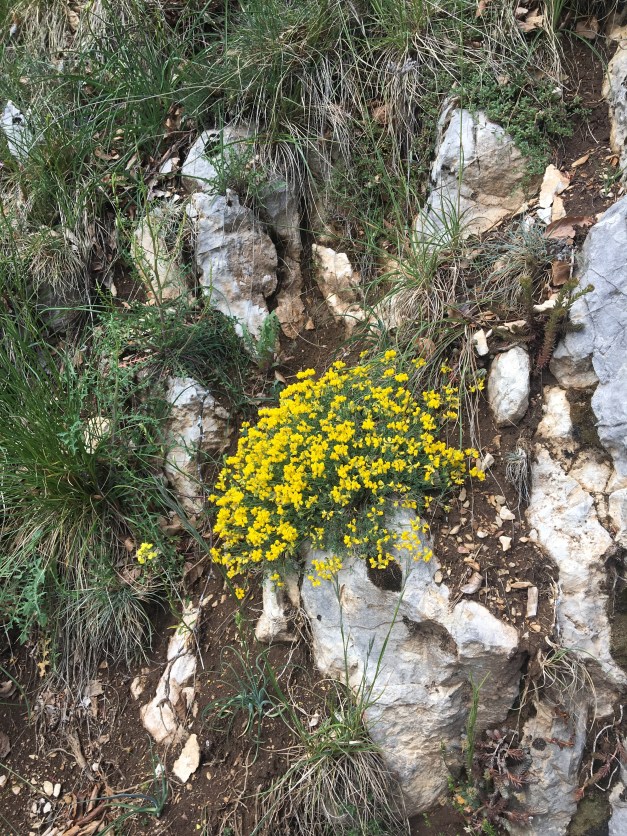
Don’t know. 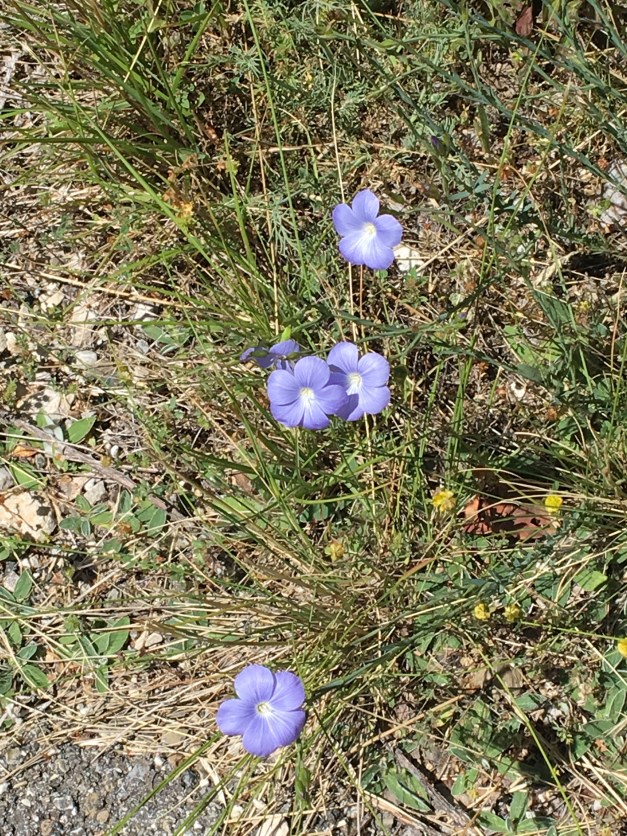
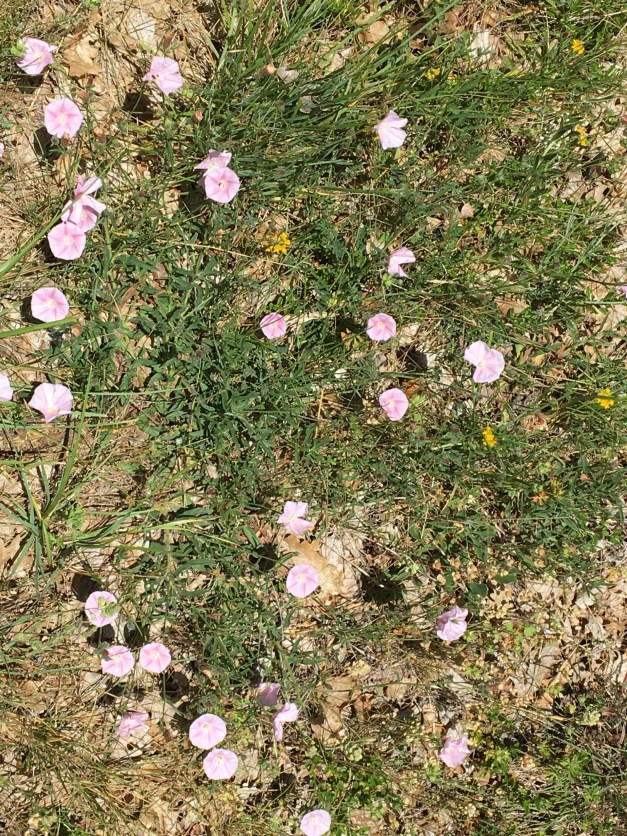
Columbine type 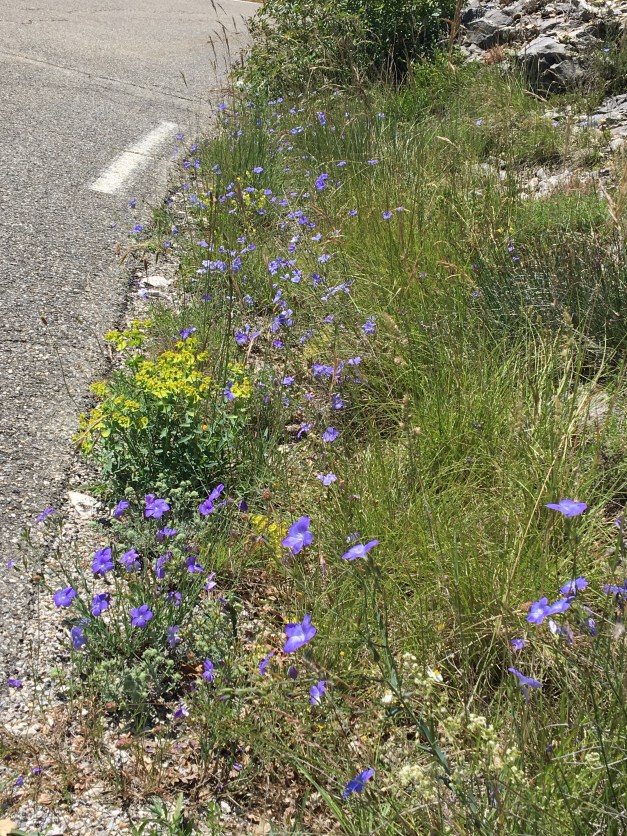
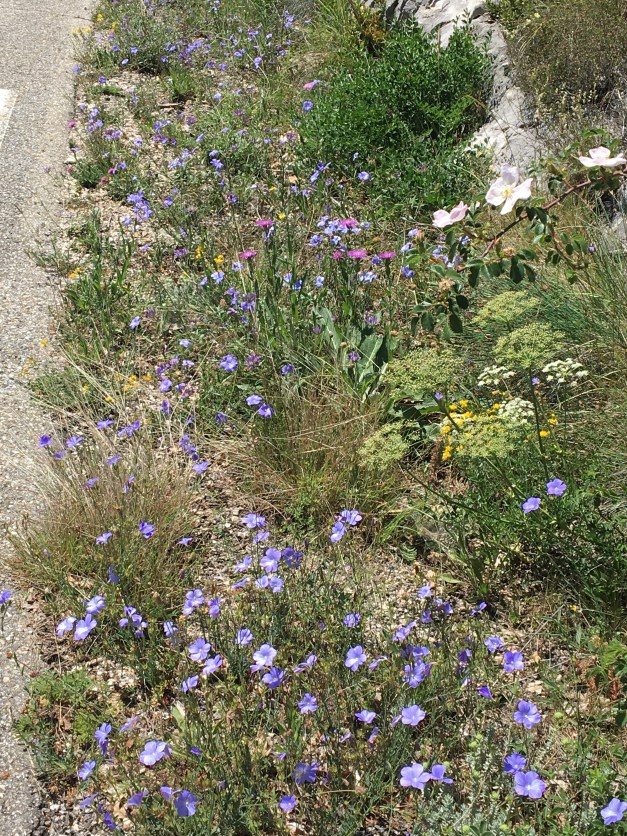
Rock garden with dog roses and umbellifers. 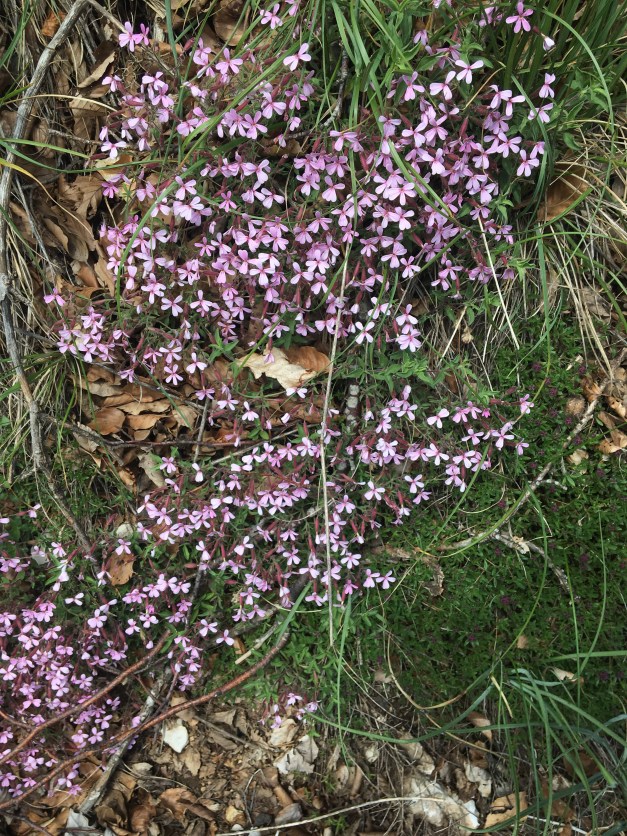
Purple saxifrage? 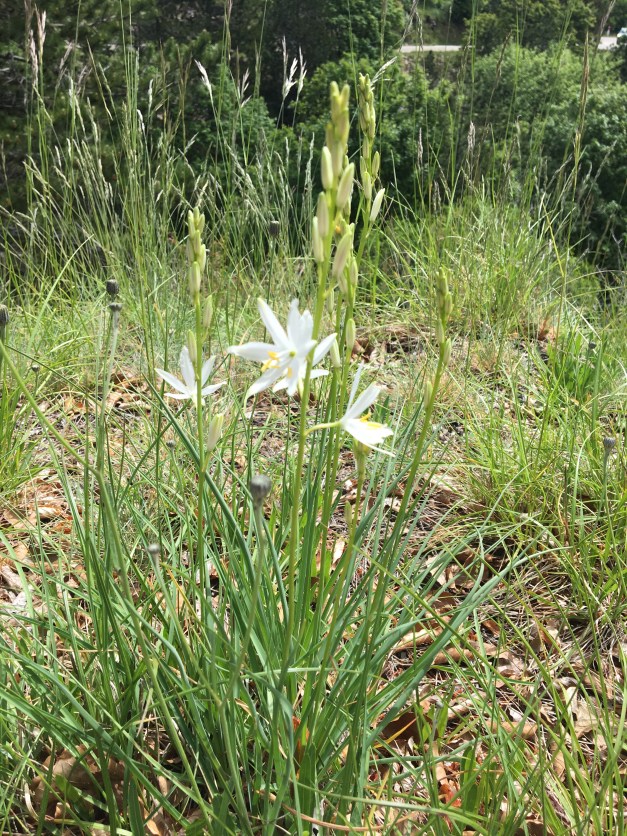
Lily of some kind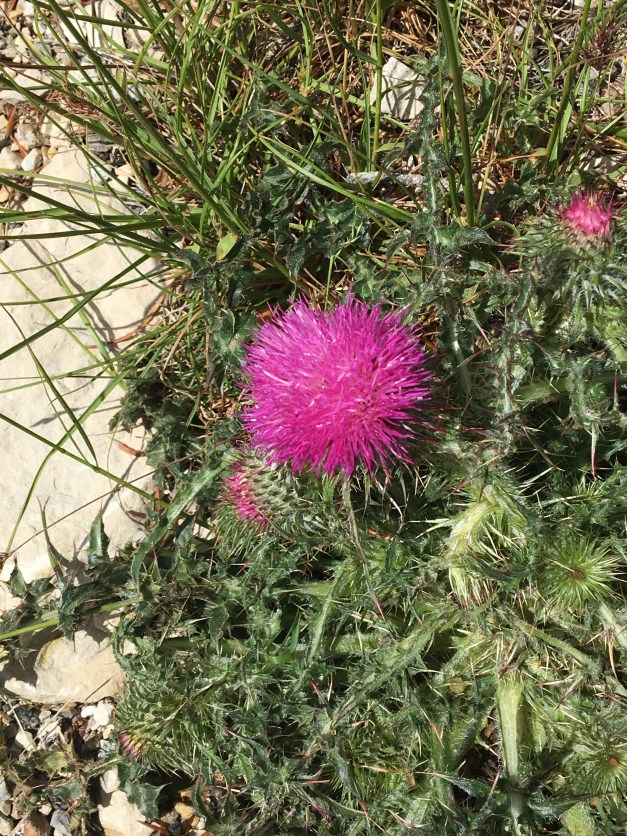
Thistle
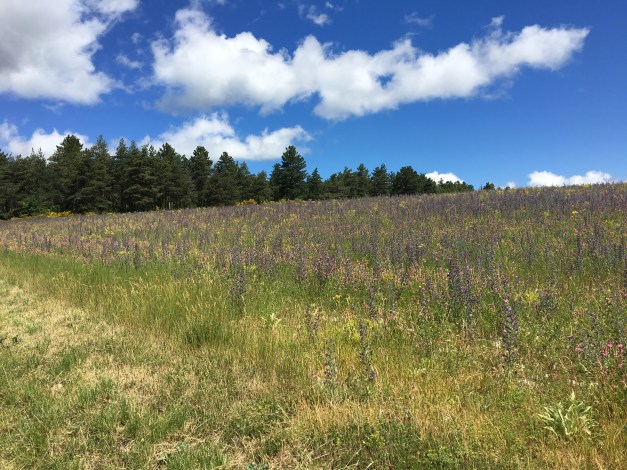
Field of Vipers Bugloss 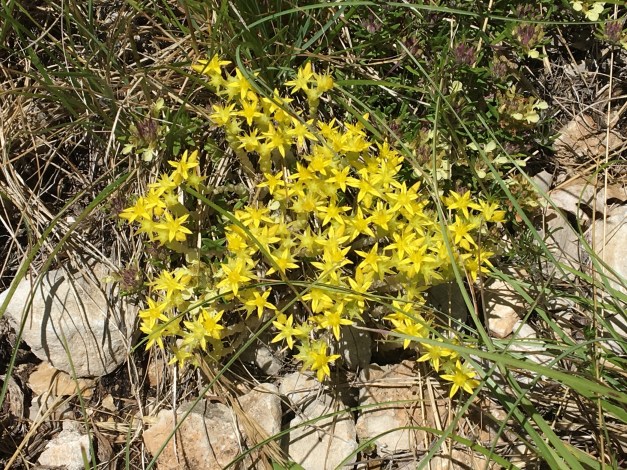
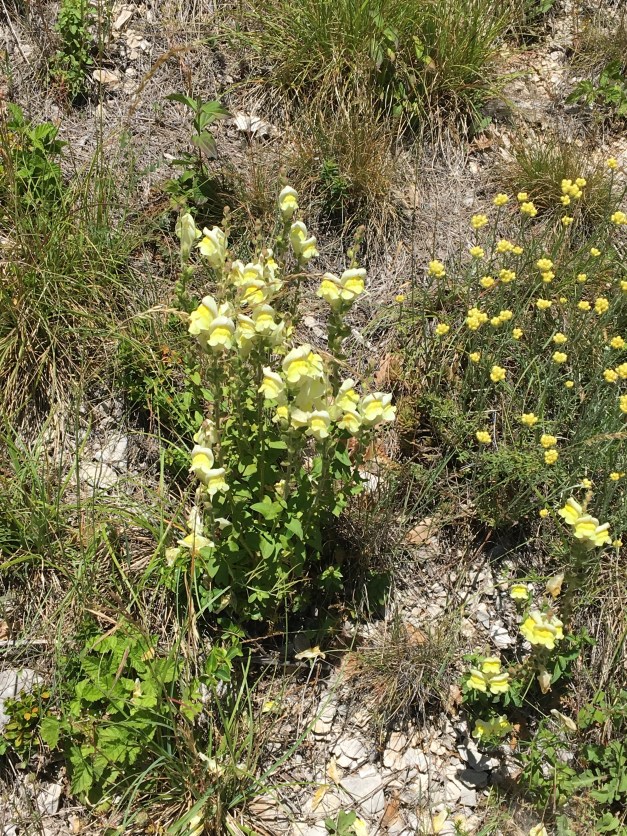
Snapdragons. This rocky bit of hillside was covered in them. Possibly naturalised from a garden.
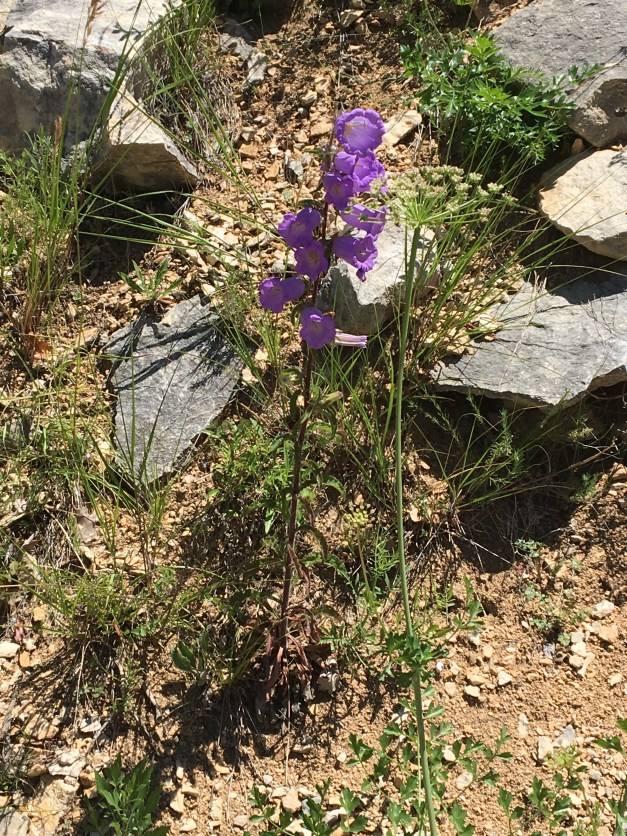
Huge bell like flowers on this. 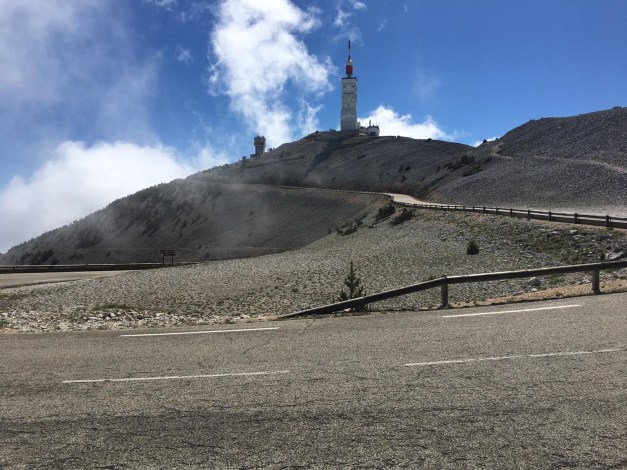
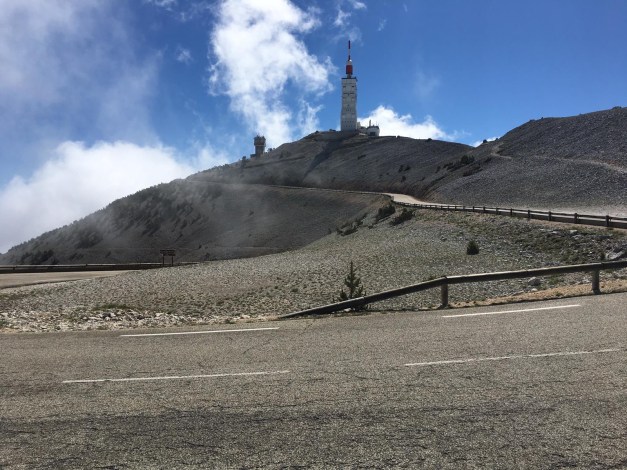
The contrast of these wonderful flowers is marked when comparing it to the bald summit of Mont Ventoux. This was supposedly caused by Napoleon ordering the clearing of the trees to build boats, and the harsh weather conditions led to erosion of what poor soil there was and left the summit bare.
The last day did not see the variety as we left the high mountains behind. However we did see the following nice examples
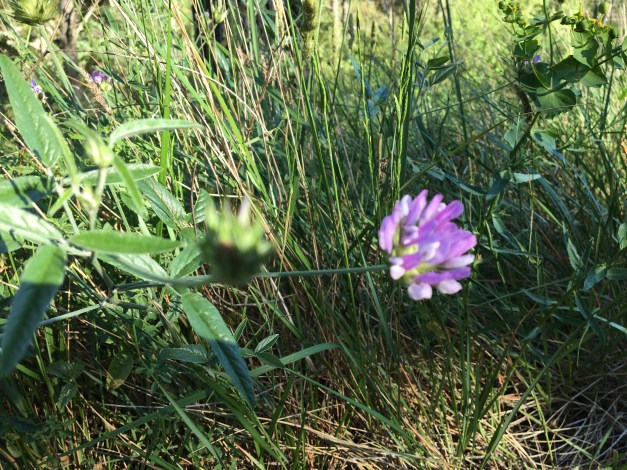
Pretty vetch 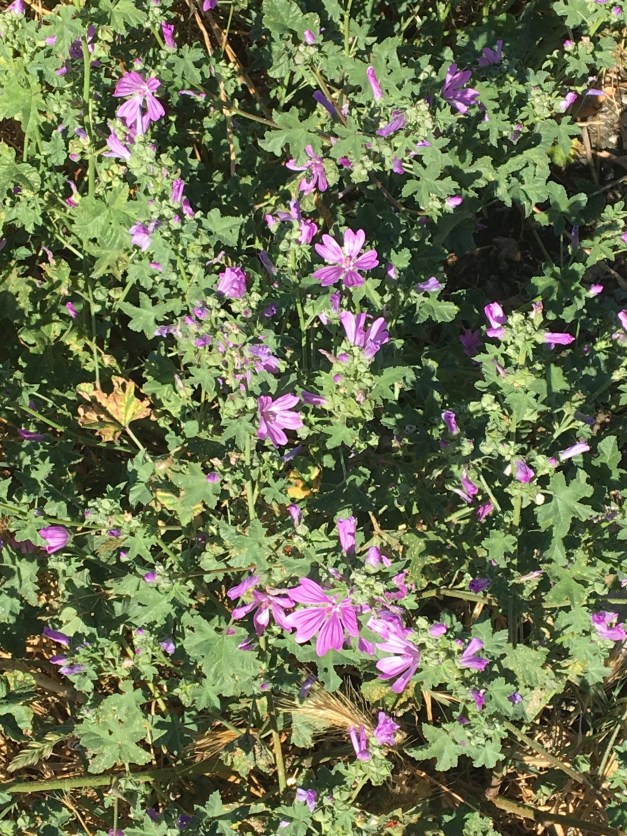
Mallow was all over the roadside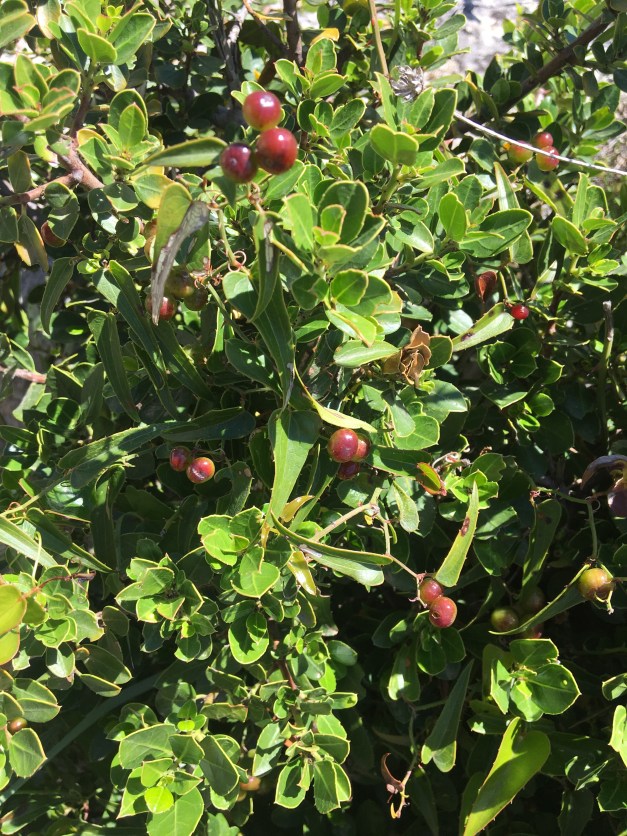
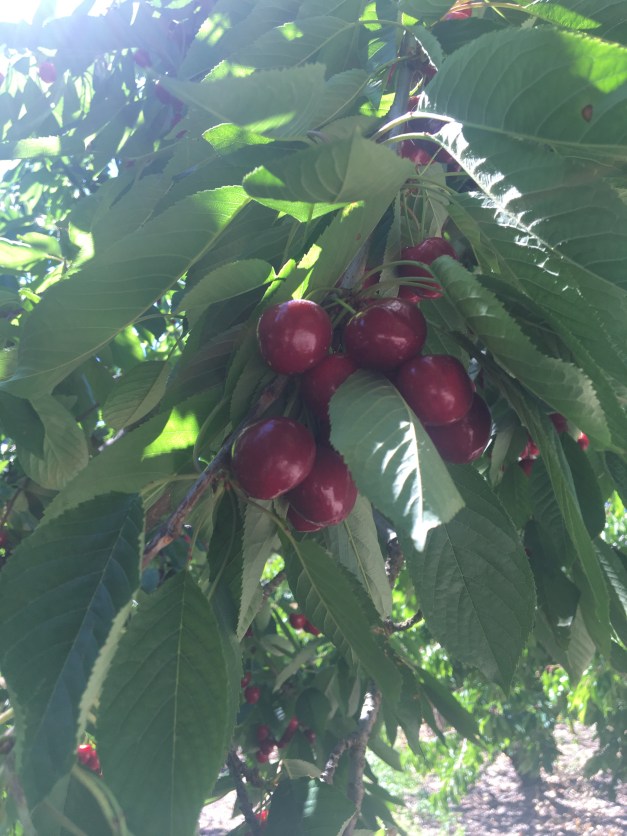
The bilberries were not yet ripe on the Alpilles, but orchards of cherries, peach, apricot, apple and pear on the lower slopes towards the Camargue shows what grows. We also saw Courgettes, vines of course and Olive groves.
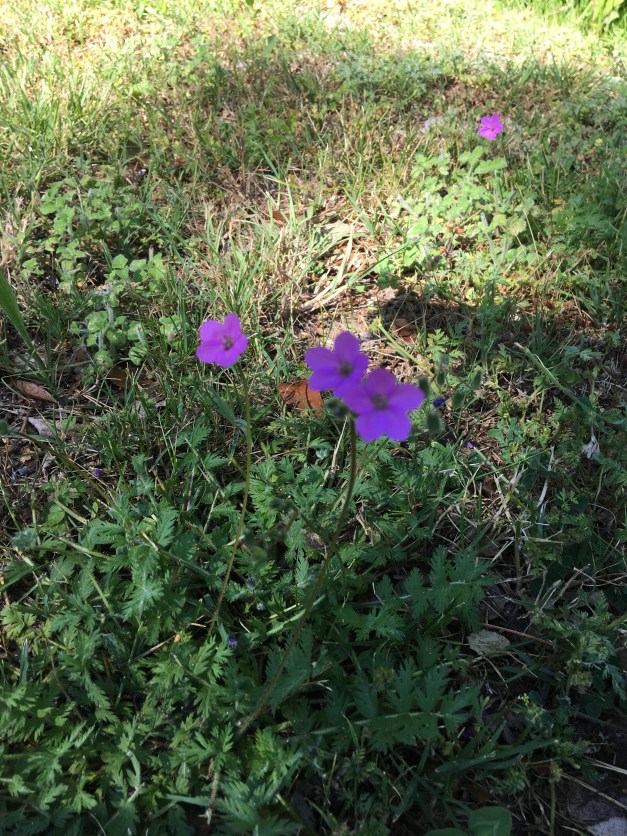
Delicate pinky flower 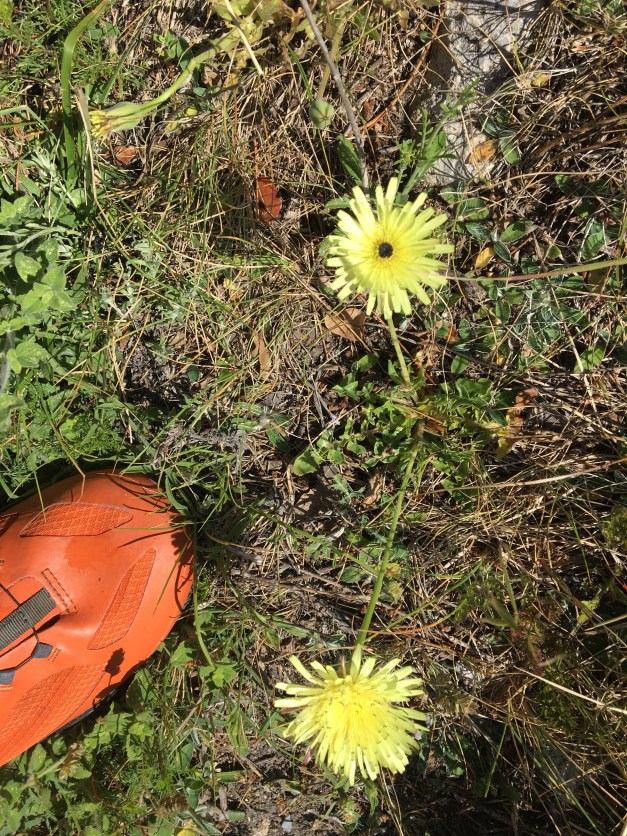
South African daisy like yellow flower 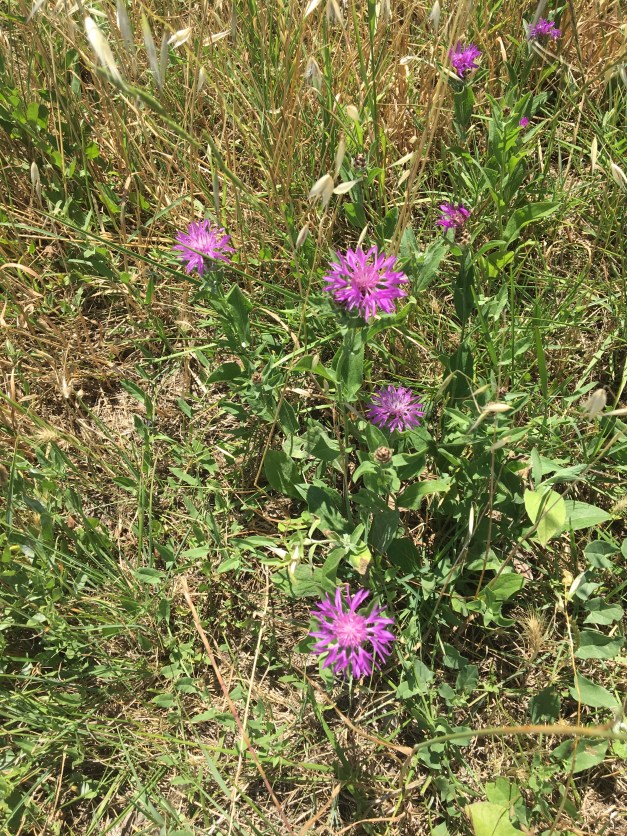
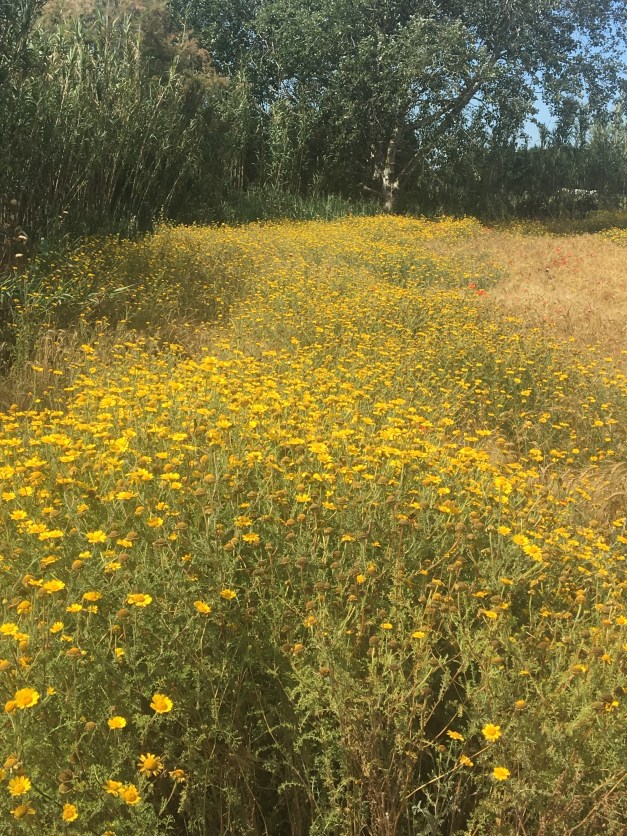
Mass of yellow daisies.
If you have managed to get this far well done. Unfortunately my knowledge is not sufficient to know all these fantastic varieties and often these photos do not do them justice. I can only suggest that you come to this region in spring/ early summer and enjoy them for yourselves.
As I said earlier if you know them please post on the blog comments section.
Until Ireland, hopefully next year. Thank you.
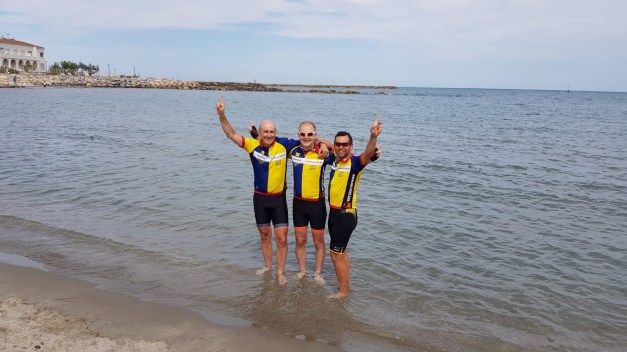 Day 14 Saintes Maries de la Mer 87 miles
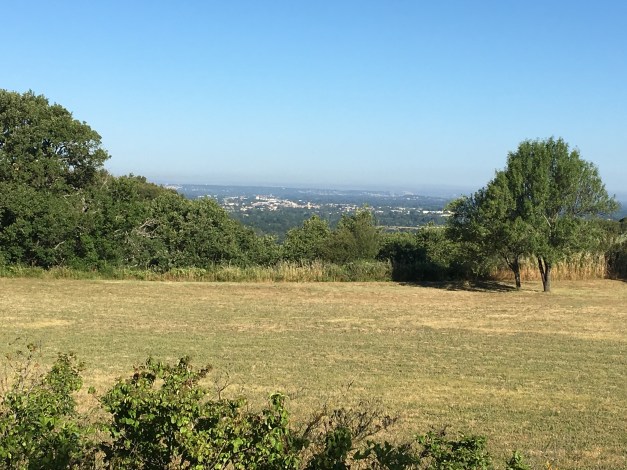 This morning started tough almost immediately from our campsite in Fontaine de Vaucluse. Shunning the usual way out we scaled the side of the hill at gradients of up to 19% towards the ancient village of Cabrieres d’Avignon.

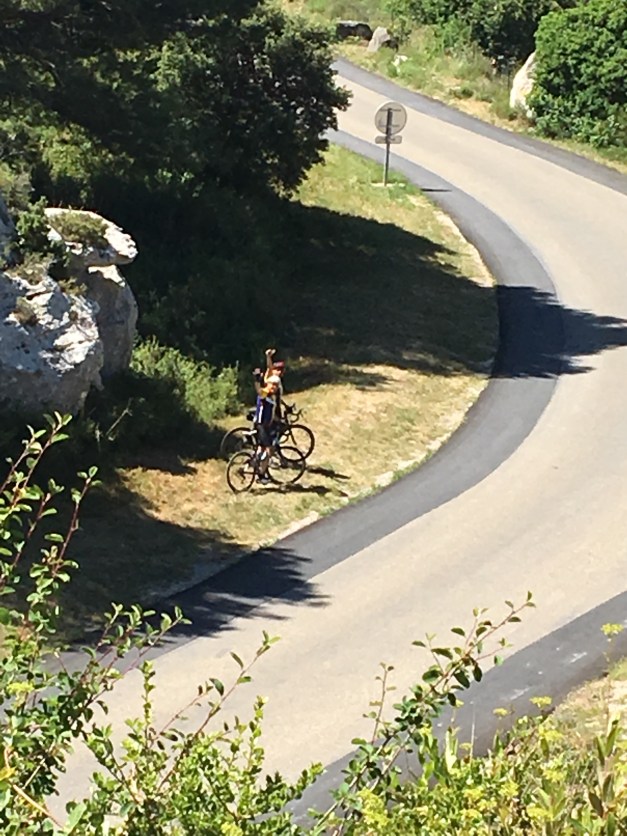
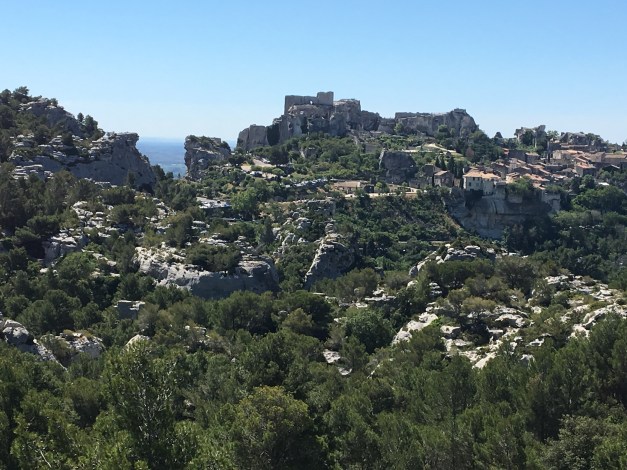
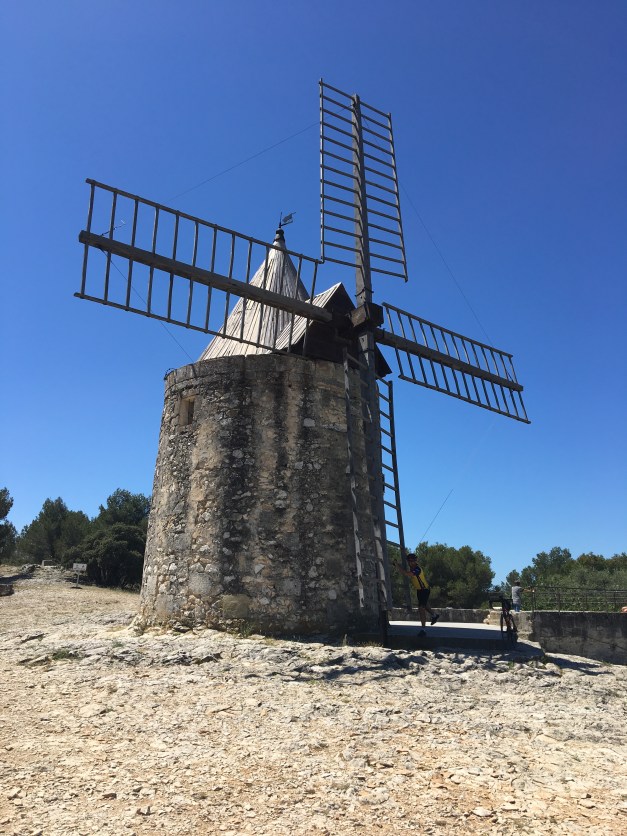
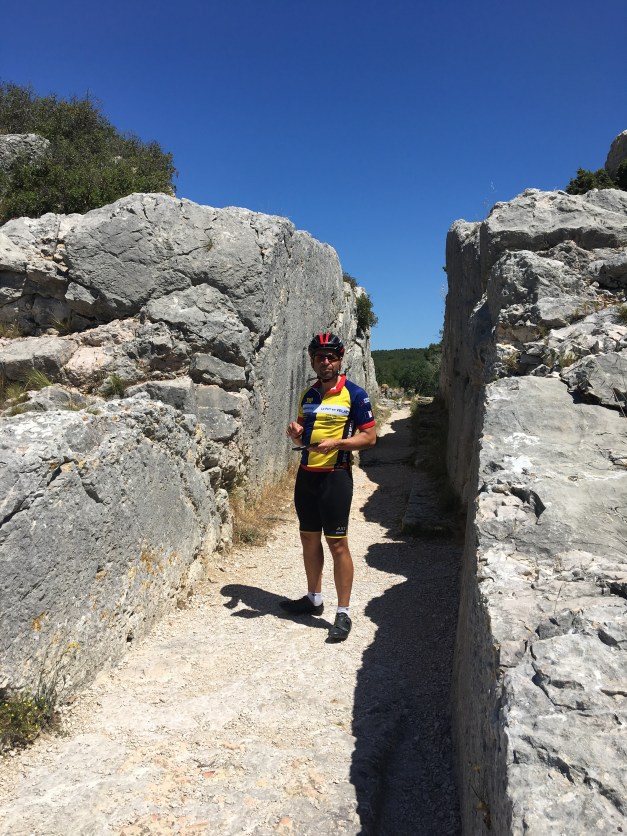
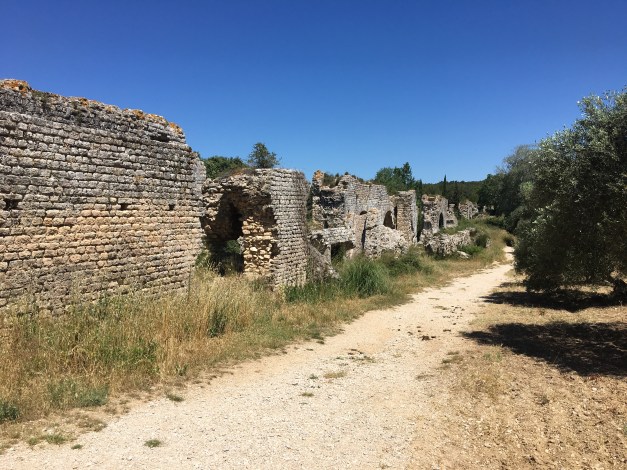

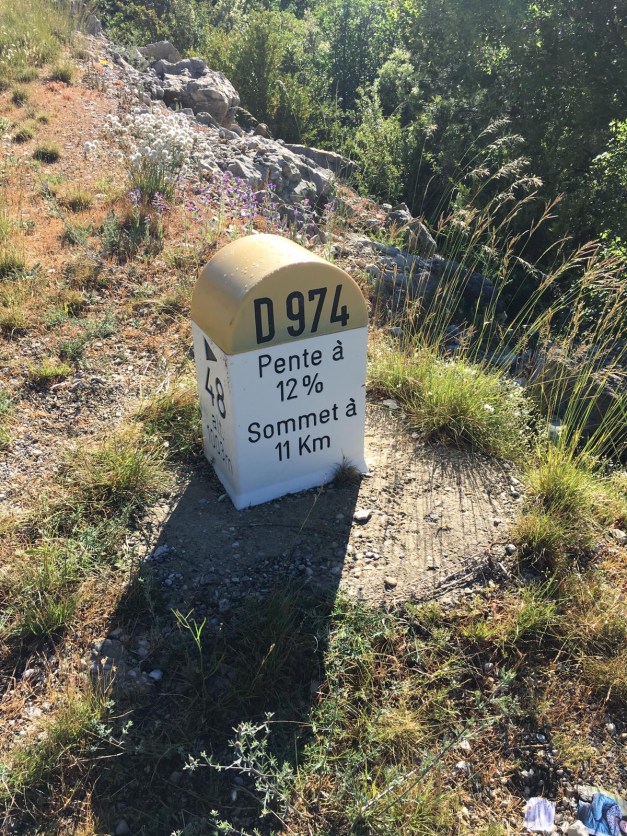
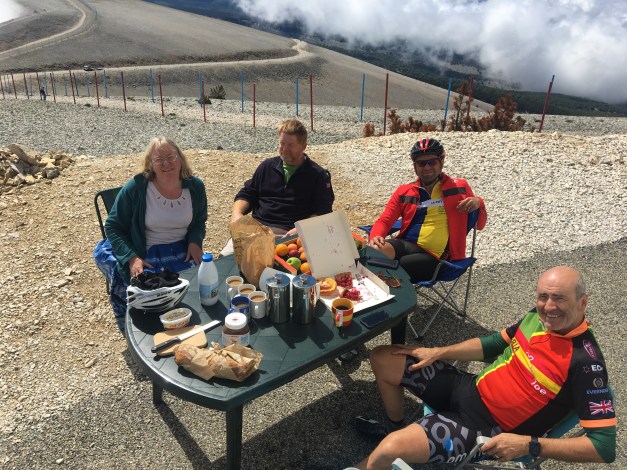
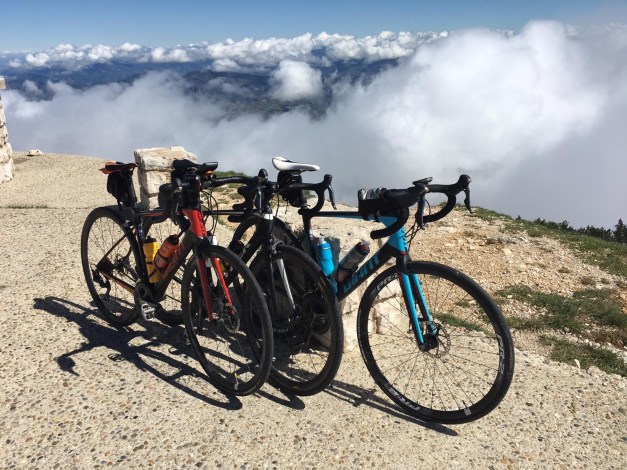
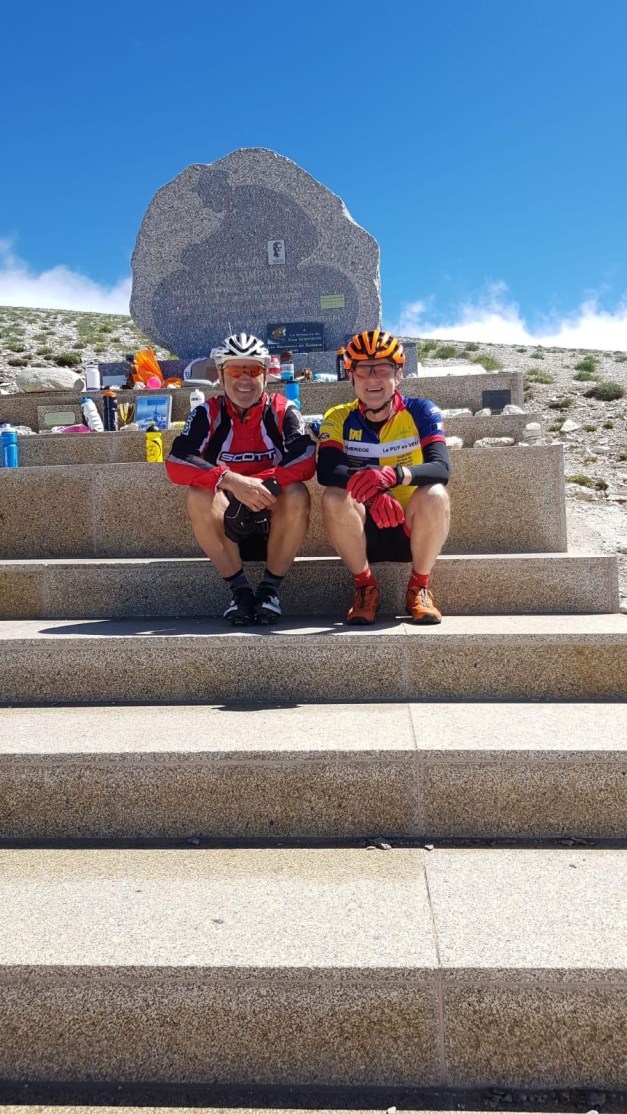

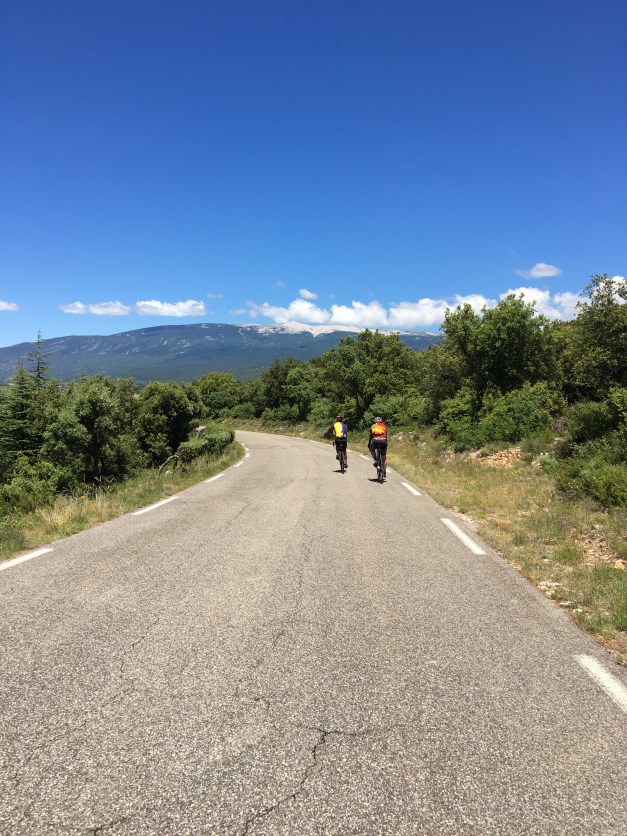
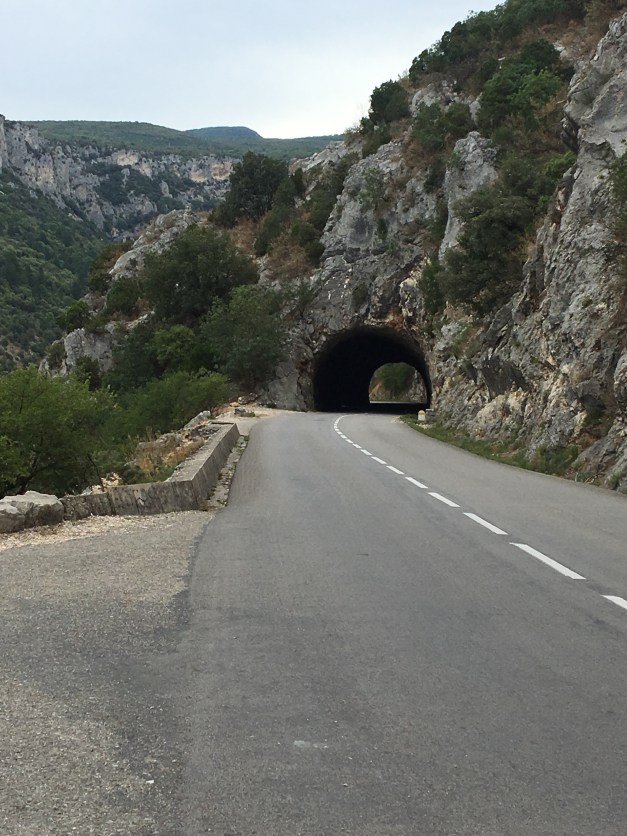
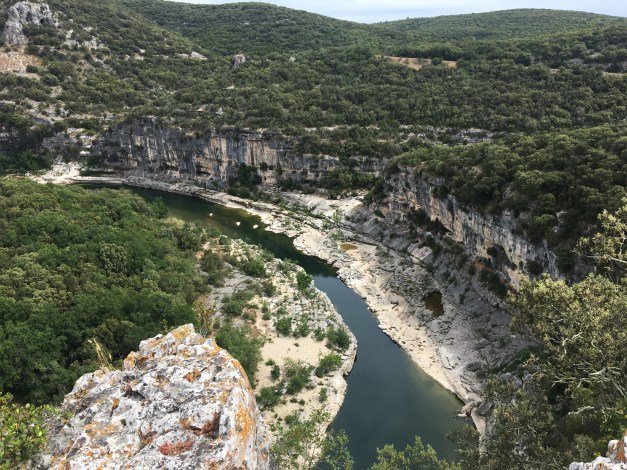
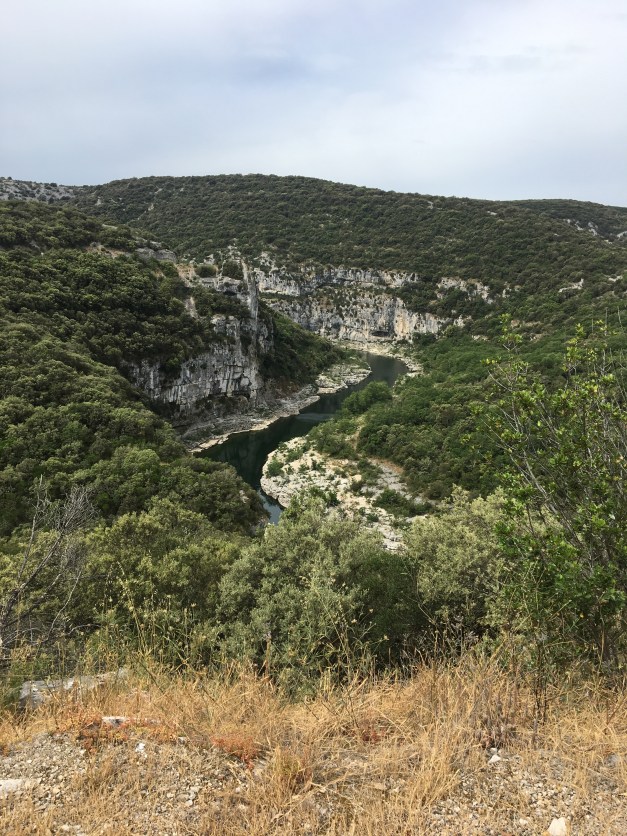
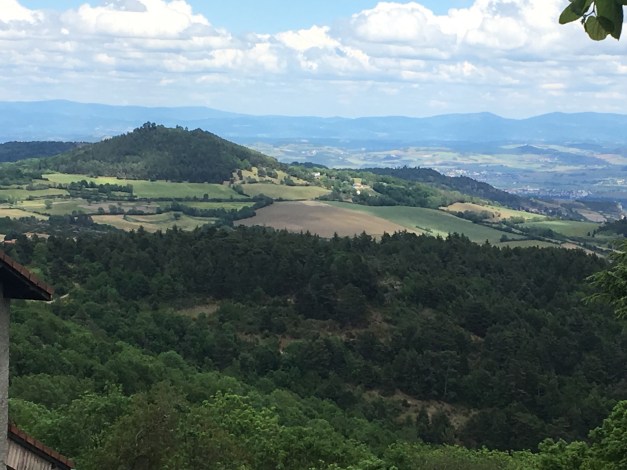
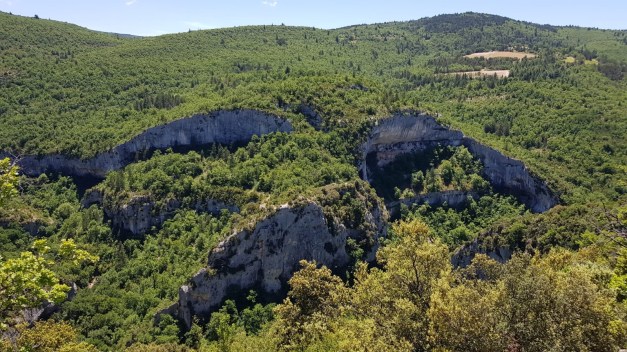 The next part of the ride along the gorge was fantastic as it was all gently downhill with incredible views across the gorge, with more flowers and tunnels to ride through.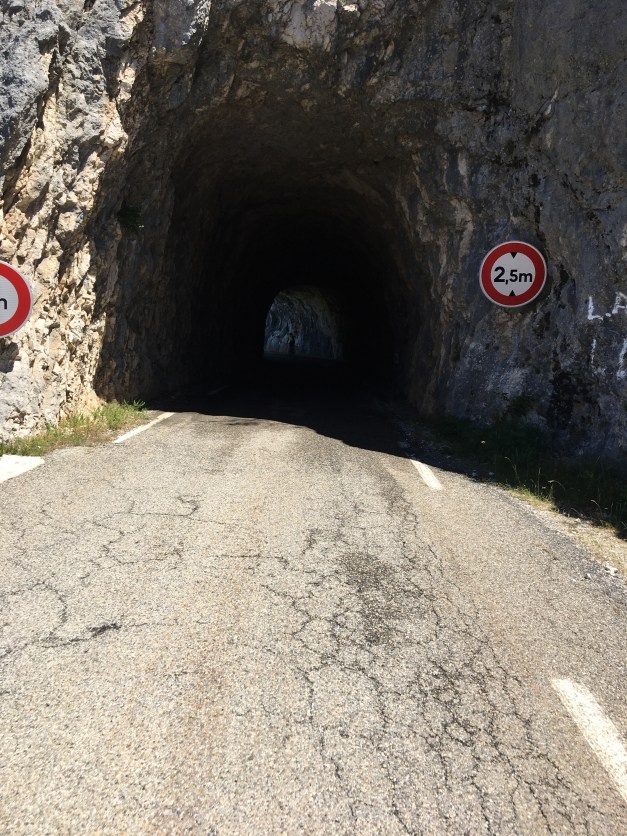
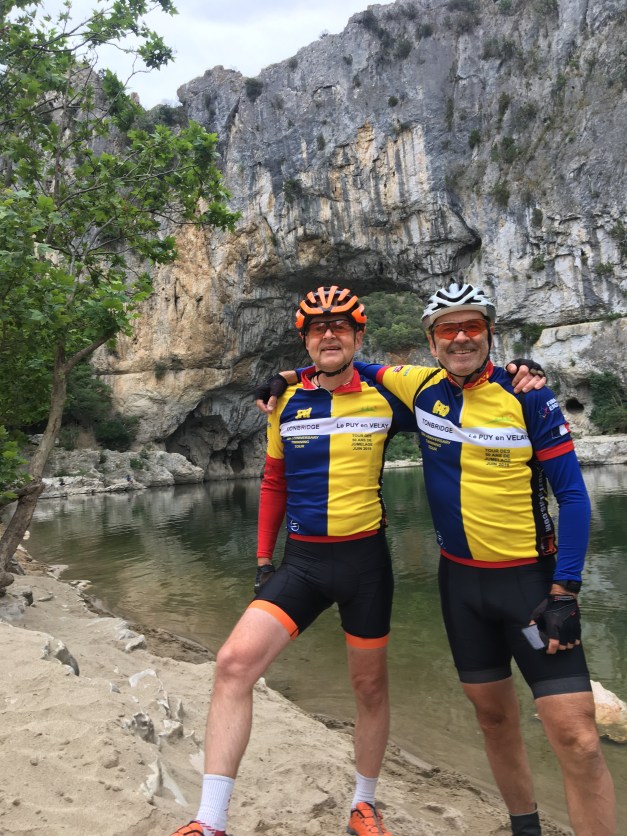
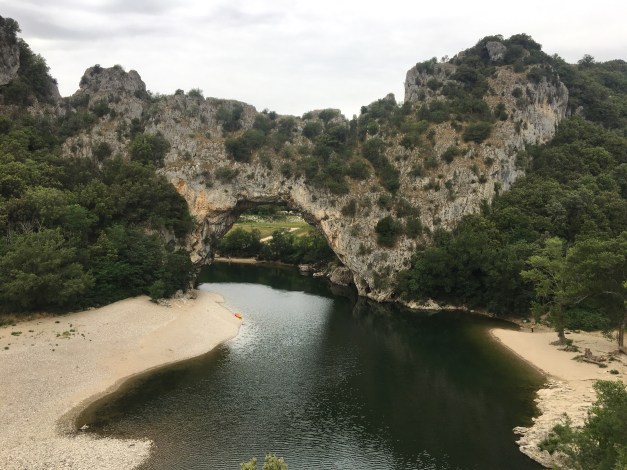

 With the 17km runners due back first after starting at 9am we had time to have a wander round the market and get some provisions in for later ( although I later managed to leave my saucisson in a cafe)
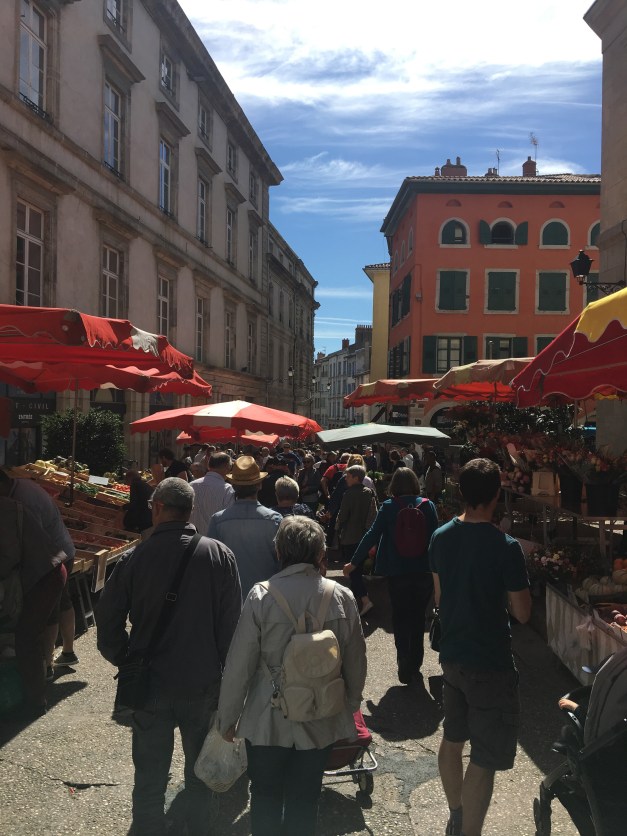 We were able to follow the runners progress through an app set up by the organisers and were therefore able to ensure that we were at the finish when someone was due.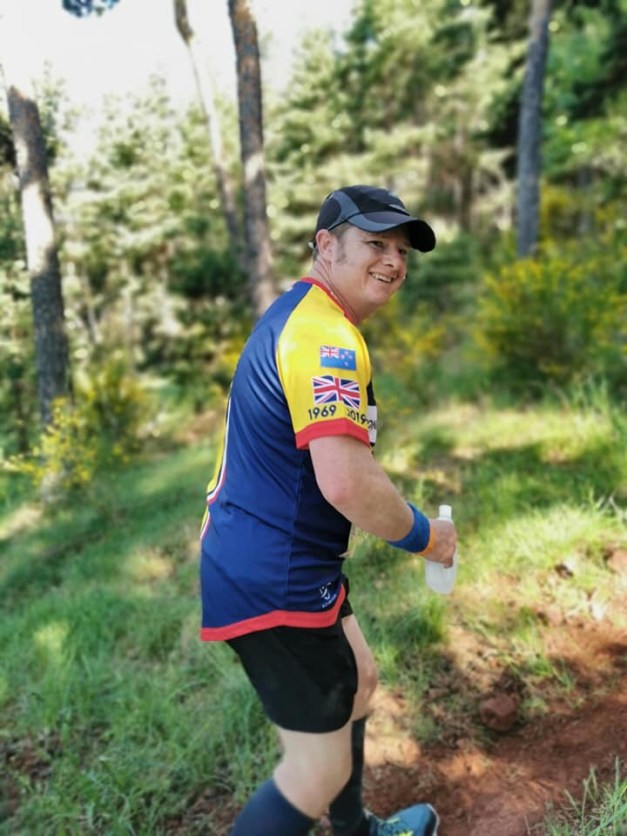
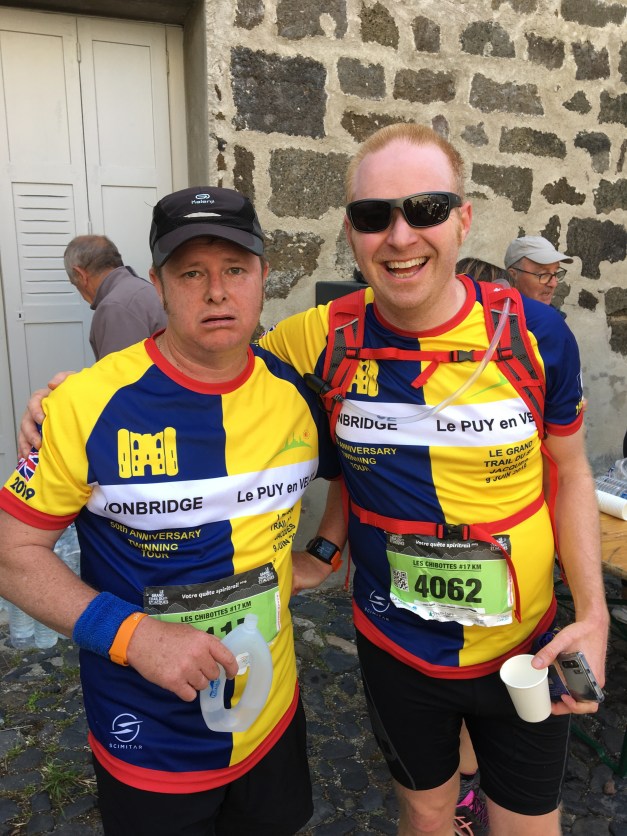 Although Jamie was not the happiest bunny on crossing the line his mood was amazingly reinvigorated when a possee of French ladies came to lay at his feet. Swapping phone numbers he claims it was only because one of them wanted to send her son to the U.K. to learn better English, obviously not realising where Jamie was from, Peter emailed Catherine encouraging her to speed up to the finish!
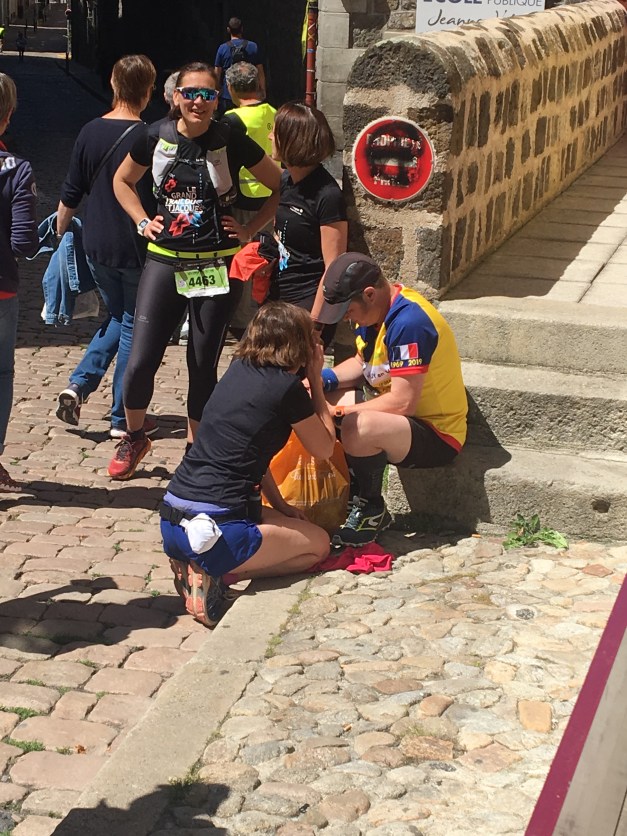 Our next finishers were Mary and Pip who again had kept together during the run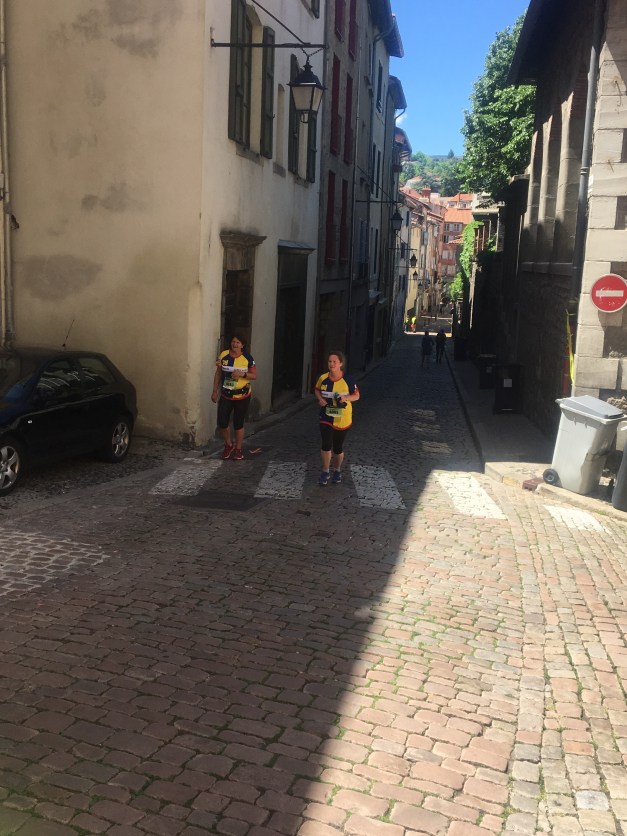
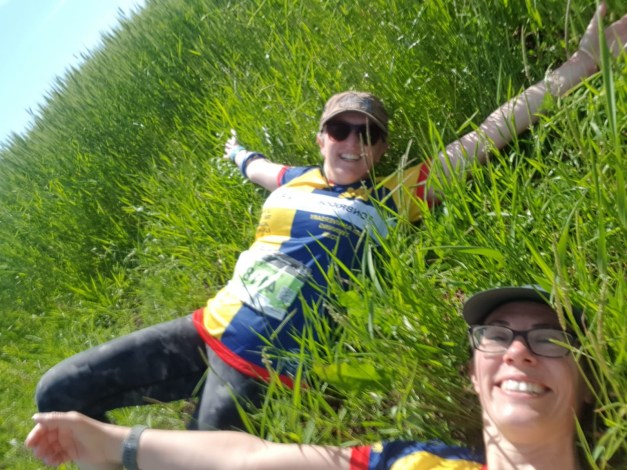 Not all of the course was tough and Justine and Catherine took advantage of the lush grass to make angels before they came down the slide of death and up the hill to the finish.
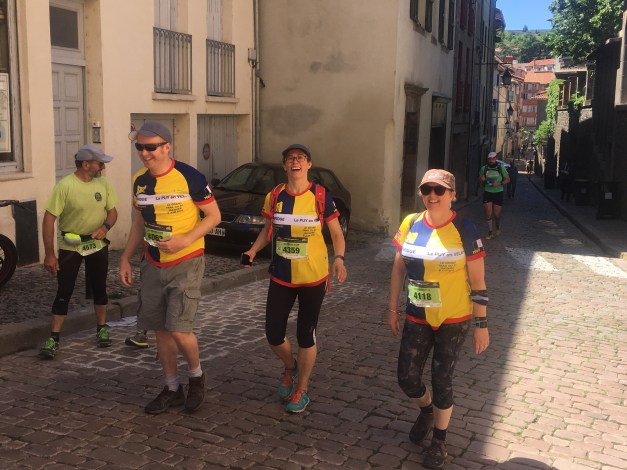 All of our short course runners had now completed the route so we took advantage of a gap to had a coffee at a cafe at the bottom of the finish hill where the mayor seeing us in our Tonbridge-Le Puy outfits came over for a chat
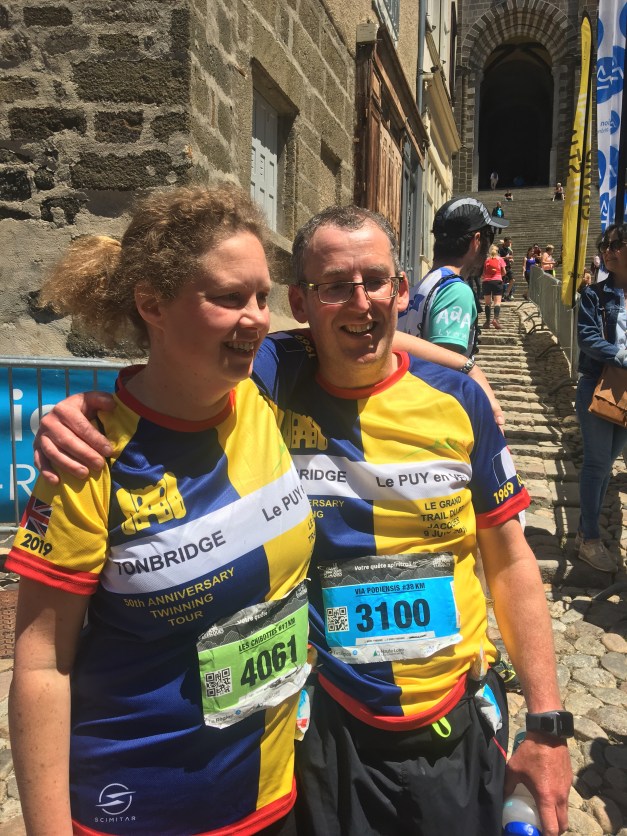
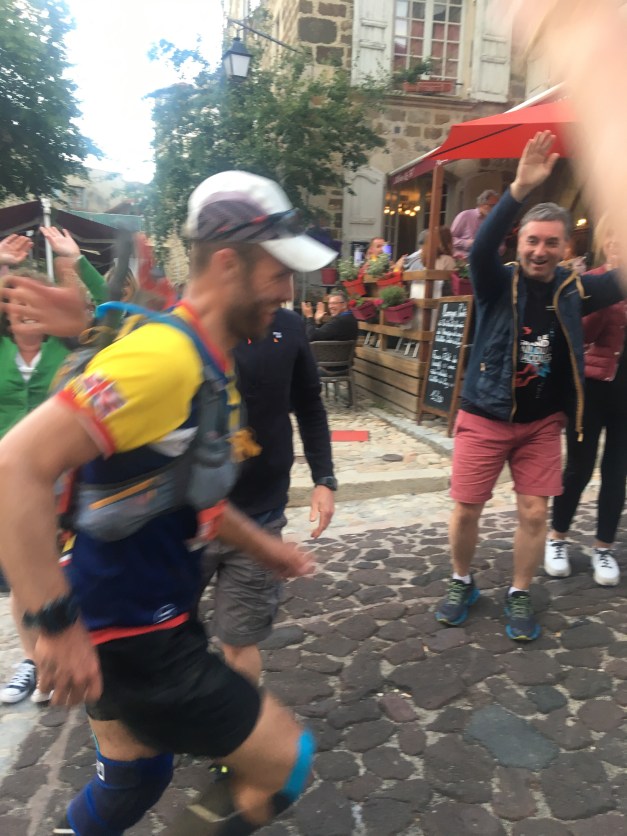 Finishing strongly Anthony was still smiling as he crossed the line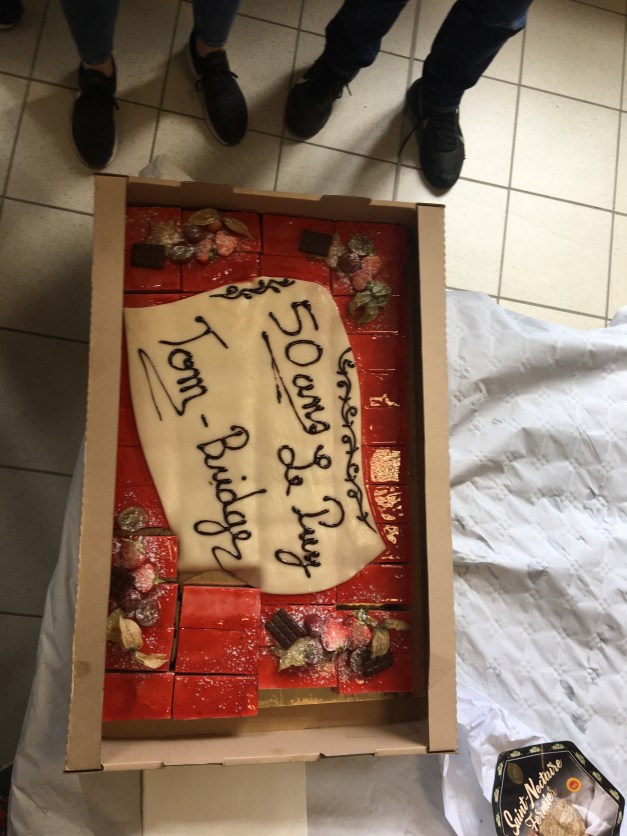

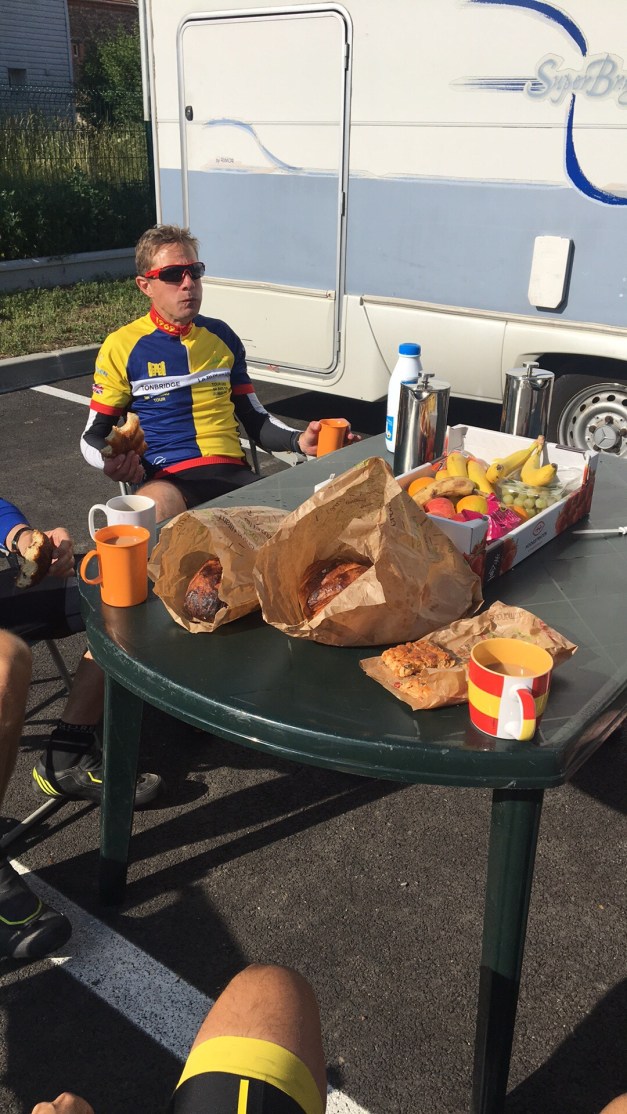







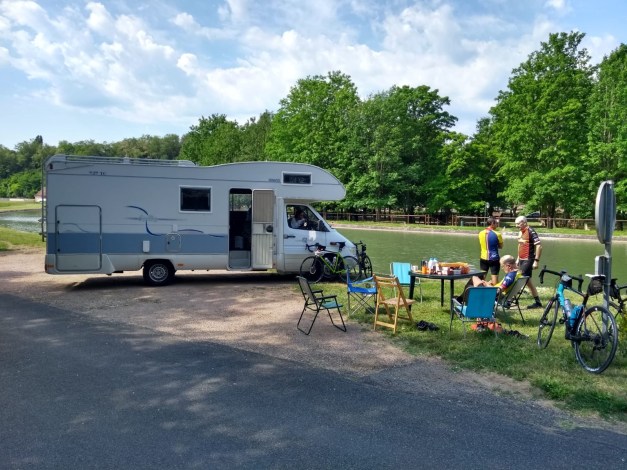
 Once again we feasted with the additional benefit of a cold roast chicken to have with our baguette and salad.
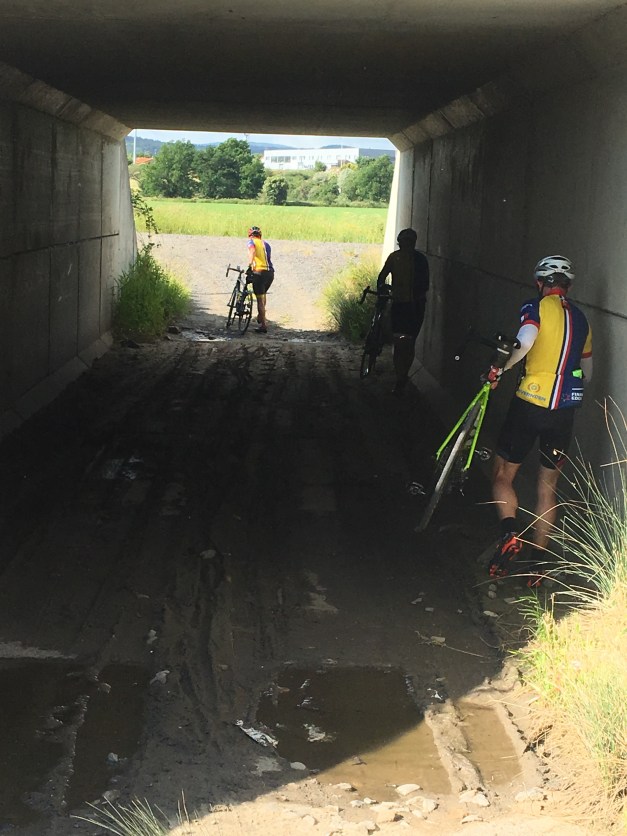
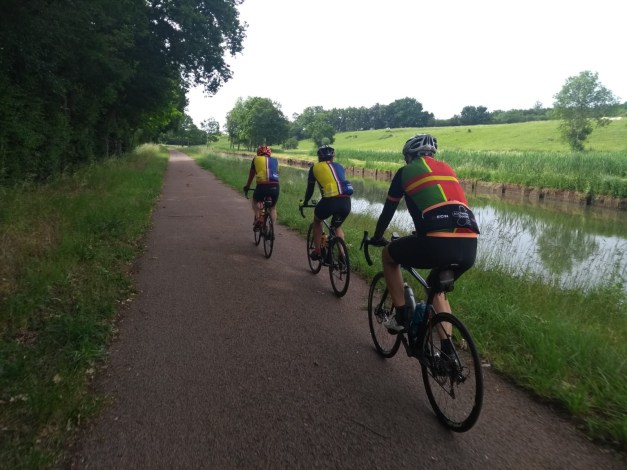
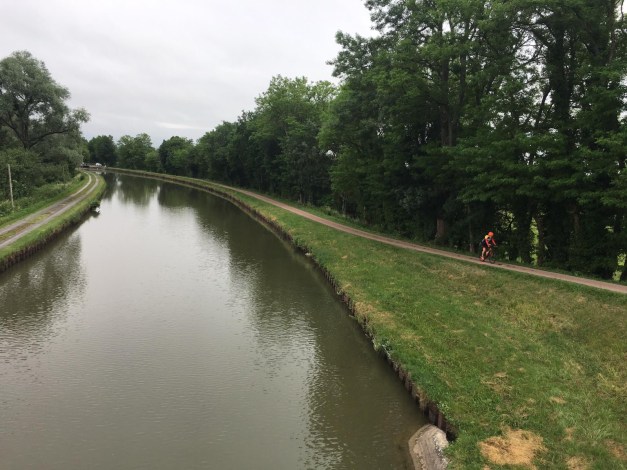
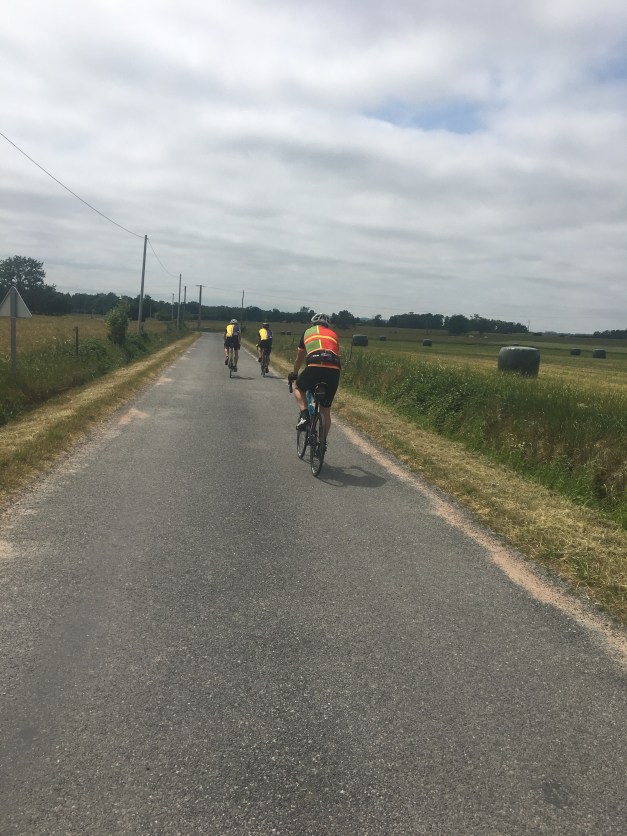
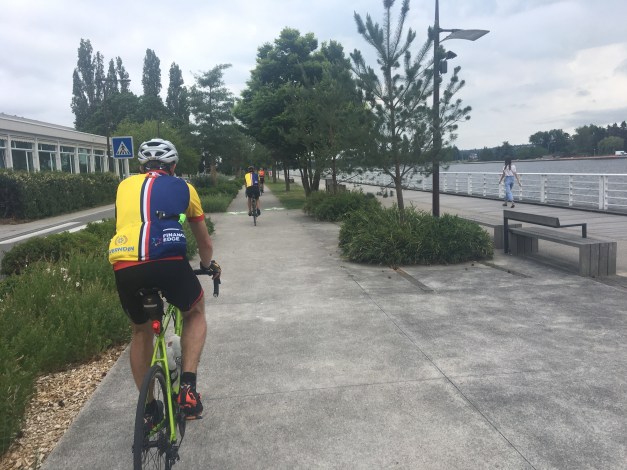
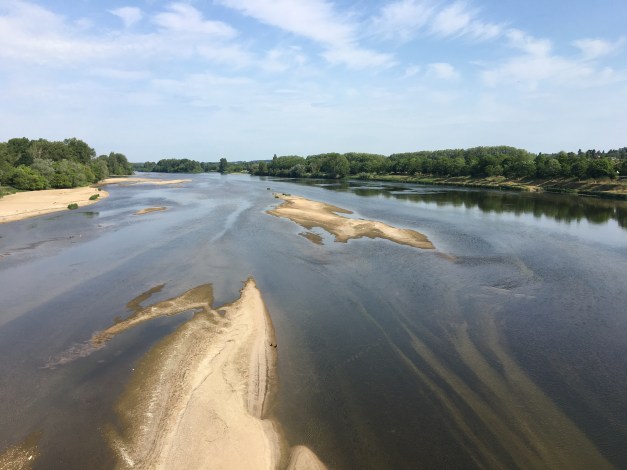
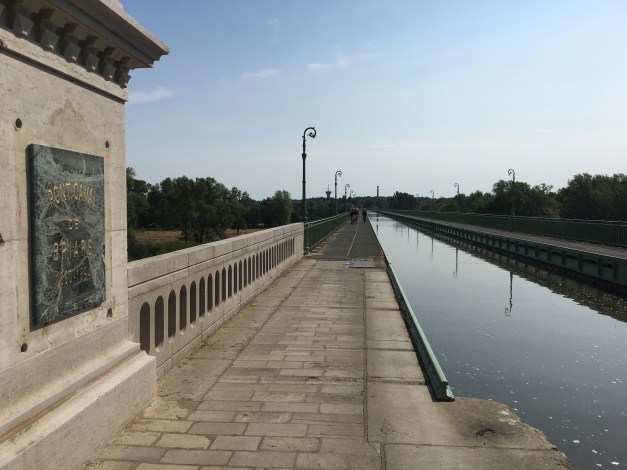
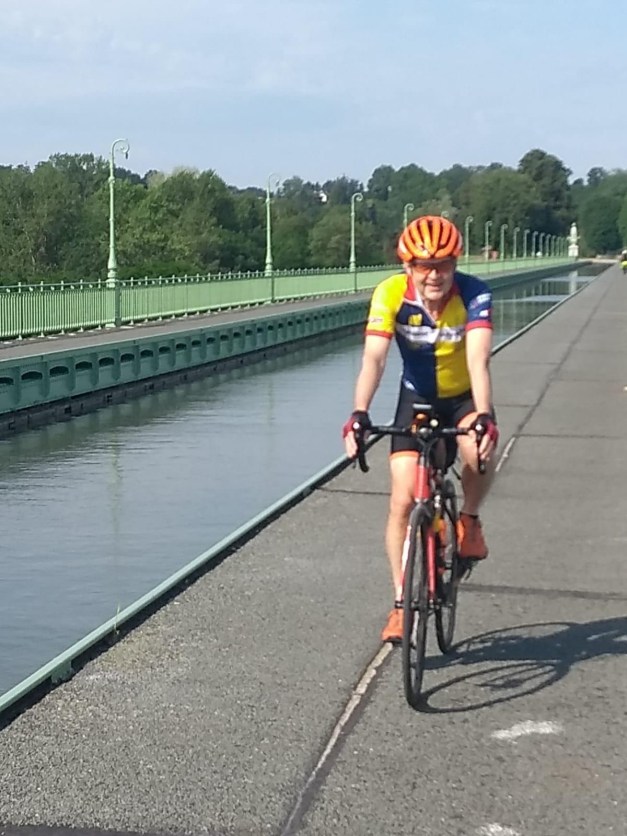
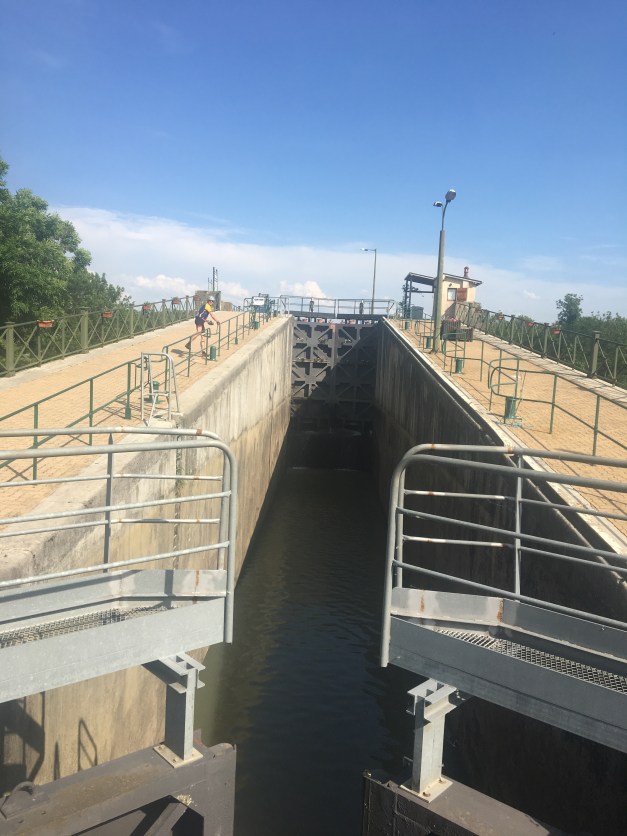
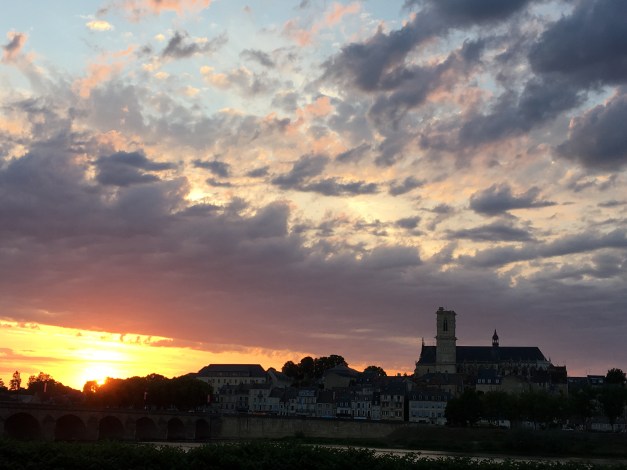
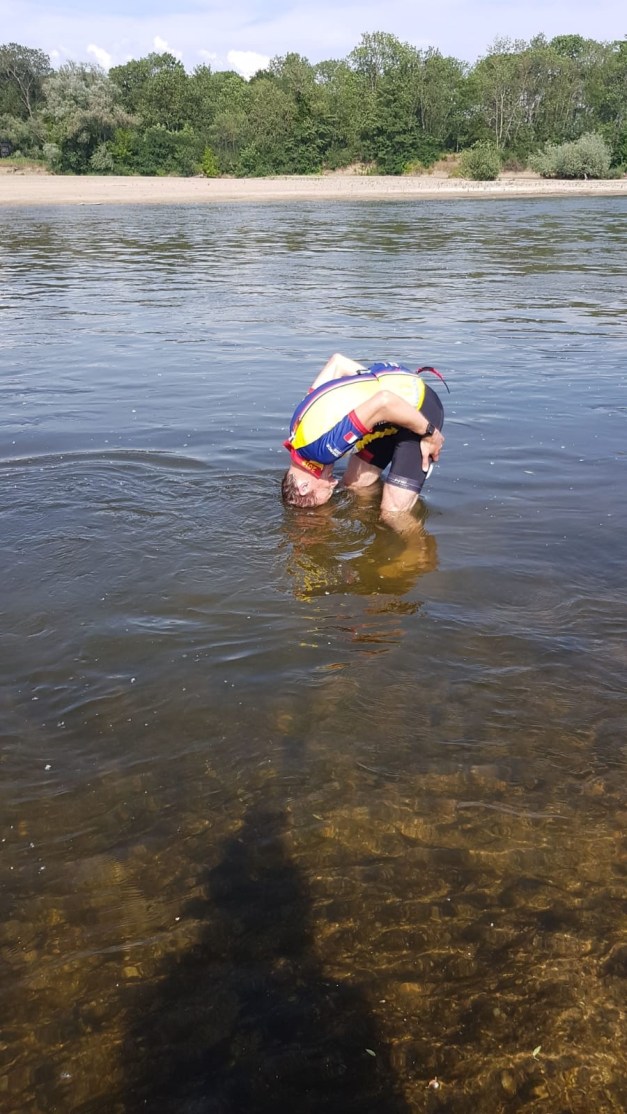 In addition to the temperature dropping a bit the route after the second pont canal took us beside a canal to the south of Nevers and with a bit of a following wind we were able to scoot along at 20 mph for the final 15 k just avoiding a nasty pile up when hitting a patch of gravel under a bridge.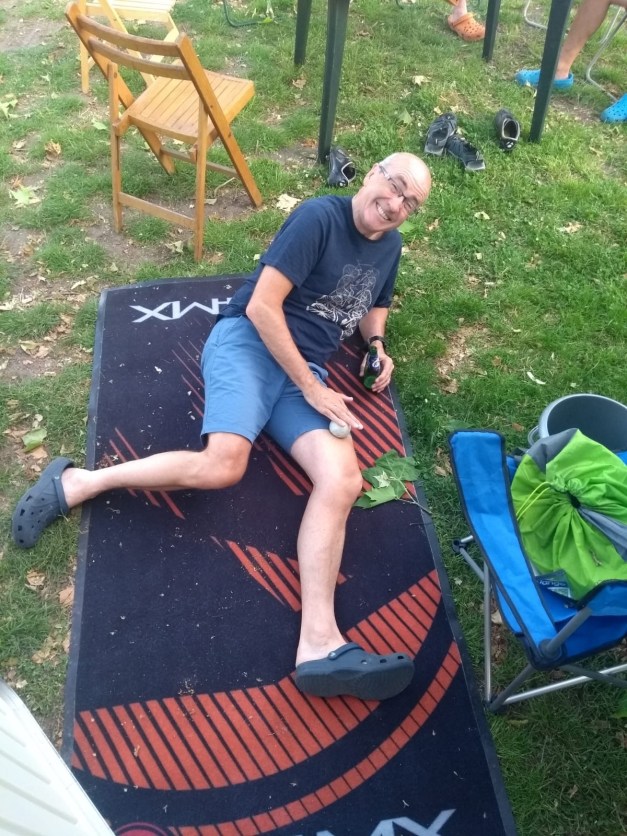

 nbjtours